Air Pollution Exposure Near Conception Raises Risk of Birth Defects

Women exposed to air pollution just prior to conception or during the first month of pregnancy face an increased risk of their children being born with birth defects, such as cleft lip or palate or abnormal hearts.
Although the increased risk is modest, the potential impact on a population basis is noteworthy because all pregnant women have some amount of exposure.
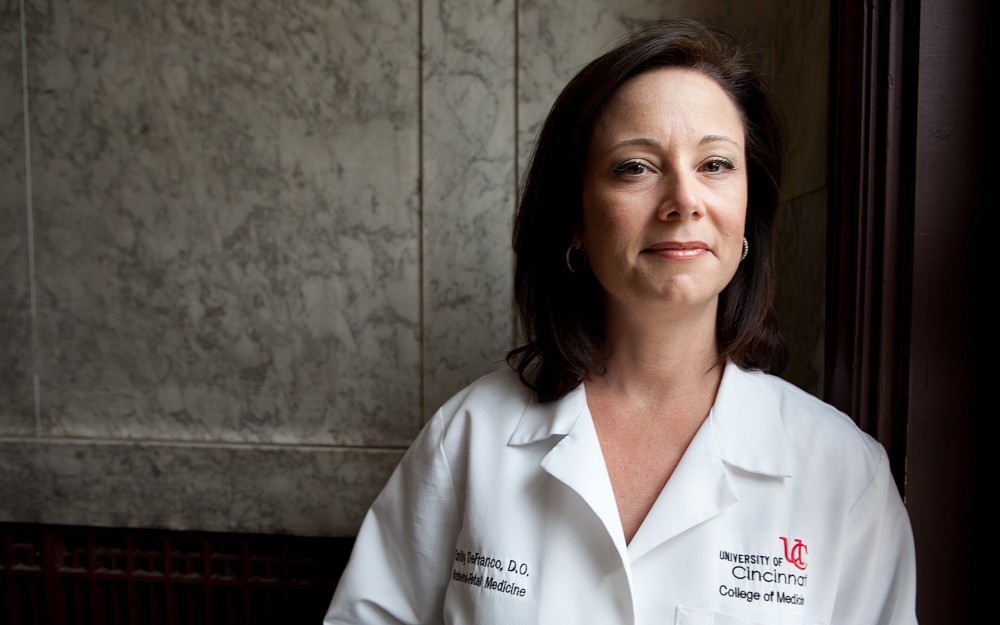
"The most susceptible time of exposure appears to be the one month before and after conception, says Emily DeFranco, DO, associate professor of obstetrics and gynecology at the University of Cincinnati (UC) College of Medicine and a physician at Cincinnati Childrens Hospital Medical Center, and senior author of the study. "Public health efforts should continue to highlight the importance of minimizing population-level exposure to harmful particulate matter in the air.
DeFranco and her colleagues examined fine particulate matter, which is a significant health hazard because these tiny particles can deposit deep into the lower airways and air sacs within the lungs and enter the circulatory system. Fine particulate matter is a mixture of extremely small particles and liquid droplets that get into the air and, once inhaled, can negatively affect many aspects of a persons health.
The study is published online in The Journal of Pediatrics.
To conduct the study, the researchers used birth certificate data from the Ohio Department of Health and particulate matter data from the U.S. Environmental Protection Agencys 57 monitoring stations throughout Ohio. They linked the geographic coordinates of the mothers residence for each birth with the nearest monitoring station and calculated average exposures. They then estimated the association between abnormalities at birth and the mothers exposure to increased levels of fine particulate matter in the air during pregnancy.
DeFranco says there are inherent limitations of observational studies such as this but that it provides a good foundation on which future studies can build. Birth defects affect 3 percent of all births in the United States.
The researchers were funded by the National Institutes of Health (R01-HL 111829), (P30ES006096), (RC4ES019755) and (R01ES020349). Additional research support was provided by the Perinatal Institute at Cincinnati Childrens and the March of Dimes Prematurity Research Center Ohio Collaborative.
Co-authors on the study were Sheng Ren, PhD, UC Department of Mathematics and the Division of Biomedical Informatics at Cincinnati Children's; Erin Haynes, DrPH, UC associate professor of environmental health; Eric Hall, PhD, Perinatal Institute, Cincinnati Children's; Monir Hossain, PhD, UC associate professor of pediatrics and Division of Biostatistics and Epidemiology, Cincinnati Children's; Aimin Chen, MD, PhD, UC associate professor of environmental health; Louis Muglia, MD, PhD, UC professor of pediatrics and Division of Biostatistics and Epidemiology, Cincinnati Children's; and Long Lu, PhD., UC associate professor of pediatrics and Division of Biomedical Informatics, Cincinnati Children's.
Related Stories
Heavy social media use linked to depression
August 31, 2026

U.S. News and World Report, Yahoo! News, MSN, USA Today and other national media highlight a new study by the University of Cincinnati and Northwestern University that found a correlation between heavy social media use and depression in adults.
On-site training in Speech & Hearing Clinic sets UC’s programs apart
August 27, 2026
At the University of Cincinnati’s Speech & Hearing Clinic, Doctor of Audiology and Speech-Language Pathology graduate students gain real-world experience while providing free speech and hearing services to the community.
Designing with cancer patients' needs in focus
August 27, 2026
Kristina Shin is designing garments that prioritize the comfort, function and confidence of breast cancer patients, addressing a need often overlooked by traditional fashion.