A Drug Long Used to Treat Gout May Help Adult Heart Patients

Researchers at the University of Cincinnati (UC) College of Medicine have shown that probenecid, a drug long used to treat gout, may be able to improve heart function in adult patients who experience heart failure.
The results are published in the Journal of the American Heart Association based off a study of 20 patients at the University of Cincinnati Medical Center.
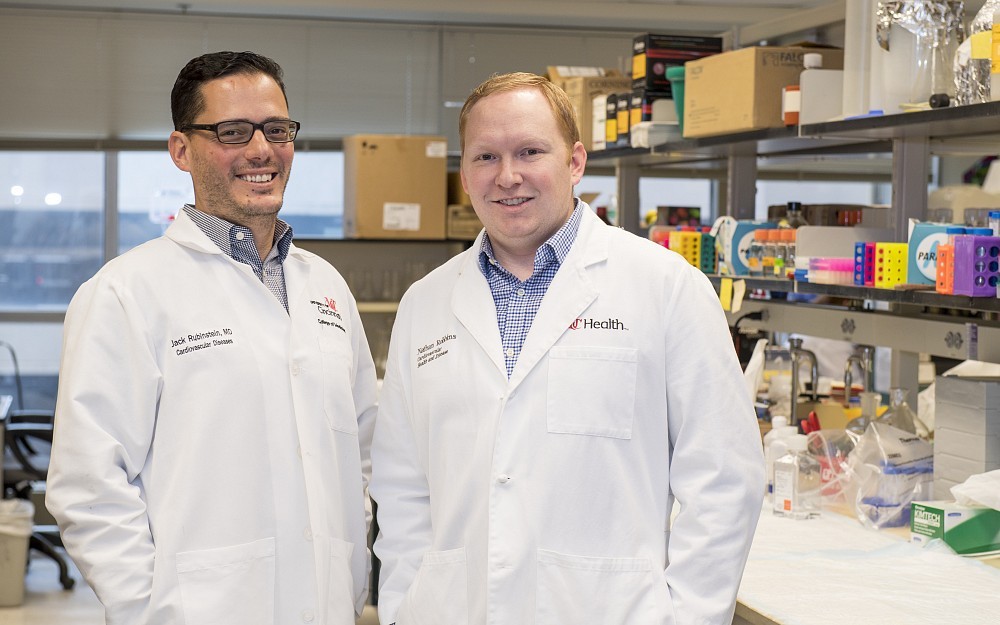
"We were testing if probenecid was safe for patients, says Jack Rubinstein, MD, associate professor in the Division of Cardiovascular Health and Disease, and corresponding author for the study. "We know that it was very likely to be safe because the medicine had been taken by people of all ages for decades. It has a very strong safety profile. We were quite happily surprised it improved the two main ways in how the heart functions. It improves how the heart contracts and how it relaxes.
The patients were offered probenecid as part of a randomized, double-blind, crossover and placebo-controlled single-center clinical trial. Patients, who averaged 57 years of age, were enrolled during four-week periods between June 2013 and April 2015.
They were required to undergo an echocardiogram, an electrocardiogram and six-minute endurance test along with other assessments, explains Rubinstein, a UC Health cardiologist and member of the UC Heart, Lung and Vascular Institute.
The studys first author is Nathan Robbins, a senior research assistant in the UC College of Medicine, who started out volunteering with Rubinstein in the laboratory examining the echocardiograms of animals treated with probenecid before later being hired to help recruit heart failure patients.
"This is the first time probenecid has been used in heart failure patients and we showed it increases the ejection fraction in patients with heart failure, says Robbins. "It was exciting to be able to see this medicine work from the bench to the bedside.
Rubinstein also partnered with basic scientists led by Sakthivel Sadayappan, PhD, professor in the UC College of Medicine and director of the heart branch of the UC Heart, Lung and Vascular Institute. Sadayappan and his researchers examined probenecid in animal heart cells and found it improved how well the heart uses calcium, an important component in cardiac muscle contraction.
"The medicine works in ways we know about and in ways we dont know about, says Rubinstein. "For the past four or five years we have been figuring out some of the ways the medicine works. We have figured out a lot of them, but there is still a lot we dont know.
Heart failure occurs when the heart pump is not strong enough to move blood throughout the body and meet the bodys needs for oxygen, explains Rubinstein. It affects 5.7 million people in the United States, according to the Centers for Disease Control and Prevention.
"The repercussions are potentially significantif we are able to confirm this experiment in larger studies with longer-term follow upthis could present a new way of treating heart failure for which there are limited medical therapies available, says Rubinstein.
"Left ventricular assist devices, pacemakers, heart transplants and medications are available to treat heart failure patients, but outcomes for patients with heart failure are still worse than outcomes for the vast majority of cancer patients, says Rubinstein. "Thats what we want to effectively change.
Other researchers in the UC College of Medicine also assisting the study are Mark Gilbert, MD, Mohit Kumar, James McNamara, PhD, Patrick Daly, MD, Sheryl Koch, PhD, Ginger Conway, Mohamed Effat, MD, and Jessica Woo.
The study performed at UC Medical Center is related to Rubinsteins work with probenecid to treat children and young adults with hypoplastic left heart syndrome. He received a $154,000 grant in June 2017 from the American Heart Association and Childrens Heart Foundation to tackle this project with researchers at Cincinnati Childrens. Hypoplastic left heart syndrome is a birth defect that affects normal blood flow through the heart.
The UC Medical Center study was funded by the University of Cincinnati and by the American Heart Association through grant ID 13BGIA17140069.
Rubinstein is a founding member of TRP therapeutics and is also founding member and board member of CinTRYP LL.
Related Stories
Cancer Center plays key role in lab research, clinical trials for new pancreatic cancer drug
September 1, 2026

WLWT and WCPO highlighted the contributions of University of Cincinnati Cancer Center researchers that helped lead to the recent FDA approval of daraxonrasib, a new treatment for pancreatic cancer.
Cancer Center physician receives $150,000 New Investigator Research Grant to study treatment-resistant leukemia
September 1, 2026
The University of Cincinnati Cancer Center’s Sarah Skuli, MD, PhD, received a two‑year, $150,000 Leukemia Research Foundation New Investigator Grant to study TP53‑mutated leukemia, a treatment‑resistant subtype with very poor outcomes.
Heavy social media use linked to depression
August 31, 2026

U.S. News and World Report, Yahoo! News, MSN, USA Today and other national media highlight a new study by the University of Cincinnati and Northwestern University that found a correlation between heavy social media use and depression in adults.