Sign the Final Beam of the UC Gardner Neuroscience Institute

Weve reached the top! Join us on April 9 to officially commemorate the installation of the last steel beam of the UC Gardner Neuroscience Institute with a beam-signing opportunity for UC Health employees, UC faculty, staff and students.
The 38-foot steel beam will be available on Monday April 9, from 7 a.m. to 7 p.m., at the corner of Bellevue and Piedmont Aves., closest to the Barrett Cancer Center parking lot. Permanent markers will be available at the beam for your signature to become a part of UC Health history.
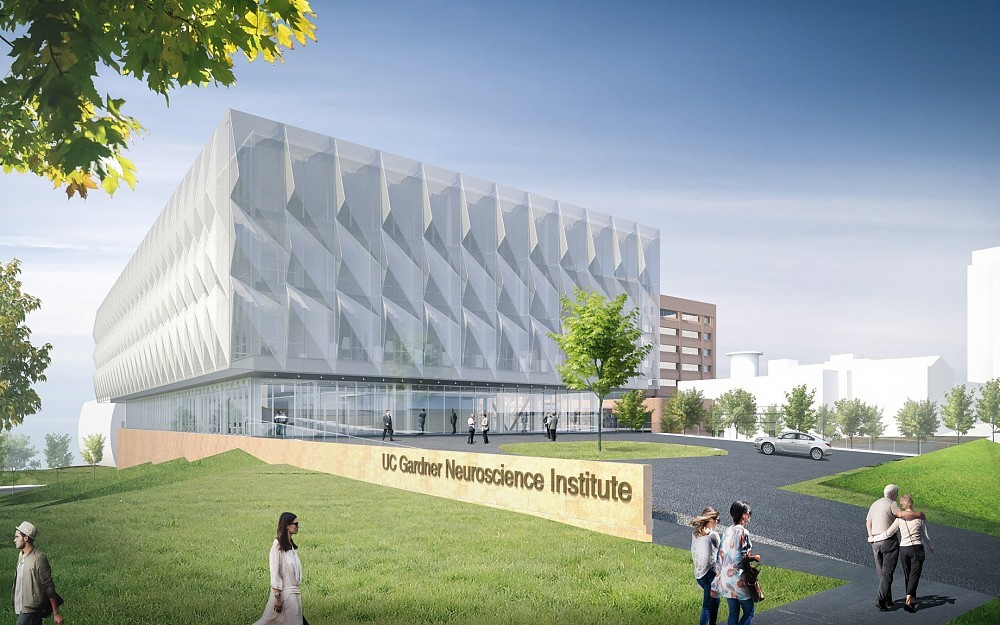
A final beam signifies the "topping off" for the buildingthat the highest point of steel construction has been reached. Construction began on the four-story patient-centered facility in May 2017. The $60.5 million new home for the institute is expected to be completed in 2019, and will house all outpatient neurologic care, as well as and patient education activities and improved access to advanced clinical trials.

University of Cincinnati Gardner Neuroscience Institute building rendering

Construction site of 223 Piedmont Ave., new facility for the UC Gardner Neuroscience Institute
Tags
Related Stories
Cancer Center plays key role in lab research, clinical trials for new pancreatic cancer drug
September 1, 2026

WLWT and WCPO highlighted the contributions of University of Cincinnati Cancer Center researchers that helped lead to the recent FDA approval of daraxonrasib, a new treatment for pancreatic cancer.
Cancer Center physician receives $150,000 New Investigator Research Grant to study treatment-resistant leukemia
September 1, 2026
The University of Cincinnati Cancer Center’s Sarah Skuli, MD, PhD, received a two‑year, $150,000 Leukemia Research Foundation New Investigator Grant to study TP53‑mutated leukemia, a treatment‑resistant subtype with very poor outcomes.
Heavy social media use linked to depression
August 31, 2026

U.S. News and World Report, Yahoo! News, MSN, USA Today and other national media highlight a new study by the University of Cincinnati and Northwestern University that found a correlation between heavy social media use and depression in adults.