Research Shows Possible New Target for Immunotherapy for Solid Tumors

CINCINNATIResearch from the University of Cincinnati reveals a potential new target to help T cells (white blood cells) infiltrate certain solid tumors.
This study, published in the April 24 advance online edition of the journal Science Signaling, showed that by targeting a certain potassium channelKCa3.1the CD8+ T cell migration in patient samples was restored, meaning that they could potentially be more effective in moving in on the tumor and attacking it. CD8+ cells are a type of T cell capable of killing cancer cells.
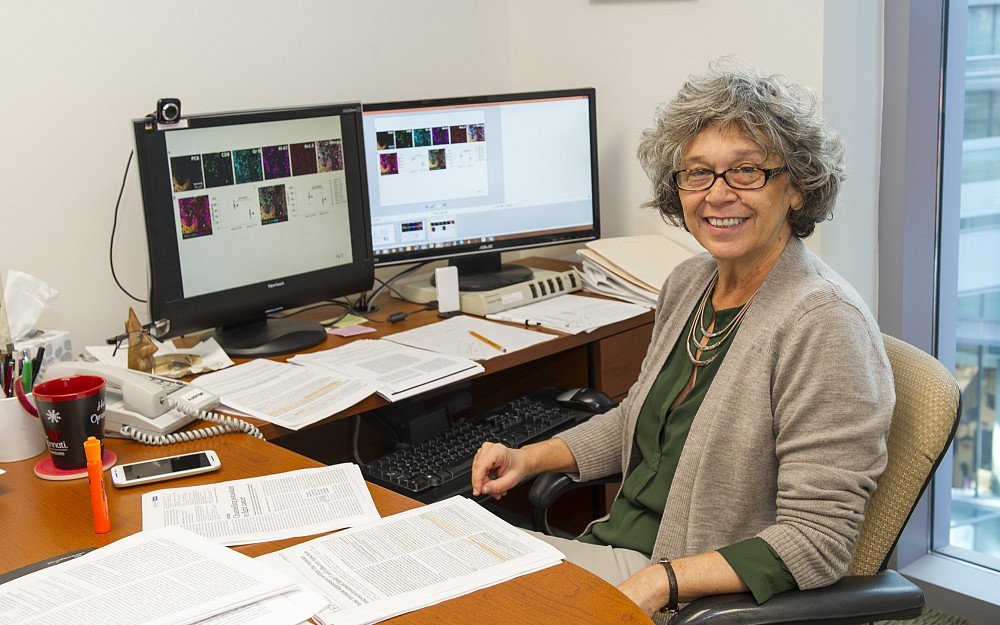
"Reduced potassium channel activity curbs T cell movement within the tumor, says Laura Conforti, PhD, professor in the Department of Internal Medicine at the UC College of Medicine, a researcher within the Cincinnati Cancer Center and UC Cancer Institute and corresponding author on the study. "T cell infiltration in solid tumors is limited by multiple factors found within the tumors microenvironment, including adenosine, an immunosuppressive substance accumulating in high amounts in solid tumors.
Conforti and her team, led by Ameet Chimote, PhD, a research associate in the Department of Internal Medicine, analyzed the migration of CD8+ T cells in a 3-D experimental model system that allows the reproduction of some features of the tumor microenvironment and found that when adenosine was present, it inhibited the movement of T cells from cancer patients more than T cells from healthy donors.
"The increased sensitivity of patient CD8+ T cells to adenosine correlated with reduced KCa3.1 channel activity, but not with adenosine receptor expression or signaling, she says. "Treatment with a substance that restores the KCa3.1 channel activity corrects patient CD8+ T cell migration in the presence of adenosine, suggesting that potassium channel activators may help enhance T cell infiltration of adenosine-rich solid tumors, providing another therapy option.
"This finding could lead to the development of new therapeutic agents to use in combination with approved immunomodulators for the treatment of solid tumors, as they may improve their efficacy.
This research was supported by the National Institutes of Health (R01CA95286). Researchers cite no conflict of interest.
Related Stories
On-site training in Speech & Hearing Clinic sets UC’s programs apart
August 27, 2026
At the University of Cincinnati’s Speech & Hearing Clinic, Doctor of Audiology and Speech-Language Pathology graduate students gain real-world experience while providing free speech and hearing services to the community.
Designing with cancer patients' needs in focus
August 27, 2026
Kristina Shin is designing garments that prioritize the comfort, function and confidence of breast cancer patients, addressing a need often overlooked by traditional fashion.
UC, NKU renew longstanding partnership supporting Army ROTC cadets
August 26, 2026
The University of Cincinnati Army ROTC and Northern Kentucky University (NKU) have renewed a longstanding partnership that supports students preparing to become Army officers and leaders in their communities. The universities formalized the renewed agreement during a signing event Aug. 11 at NKU.