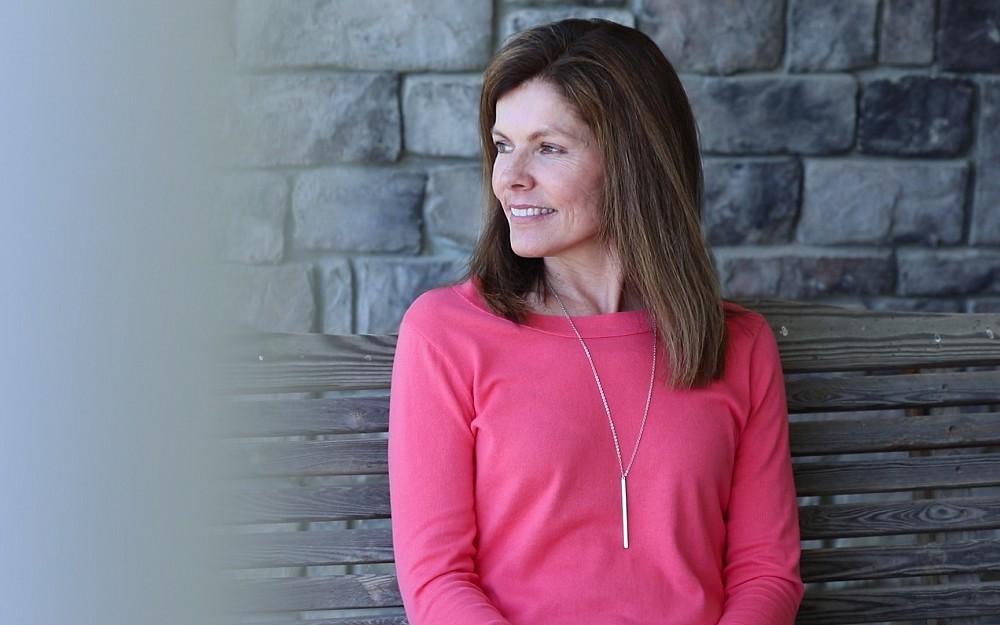
Stroke Can t Keep Patient From Lacing Up Her Running Shoes Again

Exactly five months after suffering a stroke, on May 6, Tammy Unger of West Union, Ohio, crossed the Flying Pig Marathons "Finish Swine with a new personal record for the half marathon.
"I have a new perspective on everything; my daughter calls me Mary Poppins. I love to feel the rain on my facethe sunshineand running just feels so good for my body; I had to keep doing it, says the 51-year-old grandmother of three.
A successful run and time with her family means a lot more to Tammy since Dec. 6, 2017.
She had stayed up late the night before, writing out Christmas cards, going to bed just after midnight. When she awoke the next morning around 6:30 a.m. something wasnt quite right.
"I opened my eyes and was seeing like a kaleidoscope, blocks of six, so I didnt get up right awaynext thing I remember, my husband was standing over me waking me up and that was around 8 a.m., she says, adding that she felt dizzy and can only recall brief snatches of time as she "phased in and out or "dozed off during her morning routine.
"My husband was insistent, You need to go to hospital, she says. Unger felt adamant that nothing was wrong but agreed to text her primary care doctor, who called her right back and told her to "go to the ER and tell them to treat it like its a stroke.
They went to nearby Adams County Hospital where Unger remembers having a CAT scan and being reassured by visiting family and friends.
The hospital debated transferring her via air care to University of Cincinnati Medical Center (UCMC)Tammy didnt want to see that bill, she exclaimsso ultimately they decided to send her via ambulance. And while she admits she had some hesitation about being sent to UCMC, she says, "Ive never had such an amazing experience.
"Immediately two or three nurses came to my assistance, and I got amazing care from the residents and head intern.
Figuring Out the Kaleidoscope Effect
They first discussed that it could be a migraine, something Tammy previously suffered from, but they decided to keep her overnight for observation.
Daniel Woo, MD, professor of neurology, a member of the UC stroke team and a UC Health physician, says the kaleidoscopic symptom is definitely unusual, but not out of the question as a symptom of stroke.
"Ive seen it maybe one other time in my career, and Tammy has a history of migraines, so a lot of people might have passed this off as a migraine event. Upon review, we were concerned it could be a stroke, so we sent her to get an MRI, and sure enough, her results showed stroke. Because of where in the brain the stroke occurred, that could explain the kaleidoscopic visual disturbances, says Woo.
"Nevertheless with this and her age being young for stroke, it made me concerned she was at risk of having a big stroke in the future, and so that included a detailed look at her heart and other labs to make sure there wasnt anything affecting her coagulopathy [blood clotting].
After being treated, one of her first questions to Dr. Woo was, "Can I run? He said yes, as long as she took it slowly. And no marathons (yet).
"So five days later, I grabbed a couple friends, and we went running for the first time since my stroke, she says.
Woo thinks that is perfectly fine for her. "In general, your brains response to an injury like that is to think, Whoa, Ive got to slow everything down, but actually in most cases, its important to return to your normal activities quickly, he says, "but a little working up to it is wise to make sure its tolerated well.
Hitting the Pavement After Stroke
Unger has closely followed doctors orders while training for the half marathon. "I felt great, and it just so happened that the race day was my fifth month stroke anniversary, so it made it even more special to me, she says.
She adds that her passion for running didnt hit until age 42, after her kids had grown. She works out five days during the week, usually averaging a 6 mile run with 10 miles on the weekend. She increased steadily as she readied for the Flying Pig.
In addition to running, she and her husband Jim farm 500 acres with beef cattle "as a hobby, she says, while also owning two businesses.
Unger recently celebrated a birthday and was showered with messages, calls and posts on social media celebrating life, which really moved her when she thinks back to just a few months ago.
"I just cant believe how close death can be, she says. "We need to find a cure (for stroke), and if I can be an advocate, to say, I ate healthy; I exercised, ask my kidsI have a heart rate of 50! And it still happened to me. I want to be a part of making a difference.
Screening for and preventing hypertension (high blood pressure), what Woo calls the "silent killer, is so important because many people can have it without any symptoms; he says it is one of the biggest risks you can control, along with diabetes, smoking, heart disease and high cholesterol.
He agrees with Unger that its important to keep your risk low. "Anyone can have a stroke, at any age, he says. "You may be the picture of health, and so then, yes, your risk is lower, but it is still possible to have a stroke. You should do everything you can to lower your risk.

Tammy Unger, left, with her running buddies, sisters Amy Watkins and Carrie Fuller, in Cincinnati for the Flying Pig Marathon. "We run all of our miles together."
Tags
Related Stories
Heavy social media use linked to depression
August 31, 2026

U.S. News and World Report, Yahoo! News, MSN, USA Today and other national media highlight a new study by the University of Cincinnati and Northwestern University that found a correlation between heavy social media use and depression in adults.
On-site training in Speech & Hearing Clinic sets UC’s programs apart
August 27, 2026
At the University of Cincinnati’s Speech & Hearing Clinic, Doctor of Audiology and Speech-Language Pathology graduate students gain real-world experience while providing free speech and hearing services to the community.
Funding expands UC research into weight gain side effects of bipolar medication
August 26, 2026
University of Cincinnati researchers have been approved for funding by the Patient-Centered Outcomes Research Institute (PCORI) to expand the implementation of healthy lifestyle interventions and metformin prescription to help manage weight gain in overweight or obese youth taking second-generation antipsychotic medications.