Study Finds Gender and Racial Disparities in Initial Hemodialysis Access

Women and Hispanics with end stage renal disease (ESRD) are less likely to use arteriovenous (AV) access than men and Caucasians according to new research from the University of Cincinnati (UC). The study, published in the American Journal of Nephrology, finds women were 15 percent less likely than men and Hispanics were 11 percent less likely than Caucasians to start hemodialysis treatments via AV access, despite the fact that AV (or permanent) access is preferred over catheter access.
"We want patients with ESRD to use permanent vascular access to initiate dialysis as compared to a temporary access like a catheter since it is associated with poor outcomes of infection, hospitalization and death, says Silvi Shah, MD, MS, assistant professor in the Division of Nephrology, Kidney CARE Program at UC and lead author of the study. "Since chronic kidney disease disproportionately affects women and minorities, it becomes even more important to examine the gender and racial differences in the prevalence of vascular access in patients undergoing hemodialysis.
The study evaluated almost 900,000 patients with ESRD who began hemodialysis between Jan. 1, 2004 and Dec. 31, 2014, using the United States Renal Data System. The study population was 56.3 percent male with ESRD with a mean age of 65 years. When starting hemodialysis, 17.5 percent had AV access, but the proportion was slightly but significantly higher among men than women (18.5 percent vs. 16.2 percent). Asian men had the highest rate of AV access (21.1 percent) and Hispanic men had the lowest (15.4 percent). Compared with white individuals, black and Asian patients had 8 percent and 11 percent greater odds respectively of AV use at hemodialysis initiation.
Shah says the study is unique in that it addresses a comprehensive racial group of patients, both men and women, over a 10-year period to better understand the natural history of vascular access in hemodialysis patients. The study further took into account and was adjusted for several pre-dialysis factors that impact the use of AV access for hemodialysis initiation including nephrology referrals, patient comorbidities, functional status and laboratory parameters.
"This is telling us that there are additional factors, which could be cultural or biological, contributing to these disparities, says Shah. "Women continue to be exposed to a higher risk of inferior vascular access, and while we can speculate that its due to a sustained lack in the ability to change the attitudes of the patients and physicians, the real reasons remain unknown. We need to target women and Hispanics in particular to better understand what other factors are responsible for these disparities. In recent times, it is imperative to advocate for the inclusion of gender and all races in all studies, and tailor therapies to specific biological states.
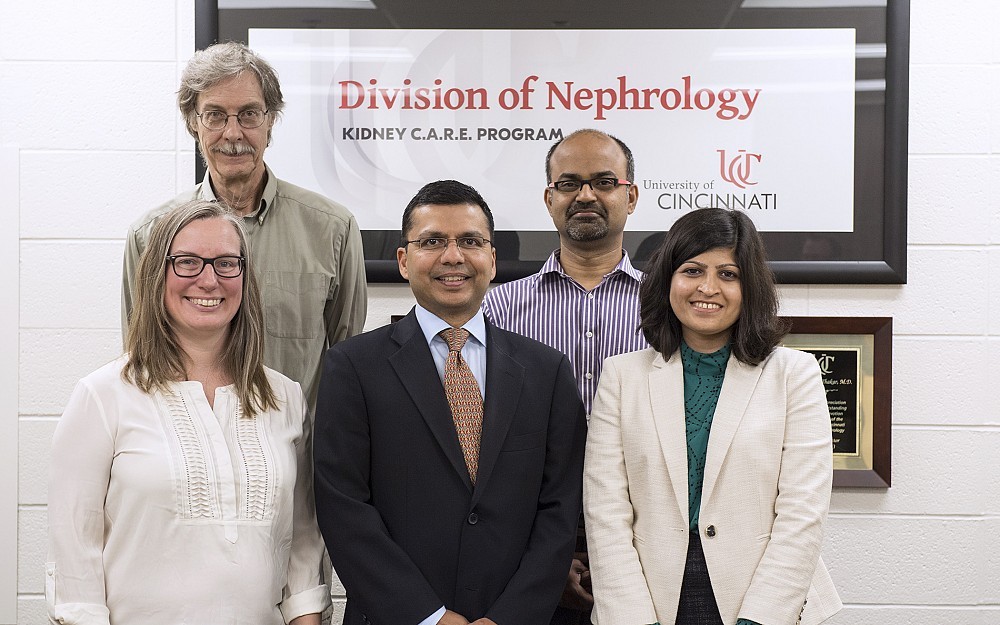
Shah was supported in this study by a Junior Pilot Faculty Award from the UC Department of Internal Medicine. Assisting her in the research were Anthony Leonard, PhD, research associate professor in the UC Department of Family and Community Medicine, Karthikeyan Meganathan and Annette Christianson, research associates in the UC Department of Biomedical Informatics, and Charuhas Thakar, MD, professor, and director of the UC Division of Nephrology Kidney C.A.R.E. Program.
Tags
Related Stories
Cancer Center plays key role in lab research, clinical trials for new pancreatic cancer drug
September 1, 2026

WLWT and WCPO highlighted the contributions of University of Cincinnati Cancer Center researchers that helped lead to the recent FDA approval of daraxonrasib, a new treatment for pancreatic cancer.
Cancer Center physician receives $150,000 New Investigator Research Grant to study treatment-resistant leukemia
September 1, 2026
The University of Cincinnati Cancer Center’s Sarah Skuli, MD, PhD, received a two‑year, $150,000 Leukemia Research Foundation New Investigator Grant to study TP53‑mutated leukemia, a treatment‑resistant subtype with very poor outcomes.
Heavy social media use linked to depression
August 31, 2026

U.S. News and World Report, Yahoo! News, MSN, USA Today and other national media highlight a new study by the University of Cincinnati and Northwestern University that found a correlation between heavy social media use and depression in adults.