Fierce Biotech: Making 'cold' tumors responsive to immunotherapy
UC research points to combination therapy involving the immune system for breast cancer

Some cancers create a hostile environment that allows them to evade immune attacks. That's why many patients with cancer don't respond to immuno-oncology treatments. Scientists are looking for ways to turn these so-called “cold” tumors into “hot” ones that are susceptible to immunotherapy.
A research study by scientists at the University of Cincinnati have discovered proteins that can be targeted to overcome resistance to cancer immunotherapy in animal models.
Syn Kok Yeo, PhD, research instructor in the department of cancer biology at the UC College of Medicine and a member in the lab of Jun-Lin Guan, PhD, the Francis Brunning Professor and Cancer Biology Department Chair, describes his research. He is a member of the UC Cancer Center.
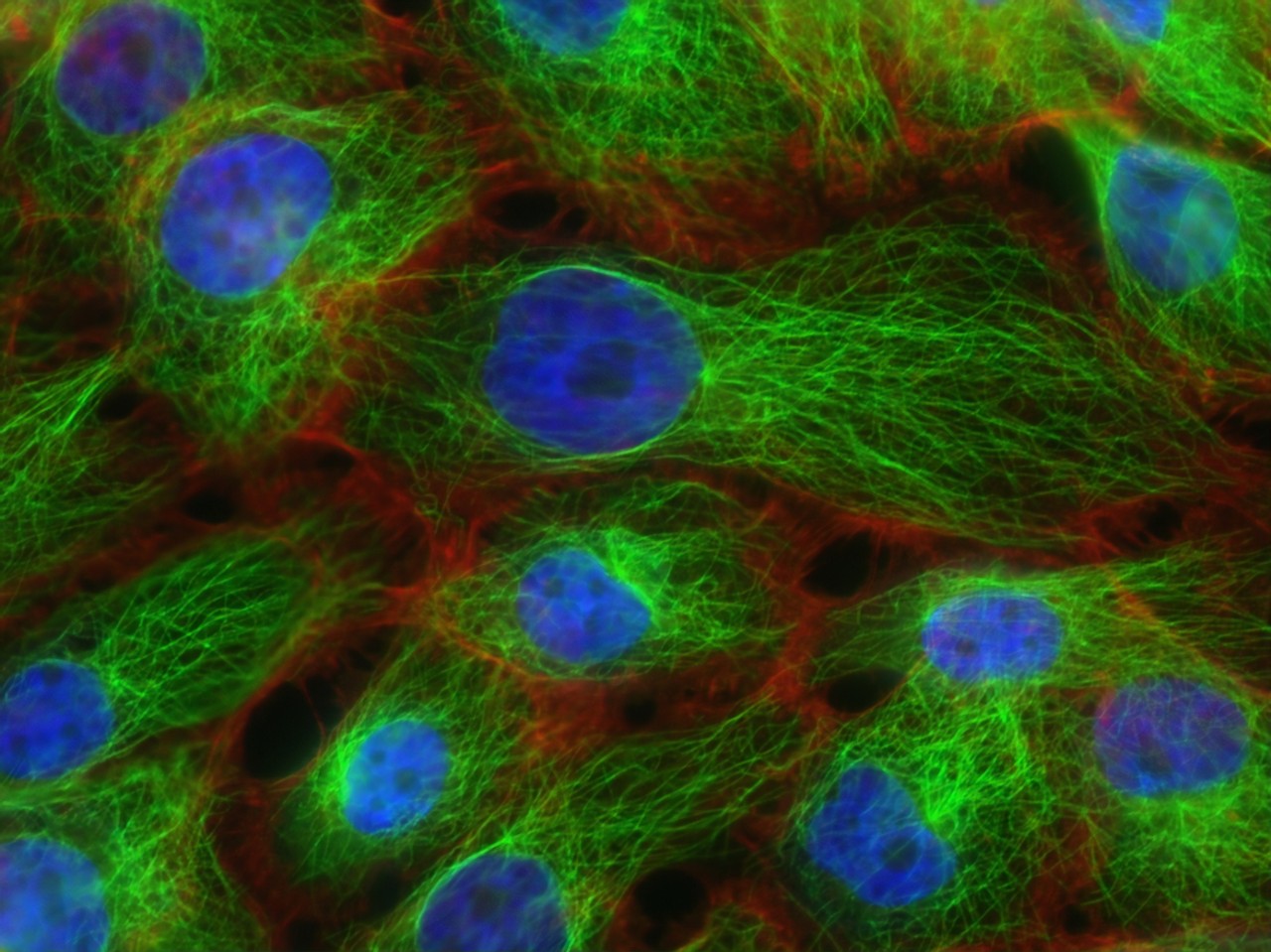
Featured photo of stress fibers and microtubules in human breast cancer cells. Courtesy of the National Cancer Institute.
Next Lives Here
The University of Cincinnati is classified as a Research 1 institution by the Carnegie Commission and is ranked in the National Science Foundation's Top-35 public research universities. UC's graduate students and faculty investigate problems and innovate solutions with real-world impact. Next Lives Here.
Related Stories
Is Cincinnati building new homes fast enough?
September 22, 2026

Gary Painter, professor and academic director of the Real Estate Center at UC's Lindner College of Business, offers comments on affordability issues in Cincinnati.
UC climbs to No. 3 in the nation for co-ops and internships in 2027 U.S. News rankings
September 22, 2026
In U.S. News & World Report’s 2027 Best Colleges rankings, the University of Cincinnati rises to No. 3 in the nation for co-ops and internships — No. 1 among public institutions — and posts gains in undergraduate business, computer science and psychology.
'Discovery, mentorship, momentum': UC College of Medicine's graduate programs celebrate year of success
September 22, 2026
From new mentorship honors to a growing research pipeline, see how the University of Cincinnati College of Medicine's graduate programs made this a standout year.