
Immunotherapy for breast cancer
UC researchers lay the foundation for combination therapy for breast cancer using the immune system

UC researchers have found a potential new combination therapy for breast cancer that would integrate use of the body’s immune system with targeted treatment for a particular protein that advances cancer.
The study, published in the journal Cancer Research, a journal of the American Association for Cancer Research, provides data that could eventually lead to a new breast cancer therapy, says co-lead author Syn Kok Yeo, PhD, research instructor in the department of cancer biology and a member in the lab of Jun-Lin Guan, the Francis Brunning Professor and Cancer Biology Department Chair. Guan is a corresponding author on the paper, and a former postdoc associate of Guan's laboratory Takako Okamoto, PhD, is the other co-lead author for the study.
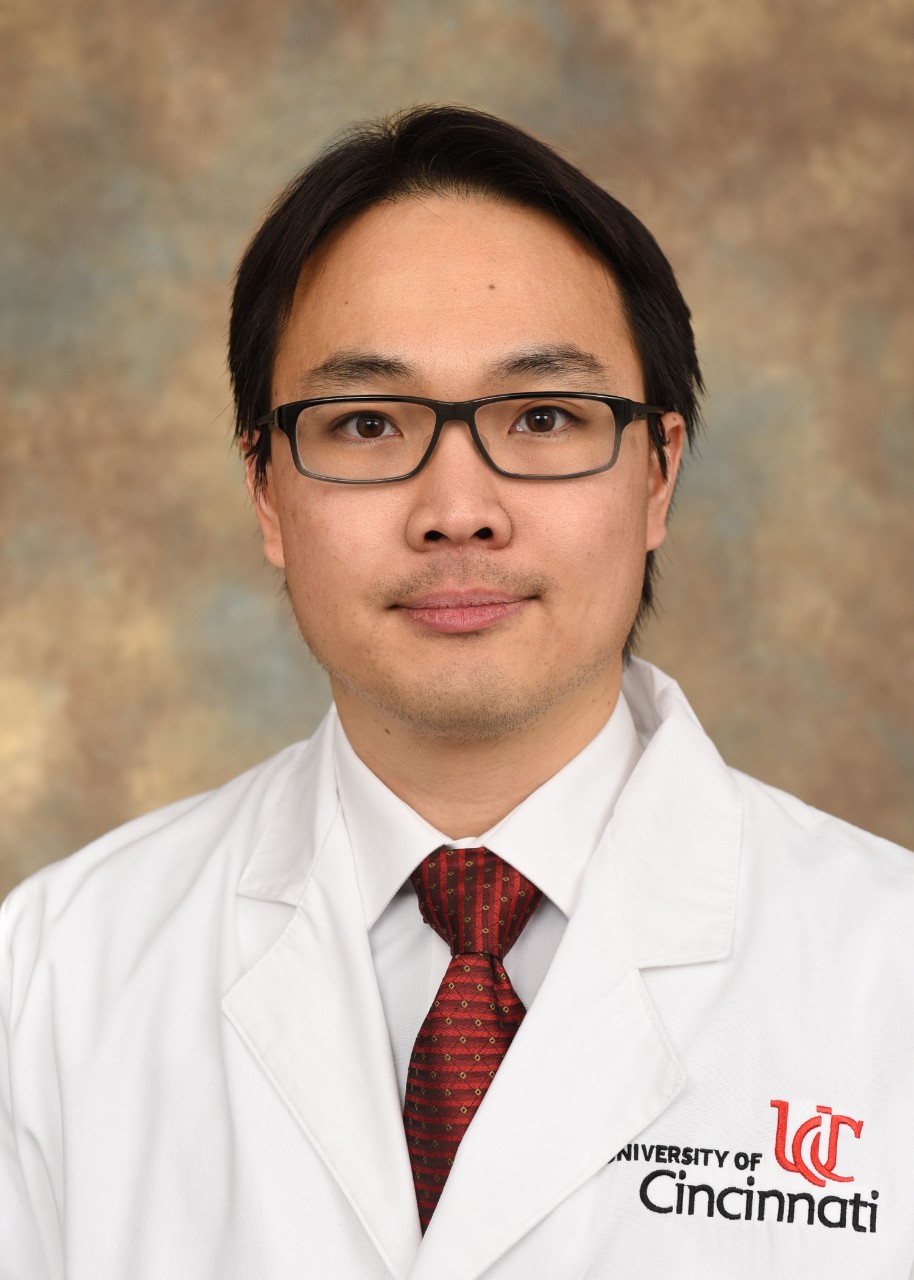
Syn Yeo, PhD, research instructor in the department of cancer biology and a member in the lab of Jun-Lin Guan, the Francis Brunning Professor and Cancer Biology Department Chair.
Both Yeo and Guan are members of the UC Cancer Center.
“Cancer immunotherapy uses a patient’s immune system against tumor cells,” Yeo says. “It has emerged as a crucial treatment strategy, resulting in stable outcomes for cancer patients. However, most breast cancers are not responsive to immunotherapy, and this remains a colossal hurdle.”
In this study, researchers found that targeting a protein called FIP200 could “overwrite” the nonresponsive nature of breast cancers to certain immunotherapies, called immune checkpoint inhibitors.
“Disruption of the protein’s functions in tumor cells could essentially turn ‘cold’, or nonresponsive, tumors into ‘hot’, or responsive, tumors, susceptible to immunotherapy,” Yeo says.
“Tumors that didn’t have this protein contained more T-cells, which is indicative of an immunologically ‘hot’ tumor. When coupled with immune checkpoint inhibitors in animal models with breast cancer, improved outcomes were observed when the protein wasn’t present.
“These findings indicate that targeting FIP200 could create a ‘hot spot’ for immunotherapy within these tumors.”
These findings expand upon previous studies by Guan’s lab that identified a tumor-promoting role of the protein in breast cancer.
“While the function of this protein in a cell-recycling process was previously identified as a culprit in breast cancer growth and progression, targeting this function did not make the tumors susceptible to immunotherapy,” Yeo adds. “This would imply that the protein has many roles in the development of breast cancer and targeting all of them simultaneously could improve treatment outcomes.
“Future studies are needed to develop therapeutic agents against this protein, to be used in combination with immunotherapy. These findings form a foundation for future clinical trials involving drugs that target the protein in breast cancers.”
Featured photo of Jun-Lin Guan, center, with members of his lab. Credit/Colleen Kelley/UC Creative + Brand
Next Lives Here
The University of Cincinnati is classified as a Research 1 institution by the Carnegie Commission and is ranked in the National Science Foundation's Top-35 public research universities. UC's graduate students and faculty investigate problems and innovate solutions with real-world impact. Next Lives Here.
Okamoto and Yeo are co-lead authors of the study. Other contributors include Mingang Hao, Mary Rose Copley and Michael Haas, all from the University of Cincinnati, and Song Chen, a former postdocorate fellow in Guan's lab who is currently at Zhengzhou University, China.
This research was funded by the National Institutes of Health (R01 CA211066, R01 HL073394 and R01 NS094144 to Guan). Researchers cite no conflict of interest.
Related Stories
UC Foundation celebrates 2026 philanthropy winners
October 23, 2026
The University of Cincinnati Foundation recognized its Outstanding Philanthropic Volunteer Award honorees at the George Rieveschl Recognition Dinner on October 22, 2026.
AI breast cancer survival model from Cancer Center could improve accuracy and personalize care
October 23, 2026
UC Cancer Center researchers, including lead author Wedad Alatebi, developed a deep learning survival model for breast cancer that combines detailed clinical and genetic information, potentially offering physicians a more accurate tool to guide treatment decisions.
UC expert explains potential impact of Pennsylvania’s new vape product law
October 22, 2026

UC professor Ashley Merianos speaks to the Pittsburgh Post-Gazette about Pennsylvania’s new vape law, youth vaping prevention, enforcement challenges and possible unintended consequences.