University Professor Balances Teaching with Life at Law School

For many years, first-year law students were not permitted to work and second-years could only work part-time. The ABA rules have since changed, but given the commitment necessary to earn a JD, understandably few law students have chosen to work full-time.
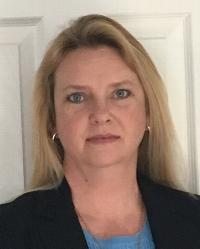
One current student, however, is doing just that. Melissa Berry has completed her first year of law school while working fulltime as a Visiting Assistant Professor of Psychology at the University of Dayton. There, she teaches forensic and social psychology at both the undergraduate and graduate levels.
Berry is no stranger to the University of Cincinnati; she earned her Ph.D. here in 1998. But her interest in law actually predates her interest in psychology. Since she was an elementary school student, Berry wanted to become an attorney. However, she recalls that in her freshman year of undergraduate studies, “They had this crazy notion of making me take a broad-based, wide-range of courses to help me be a well- rounded person!” Berry enrolled in a psychology course to fulfill her academic requirements and ended up enamored by her studies.
Prior to law school, Berry often testified as an expert witness regarding memory and eyewitness identification to inform juries about the circumstances that may lead to eyewitness errors, which is the leading cause of wrongful convictions. She also teaches a CAP course, a themed interdisciplinary program for UD undergraduates. Her chosen theme?: Preventing wrongful convictions.
Additionally, Berry also aided in the launching of the University of Dayton undergraduate chapter of the Ohio Innocence Project, known as OIP-u, for which she serves as faculty advisor. This chapter (along with other participating OIP-u campuses) holds events each semester to educate the community and raise awareness of wrongful convictions. Prior to law school, she worked with OIP Director Mark Godsey in training OIP fellows. And now Berry, herself, is an OIP fellow.
She has come to Cincinnati Law for her JD to learn “the other side,” that is, the legal side of the work that she has been doing all this time. Berry already possesses a deep, expert knowledge of the psychological side of criminal proceedings and wrongful convictions, but she seeks to gain a greater understanding of the issues by acquiring the expertise of an attorney.
It’s not easy to balance a full-time education in one city with a full-time job in another, but Berry handles the feat well. She admits that she does not “love the commute,” but is grateful for Cincinnati Law’s flex-time option, which enables her to take a manageable course load at a convenient pace.
As for the future, Berry is keeping her options open. She believes she will continue to work with the Innocence Project, but she is not yet sure in what capacity (perhaps as a psychological expert, perhaps as an attorney, perhaps both). No matter what the outcome, Berry is confident that whatever work she does in the future, she will do more effectively with her JD from Cincinnati Law.
By: Pete Mills, writer
Related Stories
President Pinto’s 2nd glow party brings first-year Bearcats together
September 20, 2026
UC President Neville Pinto and team hosted the second annual Bright Beginnings glow party for first-year students
Scholarships paved the way for one UC law student
September 14, 2026
Fall campaign story 2026 - College of Law.
From Classroom to Community: The Jones Center Expands Its Impact
September 10, 2026
The Jones Center for Race, Gender, and Social Justice is building on its legacy by focusing on the future--beyond the classroom and into the community.