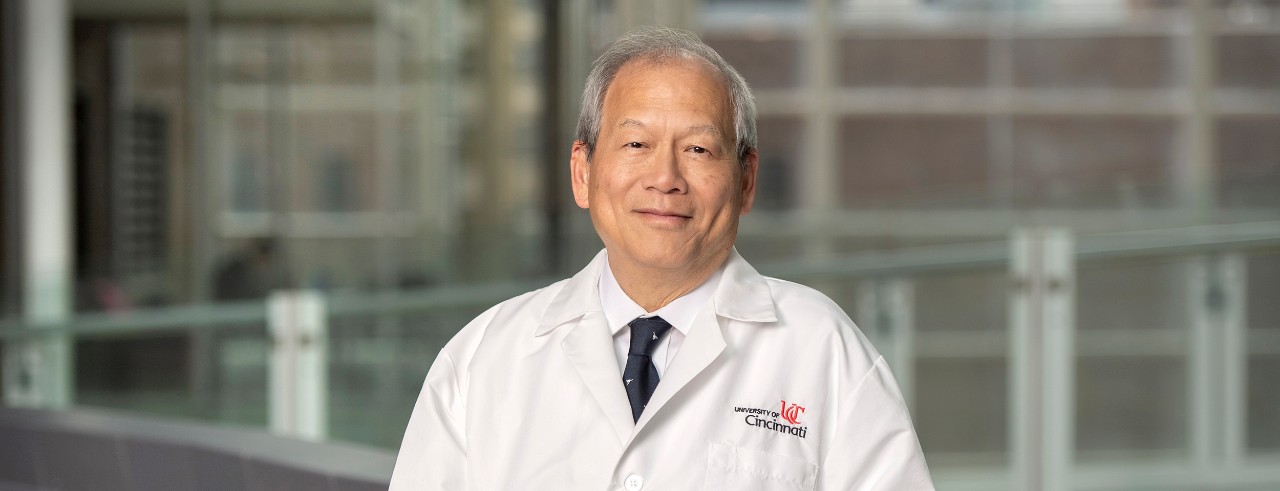
UC researchers granted $3.4 million by NIH
Patrick Tso, PhD, and team to study the gastrointestinal lymphatic system

A team of researchers at the University of Cincinnati (UC) College of Medicine have been awarded $3.4 million by the National Institutes of Health (NIH) to study the role of the gastrointestinal (GI) lymphatic system in dietary nutrient absorption and the transport of signaling molecules.
The lymphatic system is a network of vascular channels that enable the return of lymph—colorless fluid containing white blood cells that bathes the tissues and drains through the lymphatic system into the bloodstream, back to the circulatory system. In the gastrointestinal tract, the lymphatic circulation has the added function of transporting the triglyceride rich chylomicrons, various hormones and signaling molecules secreted by the cells of the gastrointestinal tract.
“Compared to other systems, cardiac or respiratory, we currently have a relatively poor understanding of the physiological significance of the GI lymphatic system, necessary for normal functioning of the GI tract and overall metabolic health,” says principal investigator Patrick Tso, PhD, professor and Mary M. Emery Chair of Pathology in the medical college’s Department of Pathology and Laboratory Medicine and director of the Cincinnati Mouse Metabolic Phenotyping Center. Yvonne Ulrich-Lai, PhD, associate professor of pharmacology and systems physiology, and Min Liu, PhD, professor of pathology and laboratory medicine, are co-principal investigators on the study.
The GI lymphatic system, Tso says, may turn out to be a critical area of study relevant to diabetes.
For example, he says that when patients undergo bariatric surgery, in most cases, their diabetes is reversed quickly, well before they start to lose weight. Ulrich-Lai, Liu and Tso believe that a disturbance of the lymphatic circulation may be involved in this very interesting clinical finding.
In this study, researchers will create a similar disruption of the drainage of the lymphatic system in an animal model to assess its impact on metabolic health.
“We hope to shed light on the mechanism involved in reversing diabetes by bariatric surgery,” says Tso.
Tso joined the Department of Pathology and Laboratory Medicine at the UC College of Medicine in 1996 as professor of pathology and an adjunct appointment in the Department of Physiology. Tso’s career there has included positions as associate director of the Obesity Research Center; director of the NIH-funded Cincinnati Mouse Metabolic Phenotyping Center and director of the Center for Lipid Research. In 2010, he received the Daniel Drake Medal, the highest honor bestowed to a faculty at the College of Medicine.
The five-year, $3.4 million, grant comes from the National Institute of Diabetes and Digestive and Kidney Diseases (NIDDK) (1RO1DK119135-01).
The investigators cite no conflicts of interest.
Related Stories
President Pinto Announces UC's new Vice President for Research
June 16, 2026
President Neville Pinto announces appointment of Dr. Loren Wold as UC's next Vice President for Research.
Biggest crowd for the biggest graduation
May 1, 2026
The University of Cincinnati celebrates a record Spring 2026 commencement, honoring 7,800+ graduates with ceremonies at Fifth Third Arena and Nippert Stadium.
How to take a gap year the right way
April 27, 2026

Cleveland Magazine spoke with Teneisha Dyer, assistant dean for student recruitment and marketing at the UC College of Education, Criminal Justice, Human Services and Information Technology, for a story about high school students considering taking a gap year after graduation.