Co-op at nuclear energy lab exceeds UC student's expectations
Not every student can say they learned to snowboard and visited the original nuclear reactor on their co-op


Sean Kane, electrical engineering student, explores career paths at INL. Photo/Provided
Third-year University of Cincinnati electrical engineering student Sean Kane hit all three items on his cooperative education wish list when he accepted an offer to work at the Idaho National Laboratory in Spring 2017.
The Cleveland native was placed in the Material and Fuels Complex (MFC) at INL, a site that fulfilled his top three co-op goals:
- Research in alternative energy.
- Experience at a research-first facility.
- Travel to a new locale.
Eager to explore how his electrical engineering studies could apply to nuclear research, Kane was energized by the lab’s collaborative culture. He most enjoyed meeting different researchers and learning practical applications of their specific areas of expertise.
“You ask a question and then you have three more. It never ends, but it was a great learning experience,” Kane explained.
Kane was assigned to the facilities branch of the MFC, where engineers manage power resources and ensure that all research equipment functions optimally. His duties included creating power distribution models and testing equipment for safety and performance.
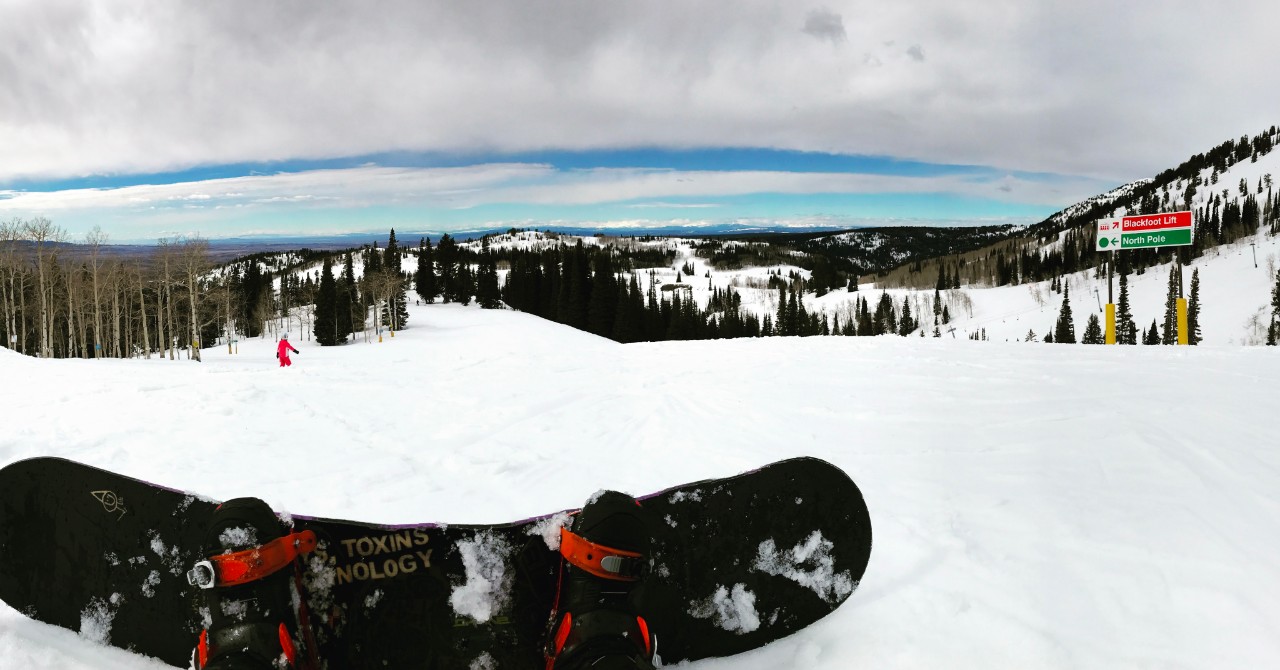
Work at the U.S. Department of Energy’s leading center for nuclear research and development demands intense focus. But INL’s rigorous requirements and intentionally remote location did not limit Kane. INL’s four-day work week allowed him to use long weekends to visit stunning resorts like Jackson Hole, Big Sky and Grand Targhee, where he learned to snowboard and ski.
“It was definitely eye-opening to see what I could do and where I could be in the future,” Kane stated.
Kane is not afraid of a little exploration; he entered the college undecided on his engineering focus. The UC College of Engineering and Applied Science’s (CEAS) Freshman Engineering Program gave him time to learn about career paths and research opportunities. He said the decision on electrical engineering was never an “’ah-ha moment’ as much as there was just a gradual build.”
Kane continues to build toward a bright future. He plans to graduate from the University of Cincinnati with both a Bachelor and Master of Science in electrical engineering as part of the CEAS Accelerated Engineering Degree (ACCEND) program’s five-year plan.
His co-op position at INL is now available to future Bearcats, thanks to the CEAS alumni network. Kane was connected with the laboratory by his co-op advisor, assistant professor Chris Tonnis. She coordinated the co-op position with the MFC’s associate lab director, Ron Crone, a CEAS alumnus who graduated in 1989 with a degree in nuclear engineering.
Current CEAS students who would like help finding a co-op that completes their wish list can contact the Division of Experience-Based & Career Education at (513) 556-2667 or careereducation@uc.edu.
Future engineering students interested in learning more about UC’s College of Engineering and Applied Science can contact undergraduate admissions at (513) 556-5417 or ceas.ug@uc.edu.
Featured image at top: Kane enjoying time on the slopes. Photo/Provided.
Related Stories
UC climbs to No. 3 in the nation for co-ops and internships in 2027 U.S. News rankings
September 22, 2026
In U.S. News & World Report’s 2027 Best Colleges rankings, the University of Cincinnati rises to No. 3 in the nation for co-ops and internships — No. 1 among public institutions — and posts gains in undergraduate business, computer science and psychology.
'Discovery, mentorship, momentum': UC College of Medicine's graduate programs celebrate year of success
September 22, 2026
From new mentorship honors to a growing research pipeline, see how the University of Cincinnati College of Medicine's graduate programs made this a standout year.
Tina Cheng, MD, receives American Academy of Pediatrics’ highest honor
September 22, 2026
UC Pediatrics chair Tina Cheng, MD, has received the American Academy of Pediatrics' highest honor for her decades of advancing child health.