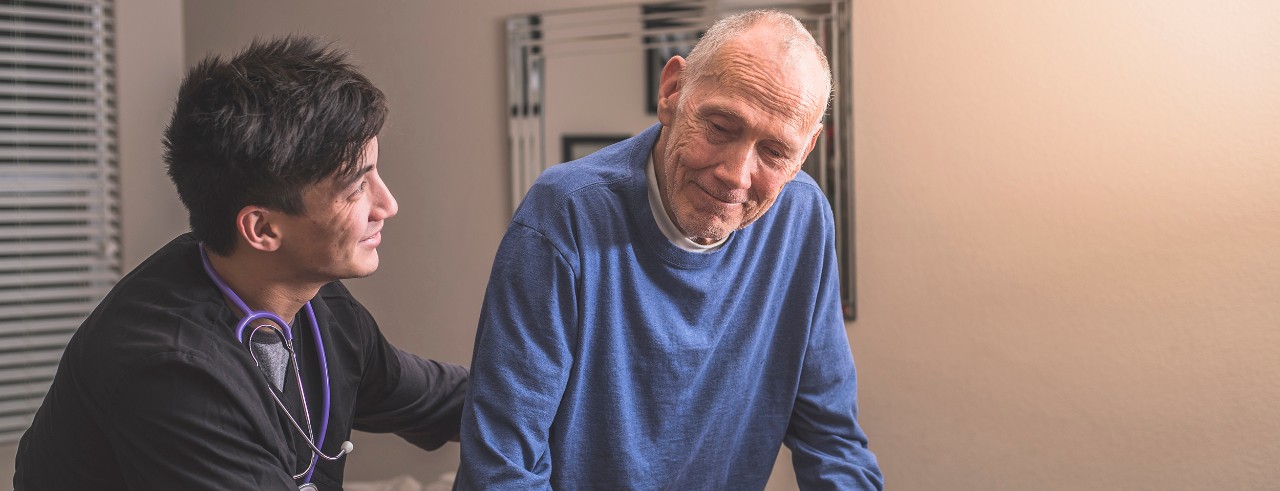
CCTST hosts virtual meeting on aging January 17
All welcome to attend

The Center for Clinical and Translational Science and Training (CCTST) Collaboration Network is hosting a virtual meeting on aging for educators, researchers and healthcare providers across UC, Children’s Hospital, UC Health, the Cincinnati VA, and the Greater Cincinnati community who are interested in the field of aging. The meeting will be held Thursday, January 17 from 9-11 a.m., and will be moderated by Jack Kues, PhD, director of the CCTST Center for Improvement Science.
All are invited to visit one of several convenient locations around the UC campus and other partner institutions where people can meet and participate remotely via WebEx to explore the CCTST’s institutional and community-wide expertise and capacity for research, education and community programs on aging.
To join one of the WebEx-enabled meeting locations, or to join us from your home or office, please visit our event website at: https://cctst.uc.edu/programs/cis/collaboration
Related Stories
6 ways starting a GLP-1 medication could affect your emotions
May 20, 2026

When patients first start taking a glucagon-like peptide-1 (GLP-1) medication, they probably expect to feel full. But they might not anticipate how it can influence their emotions. The medications act on the stomach and the brain, said Malti Vij, MD, a University of Cincinnati adjunct associate professor in the College of Medicine's Department of Internal Medicine and a diplomate of the American Board of Obesity Medicine.
UC researchers recruit older adults for extreme heat health study
May 20, 2026
The University of Cincinnati’s Center for Collaboration on Climate & Community for Health (C4H) is recruiting older adults to participate in a study tracking their health during periods of extreme summer heat.
$15 million bequest supports endowed chair at UC College of Medicine
May 19, 2026
As a student and resident at the University of Cincinnati College of Medicine, George G. Bemis, Jr., MD, Med ’64, saw firsthand that medicine was more than a profession for those teaching and leading him. Inspired by their sense of calling, he knew he wanted to pursue the same path.