
UC project a finalist for Fast Company's World Changing Ideas Awards
AntiOD was recognized in the Health and Wellness category by the business publication

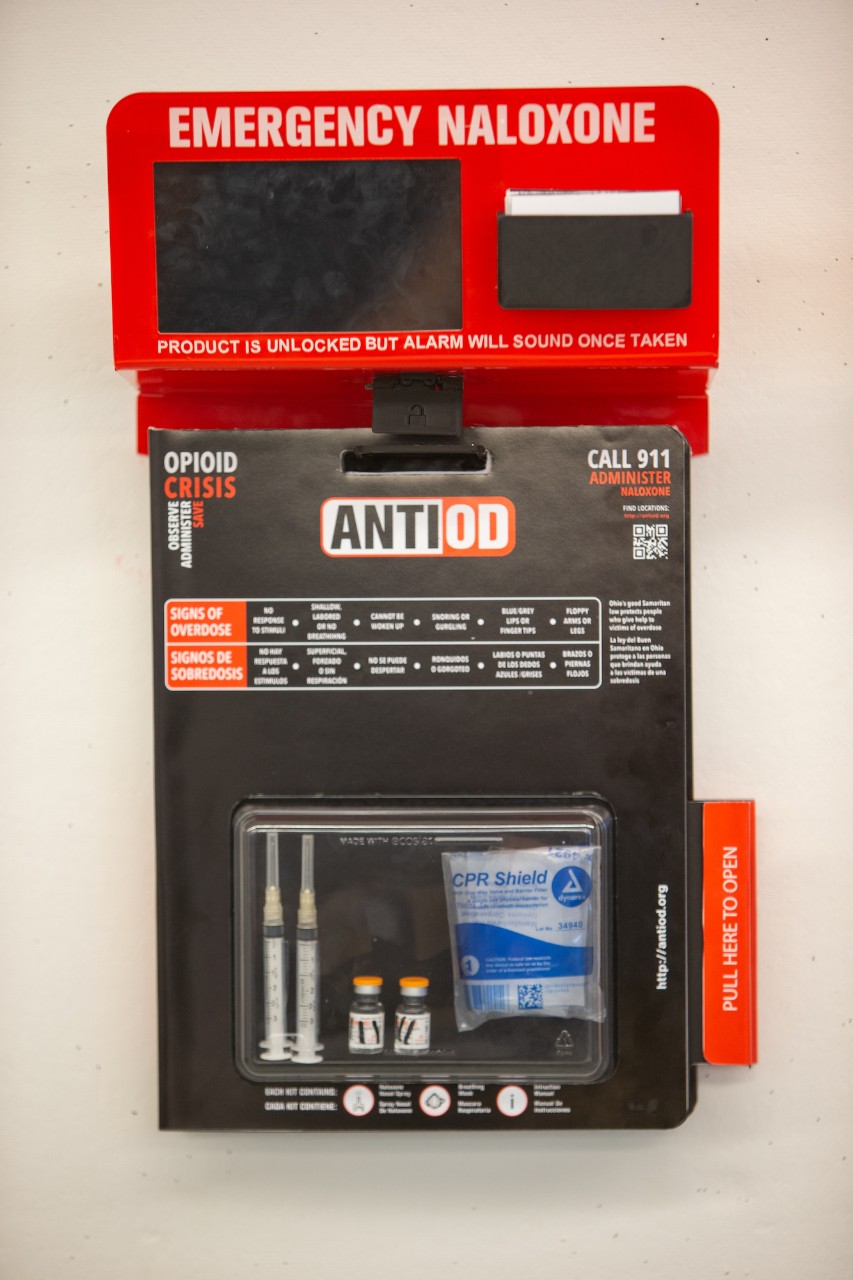
A University of Cincinnati design project aimed at making opioid overdose reversal medication more accessible has been recognized by Fast Company.
AntiOD was named a finalist in the Health and Wellness category for the publication's World Changing Ideas Awards. The project was created by Claudia Rebola, assistant professor in UC's College of Design, Architecture, Art, and Planning, and a team of DAAP graduate students. They developed a naloxone-dispensing smart device to help combat the opioid epidemic. The dispensers are expected to be installed across Cincinnati this spring.
Fast Company‘s third annual World Changing Ideas Awards "celebrates businesses, policies and nonprofits that are poised help shift society to a more sustainable and equitable future." The competition drew nearly 2,000 submissions across 17 categories. Fast Company editors and reporters created lists of honorable mentions and finalists and their panel of judges picked winners in each category.
Read more online or in the May print edition of the magazine.
More news media coverage
- Cincy Magazine: Higher Learning on the Rise: Guide to Colleges and Universities 2019
- Local 12: AntiOD: Naloxone kits to be available throughout downtown Cincinnati
- Cincinnati Enquirer: Naloxone boxes to be placed in Downtown Cincinnati in new bid to stem overdose deaths
- WLWT: DAAP professor's device makes it easier to access, use Narcan
- WVXU: Some Cincinnati buildings to get anti-overdose kits
- Spectrum News 1: UC students create lifesaving device for opioid overdose victims
- Medical Xpress: Design team creates a naloxone dispenser
- News-Medical: UC team designs new naloxone-dispensing smart device
- Bioengineer: University of Cincinnati design team creates a naloxone dispenser
Next Lives Here
The University of Cincinnati is classified as a Research 1 institution by the Carnegie Commission and is ranked in the National Science Foundation's Top-35 public research universities. UC's graduate students and faculty investigate problems and innovate solutions with real-world impact. Next Lives Here.
Related Stories
UC Blue Ash Career Champions make career development part of the everyday experience
October 21, 2026
The University of Cincinnati Blue Ash College is bringing career development into students' everyday experiences through its Career Champions program.
Still the top ‘cat
October 20, 2026

The University of Cincinnati Bearcat mascot was voted Cincinnati’s favorite mascot in a Cincinnati Enquirer reader poll, earning 45.1% of the vote and topping other local favorites.
Researchers test gene therapy as less invasive treatment for hydrocephalus
October 20, 2026

Researchers at the University of Cincinnati College of Medicine say an experimental gene therapy could eventually lead to a less invasive treatment for hydrocephalus, a condition in which excess fluid accumulates in the brain. The early-stage study, led by Agnes (Yu) Luo, PhD, professor and vice chair for research, was published in the journal Fluids and Barriers of the CNS. Yahoo! News recently featured it.