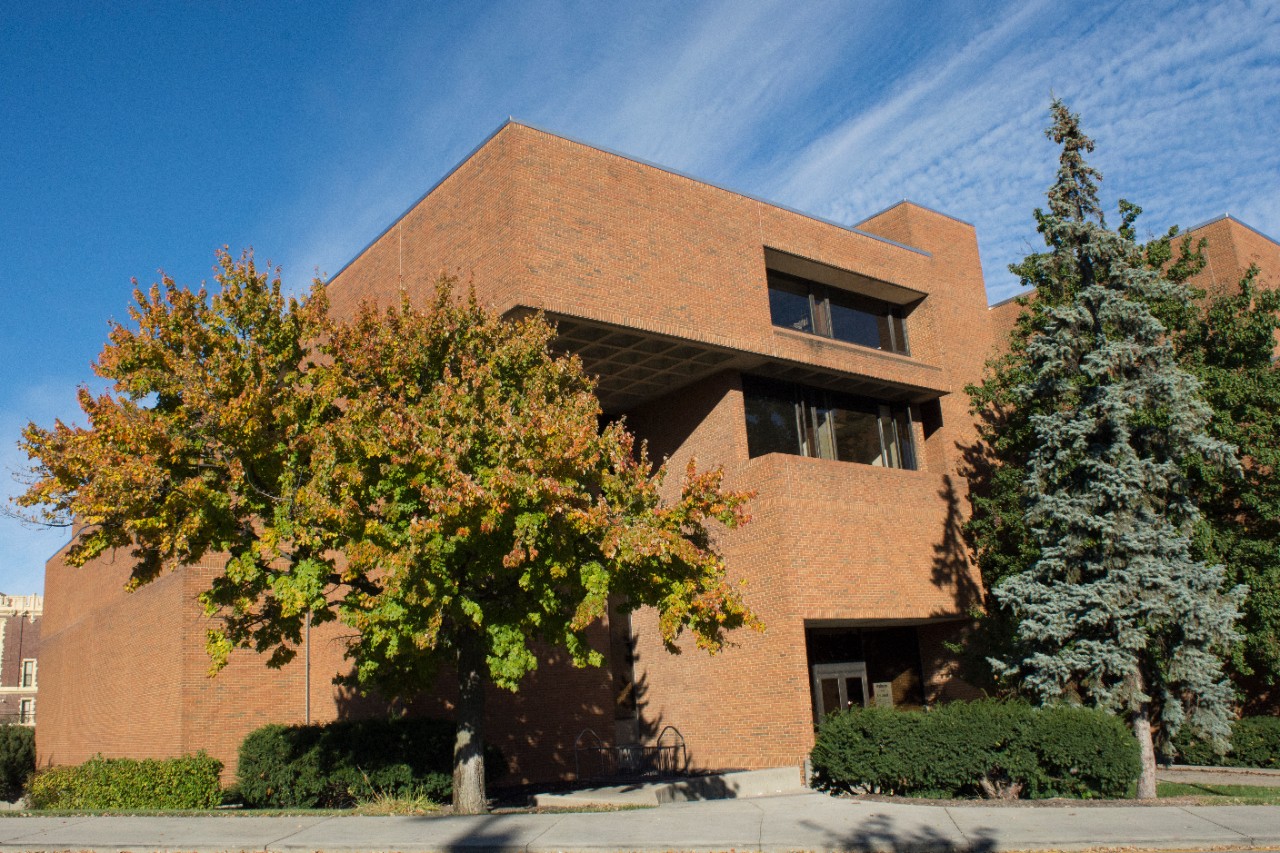
UC College of Law program examines constitutional conflict, Supreme Court’s role

Event Information (passed)
Melissa Murray, professor of law at New York University School of Law , will discuss constitutional conflict and the U.S. Supreme Court’s role in resolving such conflict in her talk “Looking Ahead: Constitutional Conflict and the Court.” This event will be held at 12:15 p.m., Tuesday, Sept. 17, in Room 114 at the University of Cincinnati College of Law. CLE: 1
Murray’s presentation will include discussion about the most recent court term, including the decisions in the Rucho v. Common Cause and the census litigation, as well as broader themes, including stare decisis and the court’s legitimacy. She will also look ahead to the upcoming Supreme Court term to identify potential areas of conflict that are likely to arise.
About the Discussant

Prof. Melissa Murray
Melissa Murray is a professor of law at New York University School of Law, where she teaches constitutional law, family law, criminal law, and reproductive rights and justice. Murray’s research interests focus on the legal regulation of sex and sexuality. Her writing has appeared in a range of legal and lay publications, including the Harvard Law Review, the Yale Law Journal, the New York Times, and the Nation. Prior to joining the New York University School of Law faculty, Murray was the Alexander F. and May T. Morrison Professor of Law at the University of California, Berkeley, where she received the law school’s Rutter Award for Teaching Distinction, the Association of American Law School’s Derrick A. Bell Award, and, from March 2016 to June 2017, served as interim dean.
Murray is a graduate of the University of Virginia, where she was a Jefferson Scholar and an Echols Scholar, and Yale Law School, where she was notes development editor of the Yale Law Journal. Following law school, she clerked for Sonia Sotomayor, then a judge of the U.S. Court of Appeals for the Second Circuit, and Stefan Underhill of the U.S. District Court for the District of Connecticut. She is a member of the American Law Institute and New York bar.
This lecture is made possible through the generous support of the Alfred B. Katz Constitution Day Fund in memory of Alfred B. Katz ’35
Tags
Related Stories
President Pinto’s 2nd glow party brings first-year Bearcats together
September 20, 2026
UC President Neville Pinto and team hosted the second annual Bright Beginnings glow party for first-year students
UC Blue Ash to host two fall open houses
September 18, 2026
The University of Cincinnati Blue Ash College will host its fall open houses on Thursday, Oct. 15 and Thursday, Nov. 5. Both events will be from 5-7 p.m. in Muntz Hall on the UC Blue Ash campus.
This September, give blood for local patients fighting cancer and sickle cell disease
September 18, 2026
September is dedicated to raising awareness of several serious diseases, including sickle cell disease and childhood cancer. For patients in Greater Cincinnati fighting these diseases, awareness is only part of the equation. They also need lifesaving blood products.