WLW: UC geologist explains giant floating rock in Pacific
Thomas Algeo tells "Eddie and Rocky" the pumice island will disappear over time

"Eddie and Rocky" on 700-WLW spoke to University of Cincinnati geologist Thomas Algeo about the discovery this month of a giant island of rock floating in the Pacific Ocean off Australia.
A couple sailing in the South Pacific reported finding an island of pumice the size of Manhattan floating off Tonga, according to CNN.

UC geologist Thomas Algeo. Photo/Joseph Fuqua II/UC Creative Services
Algeo, a professor of geology in UC's McMicken College of Art and Sciences, said the island was formed from a volcanic eruption deep underwater.
"The rock floats because it's full of air bubbles," Algeo told show hosts Eddie Fingers and Rocky Boiman. "The air bubbles form in the lava. A pumice rock can consist of up to 90 percent air bubbles. That allows it to float. It's actually less dense than water."
News accounts suggested the pumice island could help the imperiled Great Barrier Reef. But Algeo said any benefits would be short lived.
"It might have a very positive short-term influence," he said. "A lot of marine organisms can latch onto these pumice fragments. You might repopulate some corals in the Great Barrier Reef from pumice floating in. But the main stresses on the Great Barrier Reef are much greater than that."
Algeo said half of the reef has died because of recent warming of ocean currents.
As for the pumice island? Algeo said once the gas escapes from the rock, the pumice eventually will sink to the ocean floor.
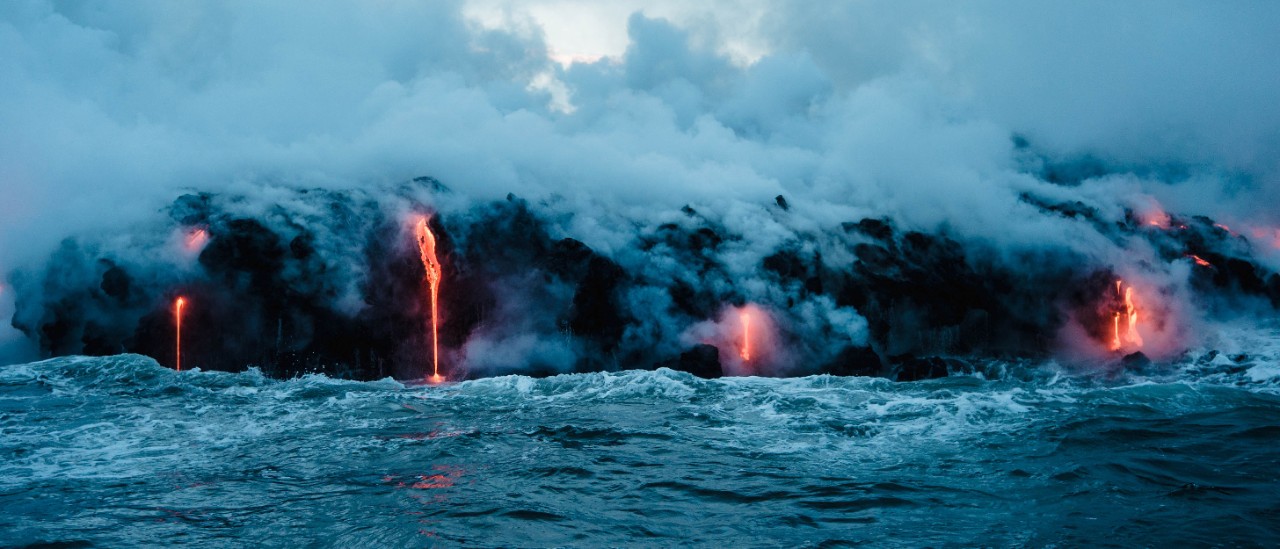
Featured image at top: Lava from an eruption pours into the ocean. Photo/Buzz Andersen/Unsplash
Related Stories
UC climbs to No. 3 in the nation for co-ops and internships in 2027 U.S. News rankings
September 22, 2026
In U.S. News & World Report’s 2027 Best Colleges rankings, the University of Cincinnati rises to No. 3 in the nation for co-ops and internships — No. 1 among public institutions — and posts gains in undergraduate business, computer science and psychology.
UC expert explains geology of Mammoth Cave
September 21, 2026

UC Associate Professor Dylan Ward and UC geosciences graduate Rachel Bosch joins an episode of OutSCIder Classroom to talk about weathering in caves found in places such as Mammoth Cave National Park.
AI is going to change all our lives
September 21, 2026

UC College of Arts and Sciences Assistant Professor Kelly Merrill Jr. tells the Columbus Dispatch that AI is becoming engrained in every aspect of health care.