
UC, Greater Cincinnati community runs in remembrance
Fifth annual 9/11 Stair Run at University of Cincinnati ensures that we never forget

Most Americans old enough to remember the events of Sept. 11, 2001, can still vividly recall what they were doing when they heard the news that our country had been attacked. But today, the vast majority of college students have little to no recollection of that day — in fact, some had not yet been born.
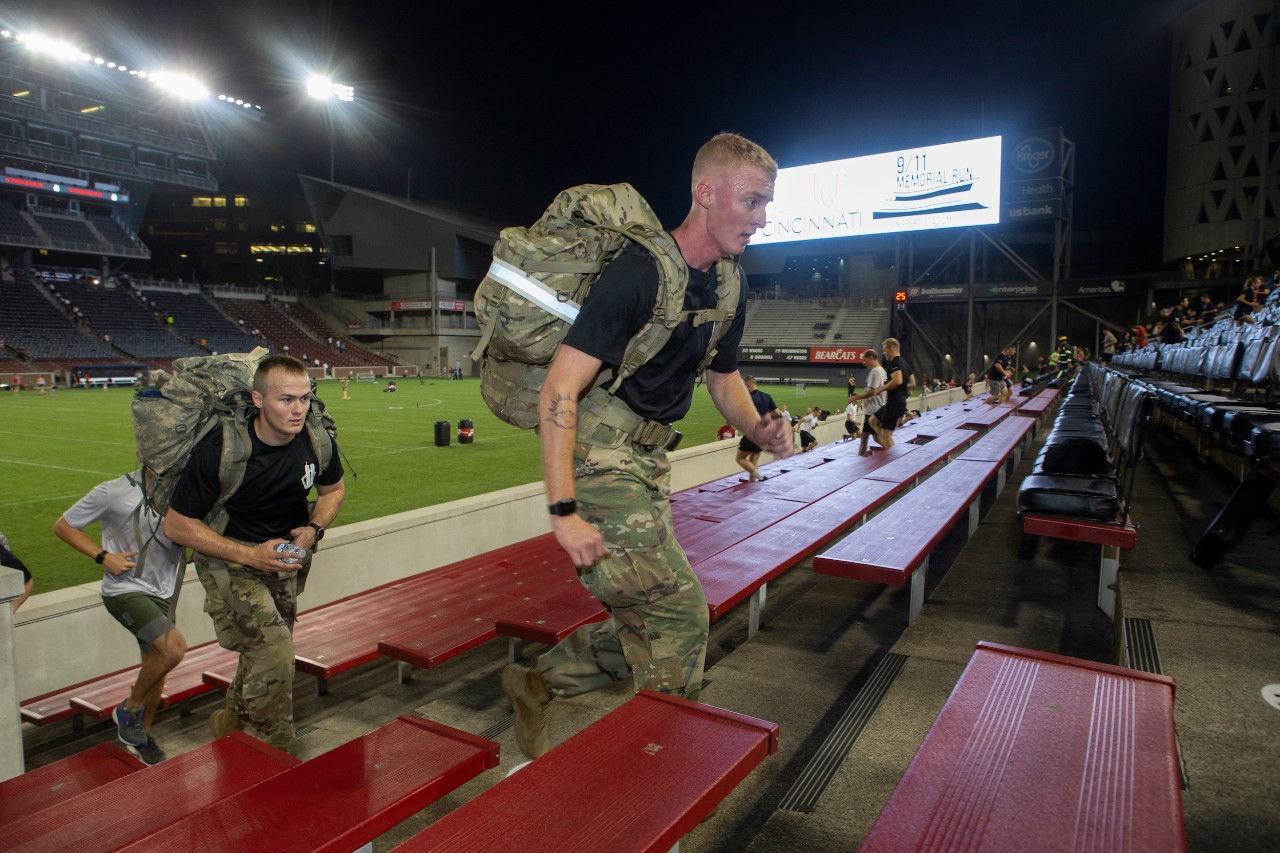
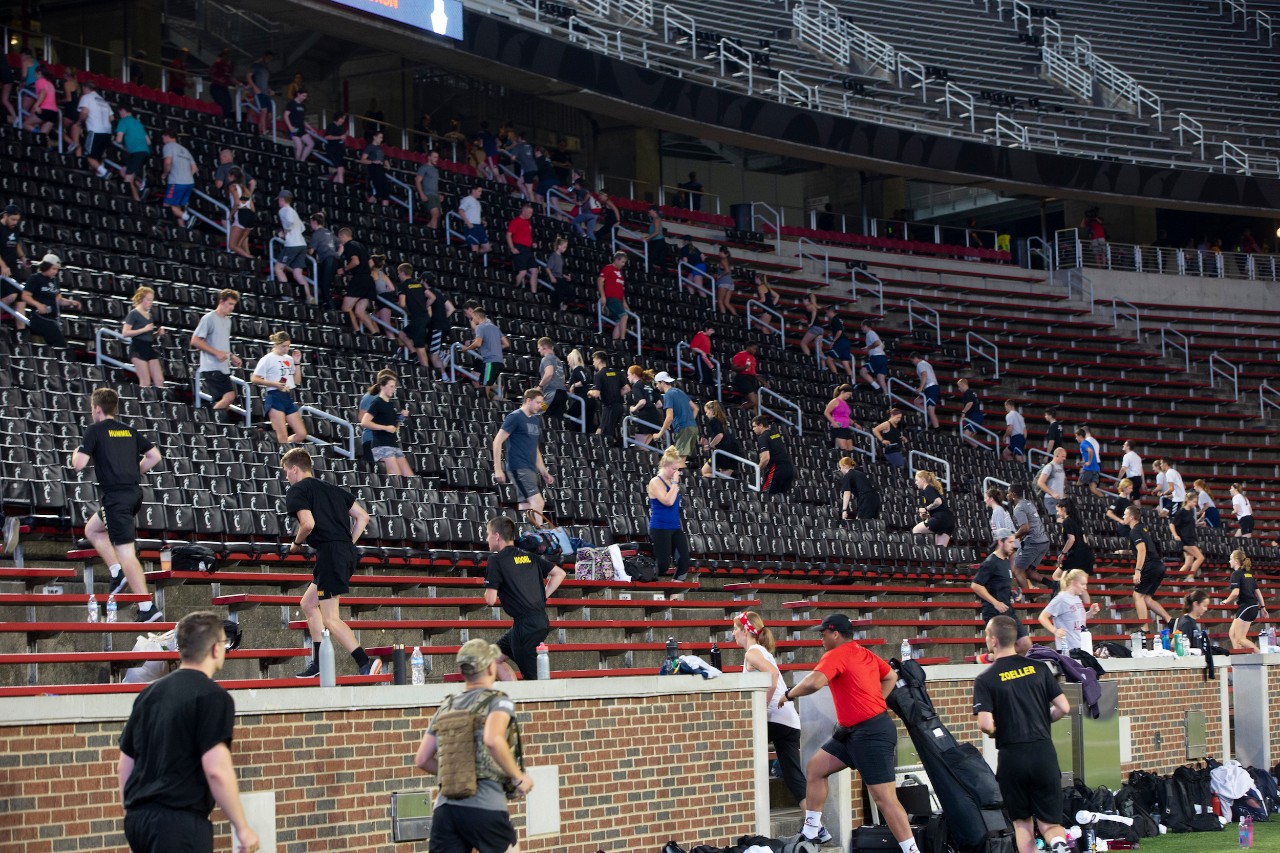
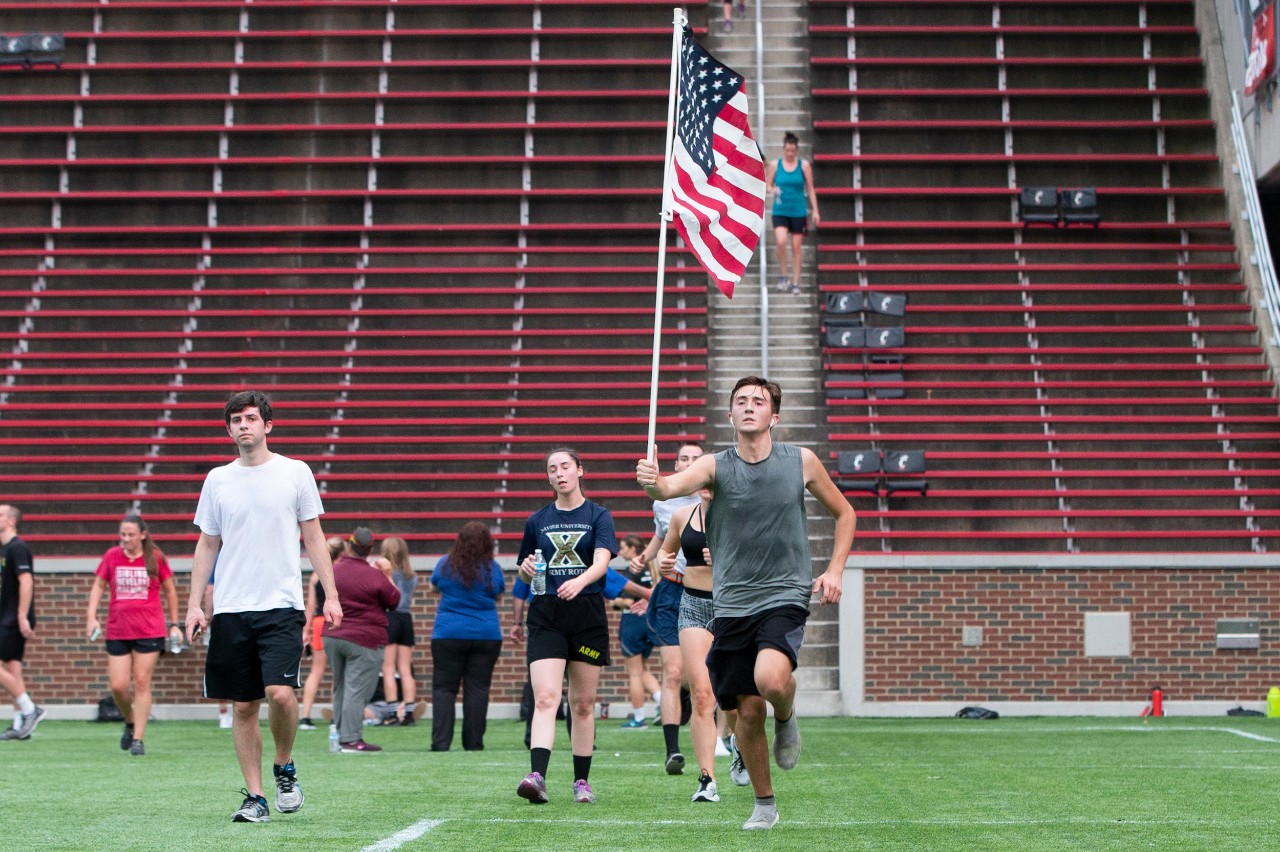
Since 2015, the University of Cincinnati Office of Veterans Programs & Services has helped ensure that the memories of those who lost their lives in the 9/11 terrorist attacks — as well as the first responders who gave their own lives trying to save others — are not forgotten. Now in its fifth year, the annual 9/11 Stair Run ensures that even those too young to recall that day never forget what happened.
The annual stair run — representing the 2,071 steps in the World Trade Center towers — has grown each year. Some runners are first responders themselves, and take on the challenge of running the stairs in their full personal protective equipment, oxygen tank and all. This year's event drew officers from Northern Kentucky University and ROTC cadets from Xavier University, as well as the usual UC students, faculty, staff and alumni.
Credit for all images below: Joseph Fuqua II/UC Creative Services




Related Stories
UC Foundation celebrates 2026 philanthropy winners
October 23, 2026
The University of Cincinnati Foundation recognized its Outstanding Philanthropic Volunteer Award honorees at the George Rieveschl Recognition Dinner on October 22, 2026.
AI breast cancer survival model from Cancer Center could improve accuracy and personalize care
October 23, 2026
UC Cancer Center researchers, including lead author Wedad Alatebi, developed a deep learning survival model for breast cancer that combines detailed clinical and genetic information, potentially offering physicians a more accurate tool to guide treatment decisions.
UC aerospace engineer leads global computational fluid dynamics taskforce
October 21, 2026
The American Institute of Aeronautics and Astronautics' CFD 2030 Integration Committee has announced the formation of the Computational Fluid Dynamics (CFD) Vision 2045 Team, a multi-institution working group tasked with defining where the field of computational fluid dynamics should be by 2045 to align with the changing and evolving needs of the aerospace industry. The University of Cincinnati's Prashant Khare, Bradley Jones professor and head of the Department of Aerospace Engineering, is leading this specialized group.