Cincinnati Enquirer: The Long Hard Road, Part 3
UC medical students eye underserved communities

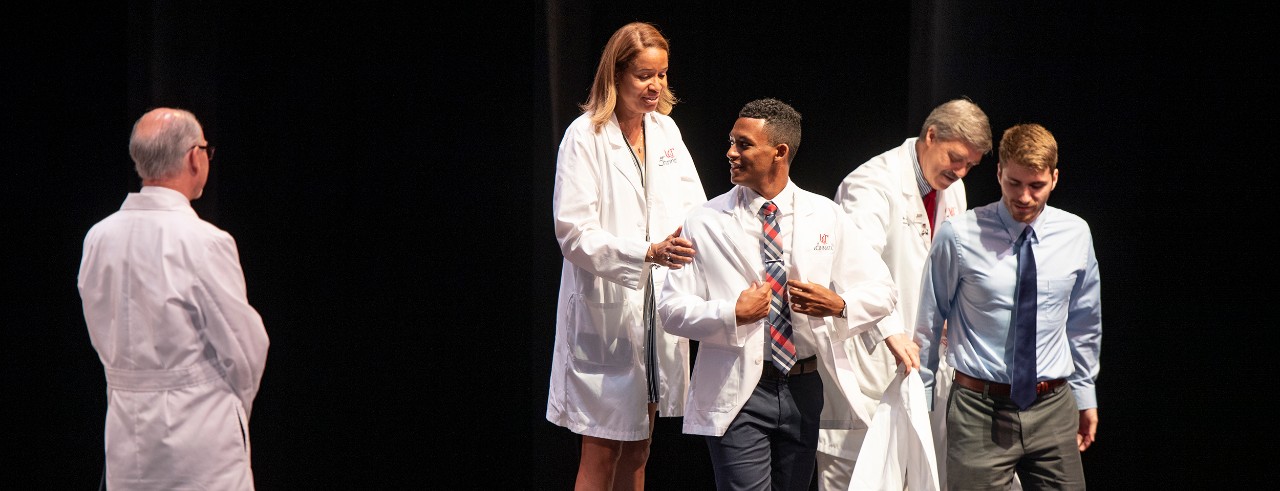
The Cincinnati Enquirer devoted a special section to examining poverty in the Tristate and the inability of residents to achieve upward economic mobility. Part of the section looked at medicine and how while gender equality has improved in medical education, economic diversity lags. Students of color still face an upheld battle in attending medical school. Their presence is crucial in helping to fuel the pipeline for physicians of color serving communities. Three medical students at the University of Cincinnati (UC) College of Medicine—Fernando Blank, Adam Butler and Halimat Olaniyan—shared their thoughts about serving underserved communities. Students of color represented 23 percent of the 185 new medical students at UC College of Medicine, the largest share ever in the school’s history.
Read the special section online.
Learn more about this year diverse class of medical students.
Related Stories
Imaging reveals how a tumor-fighting drug triggers cellular breakdown
August 24, 2026

Optics trade publication SPIE highlighted research led by the University of Cincinnati's Jiajie Diao, PhD, published in Biophotonics Discovery that demonstrated how super-resolution microscopy can track how a drug alters several important structures within cancer cells.
A new year, a shared purpose: President Pinto welcomes Bearcats to UC’s 208th fall
August 24, 2026
President Neville G. Pinto welcomes students, faculty and staff back to UC's 208th academic year.
Back to School 2026: UC remains a destination campus
August 24, 2026
The University of Cincinnati welcomes its largest first-year class and a record share of first-generation students for fall 2026, reinforced by affordability initiatives, co-op opportunities and new academic offerings across all campuses.