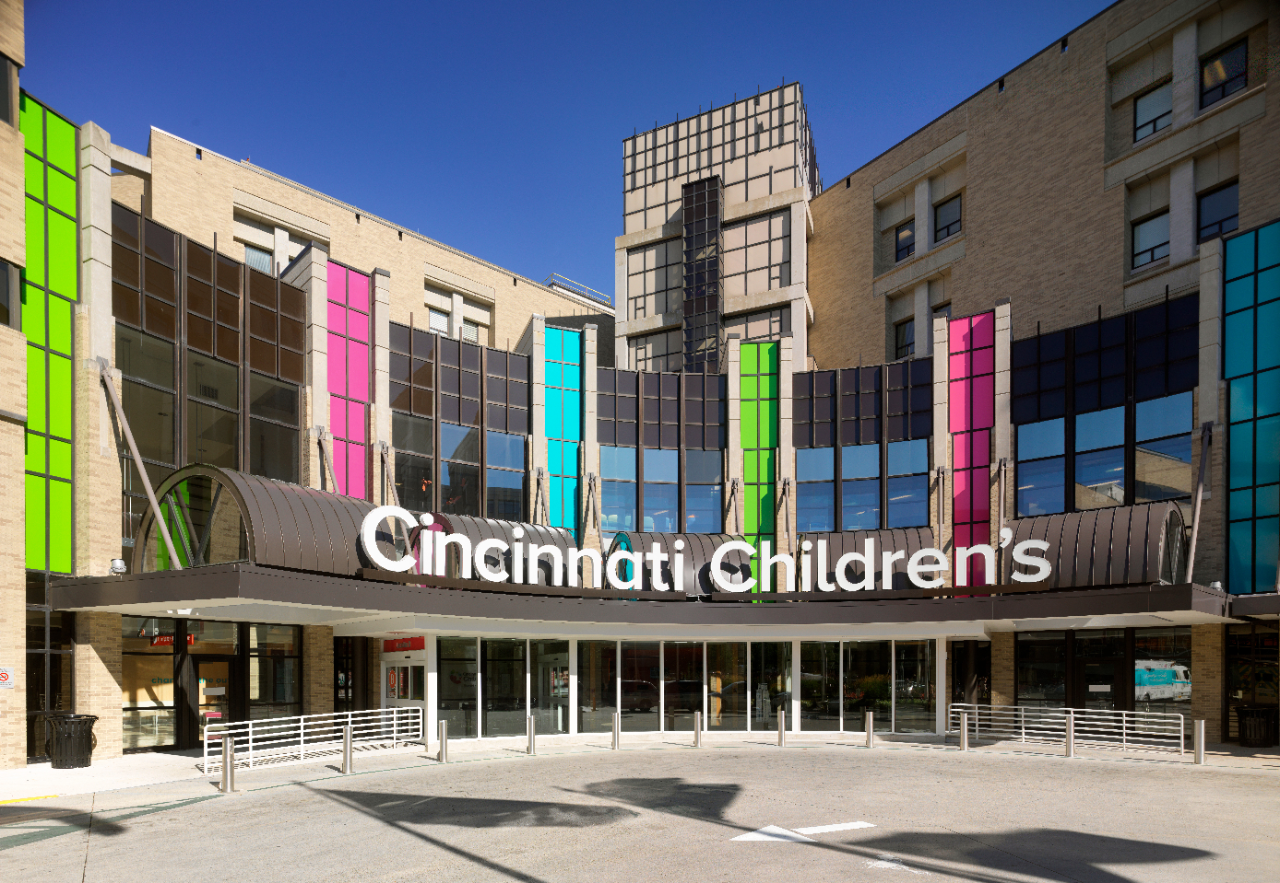
Cincinnati Business Courier: Cincinnati Children’s lands third largest grant ever
UC faculty partner with Cincinnati Children's

Cincinnati Business Courier reports that Cincinnati Children’s has landed $28 million in federal funding – the hospital's third-largest single grant ever – to establish a data management and coordinating center for an agency that oversees researchers seeking cures for hundreds of rare diseases.
The five-year grant from the National Center for Advancing Translational Sciences, one of the National Institutes of Health, will fund a coordinating center to facilitate studies involving thousands of scientists across the United States and 22 other nations.
The center based at the hospital in Avondale will collect, organize, share and analyze big data about rare diseases that are often disabling or fatal. The data management and coordinating center will be led by three senior Children’s scientists and University of Cincinnati College of Medicine faculty members. They include Eileen King and Dr. Maurizio Macaluso, both professors in the UC Department of Pediatrics, and Peter White, professor and chair of the UC Department of Biomedical Informatics.
Read the Business Courier Story online
Learn more about how University of Cincinnati faculty will also support this work.
Photo courtesy of Cincinnati Children's
Related Stories
Imaging reveals how a tumor-fighting drug triggers cellular breakdown
August 24, 2026

Optics trade publication SPIE highlighted research led by the University of Cincinnati's Jiajie Diao, PhD, published in Biophotonics Discovery that demonstrated how super-resolution microscopy can track how a drug alters several important structures within cancer cells.
A new year, a shared purpose: President Pinto welcomes Bearcats to UC’s 208th fall
August 24, 2026
President Neville G. Pinto welcomes students, faculty and staff back to UC's 208th academic year.
Back to School 2026: UC remains a destination campus
August 24, 2026
The University of Cincinnati welcomes its largest first-year class and a record share of first-generation students for fall 2026, reinforced by affordability initiatives, co-op opportunities and new academic offerings across all campuses.