
Medill Reports: Glaciers are like global thermometers
UC geology professor Thomas Lowell explains his glacier research to a national climate conference

The world's glaciers grow and retreat in a synchronous way, according to University of CIncinnati geology professor Thomas Lowell, who spoke at a recent climate conference.
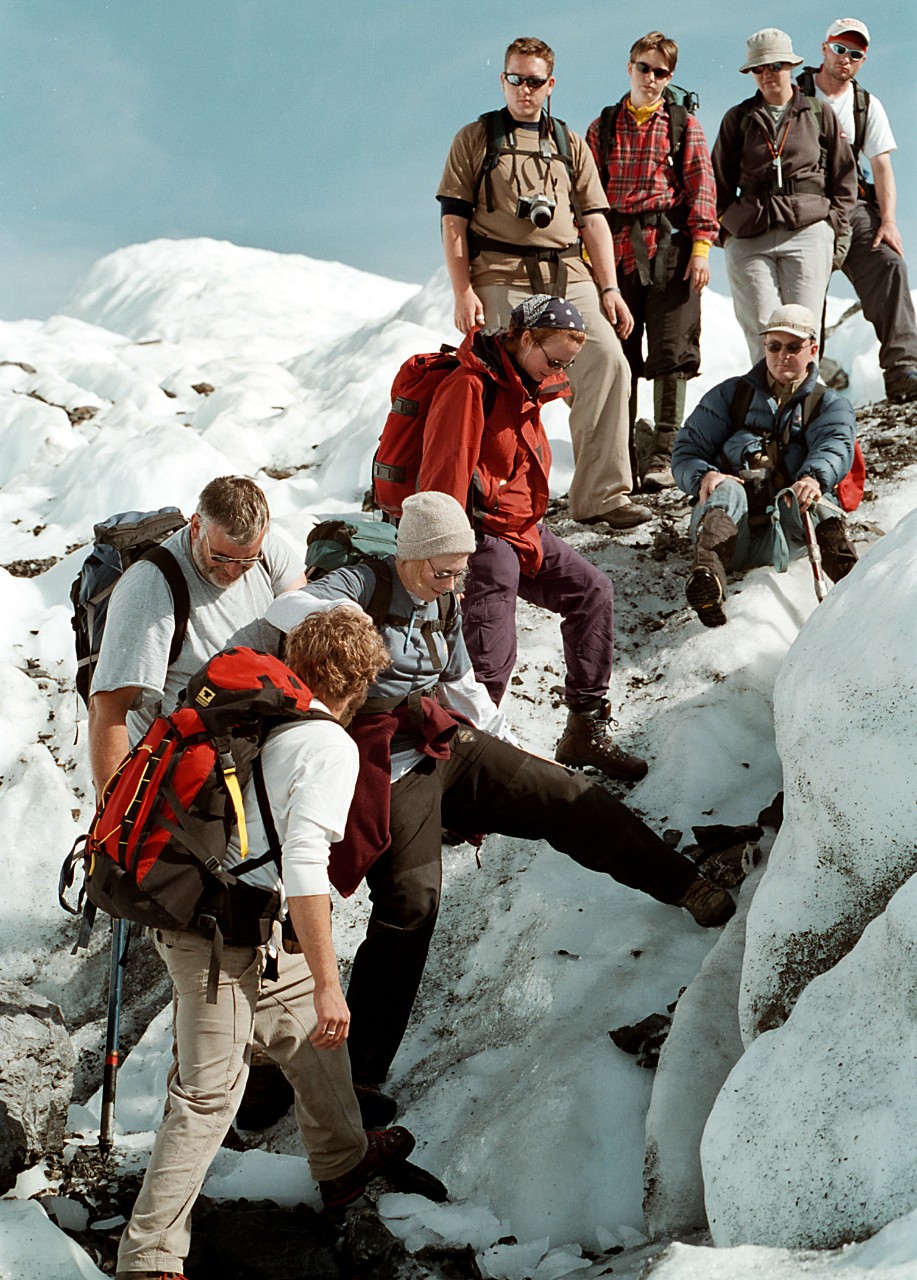
UC geology students explore a glacier in Alaska in 2002. Photo/Colleen Kelley/UC Creative Services
Lowell, a professor in UC's McMicken College of Arts and Sciences, addressed the Comer Climate Conference in Wisconsin about his work studying glaciers around the world.
He told Medill Reports Chicago the global retreat of the world's glaciers from climate change will lead to observable sea level rise.
"I'm interested in past climate changes and their interactions with glaciers," Lowell said.
"Glaciers are fun things to play on and fun things to visit. But they're also a sensitive indicator of climate," he said. "Glaciers are very sensitive to change so they're the canary in the coalmine."
Lowell has taken his students on field trips to places like Alaska and Iceland to study glaciers.
"I did an exercise in Iceland where we looked at glaciers and then students were told to look for where the glacier was the year they were born," he said. "Then I'd have them walk to see how the glacier changed in their lifetime."
Featured image at top: Harbor seals rest on ice floes calved off the nearby Aialik Glacier in Alaska. Photo/Michael Miller
Become a Bearcat
Apply online or get more information about undergraduate enrollment by calling 513-556-1100. Learn more about UC's many undergraduate and graduate programs.
UC Magazine
Read about a UC Geology student trip to Alaska to study glaciers in UC Magazine.
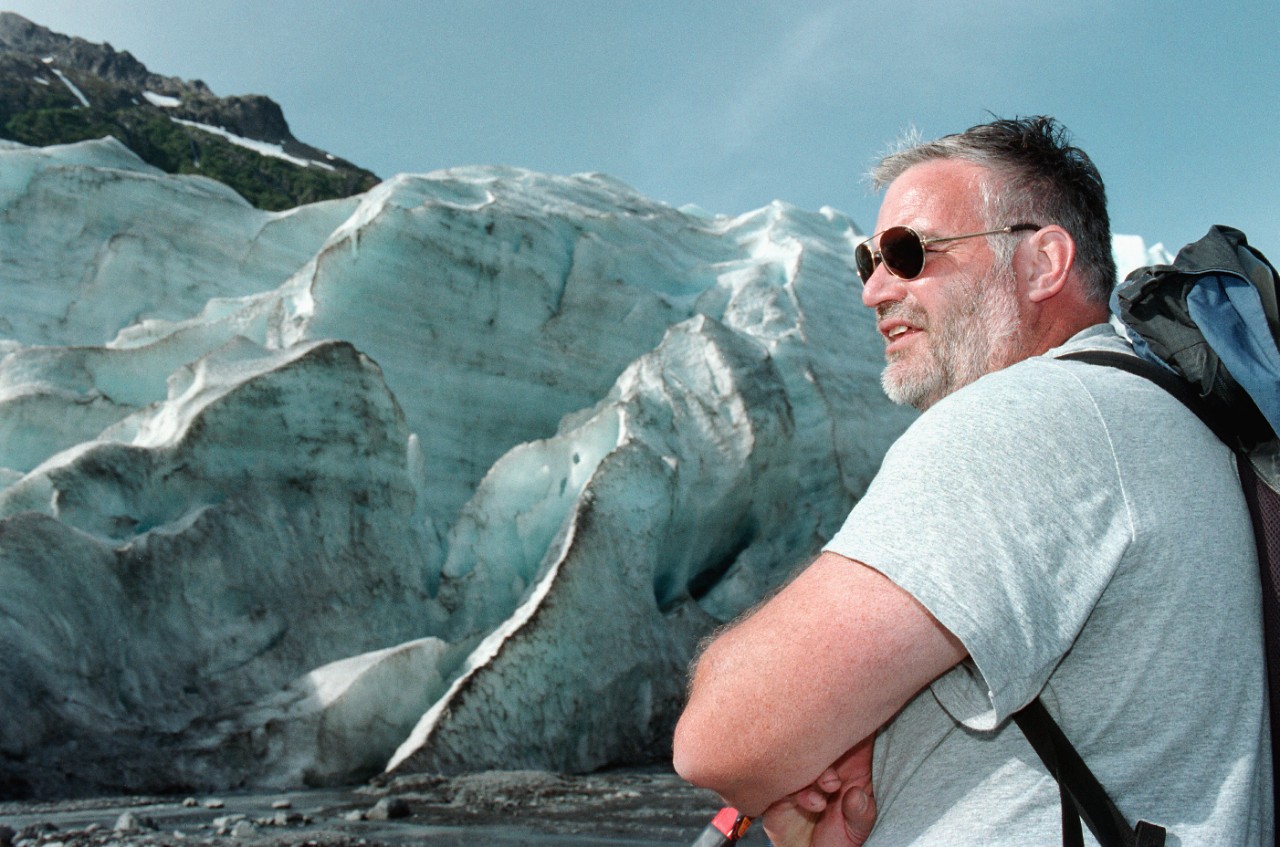
UC geology professor Thomas Lowell stands in front of Exit Glacier in Alaska's Kenai Peninsula in this 2002 file photo. Photo/Colleen Kelley/UC Creative Services
Related Stories
Still the top ‘cat
October 20, 2026

The University of Cincinnati Bearcat mascot was voted Cincinnati’s favorite mascot in a Cincinnati Enquirer reader poll, earning 45.1% of the vote and topping other local favorites.
Beware the AI throuple: Is technology manipulating you or your relationship?
October 19, 2026
Is technology manipulating you or your relationship? Would you date someone who controlled what you see?
Got three minutes? Present your research for a chance to win $1,500
October 19, 2026
The University of Cincinnati’s Three Minute Thesis (3MT) Competition challenges graduate students to explain their research or scholarship to people outside their field in just three minutes using a single slide. Applications for the 2027 competition open Sunday, Nov. 1, 2026, giving graduate students a chance to sharpen a skill that can make a difference far beyond graduate school.