Men's Health: What experts say you should do if you’re exposed to the coronavirus
UC infectious disease expert says it's best to keep your distance

Dr. Carl Fichtenbaum of UC's Division of Infectious Diseases was interviewed by Men's Health magazine for a story on steps people should take if they think they've been exposed to the coronavirus.
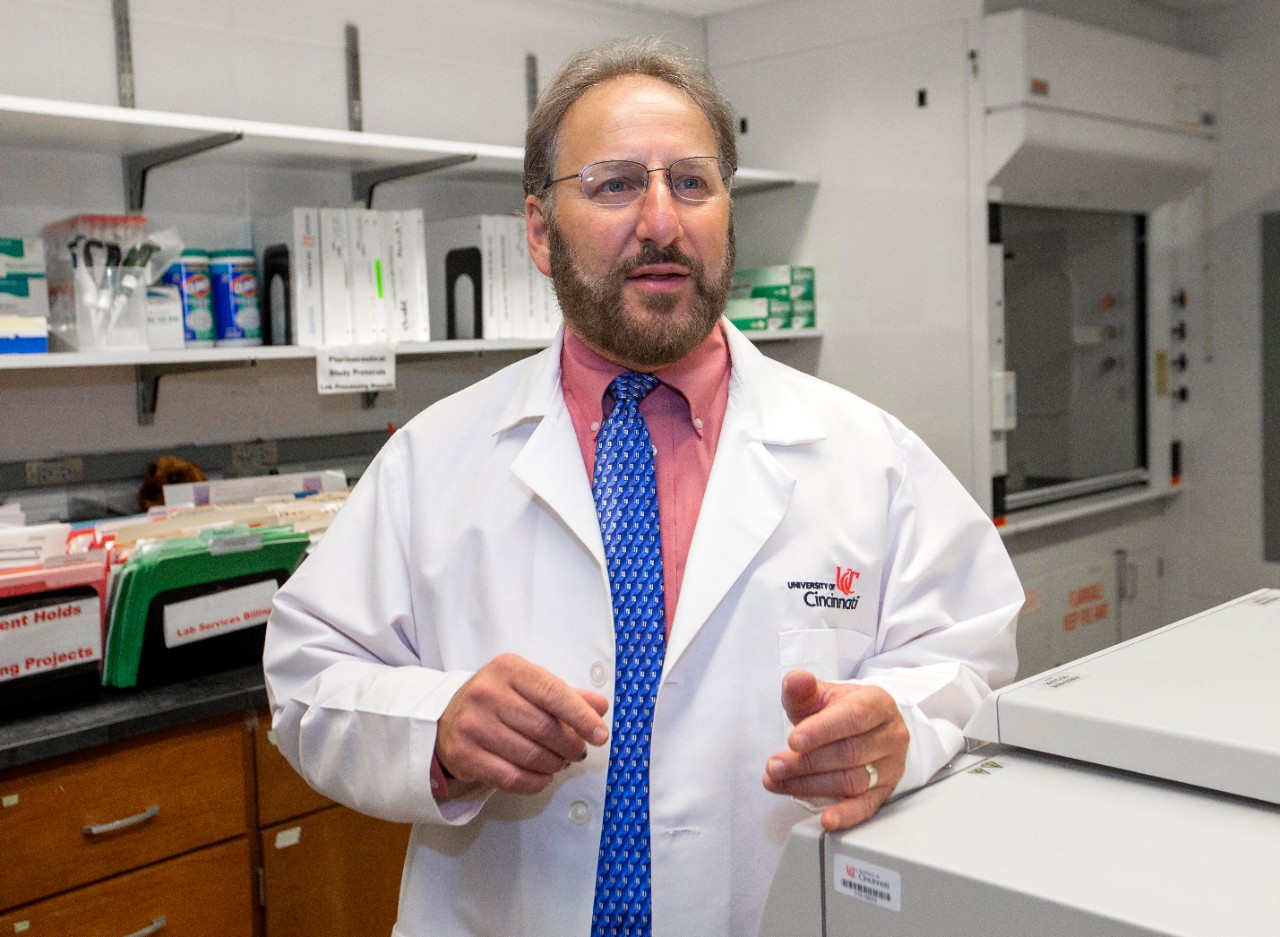
Dr. Carl Fichtenbaum in a lab in the UC College of Medicine Division of Infectious Diseases. Photo/Joe Fuqua II/UC Creative + Brand
Dr. Fichtenbaum said that even if you're not sure, but suspect via the primary symptoms—fever, cough and shortness of breath—it's best to distance yourself and stay in quarantine.
"This is where we have to look towards the greater good of humanity," he says. "If most of us use this strategy—we can beat this virus." Read the full article here.
Men's Health also featured Dr. Fichtenbaum in an article on the claims that ibuprofen is unsafe for people with COVID-19.
Find the latest details related to coronavirus disease 2019 (covid-19) on the Centers for Disease Control and Prevention (CDC) website, and follow UC's latest information with regard to the virus.
Related Stories
Selecting noninvasive tests for liver disease diagnosis, monitoring
September 3, 2026

Noninvasive tests have emerged as valuable alternatives for diagnosing, staging and monitoring MASLD and MASH, according to a recent MedCentral report.
Why can it get so hot at times?
September 3, 2026

Cincinnati is experiencing more days of extreme heat this summer than in previous decades, due in large part to warmer global temperatures. But explanations for these higher temperatures also relate to regional factors, including the city's location in a river valley and large proportion of built environment.
Cancer Center plays key role in lab research, clinical trials for new pancreatic cancer drug
September 1, 2026

WLWT and WCPO highlighted the contributions of University of Cincinnati Cancer Center researchers that helped lead to the recent FDA approval of daraxonrasib, a new treatment for pancreatic cancer.