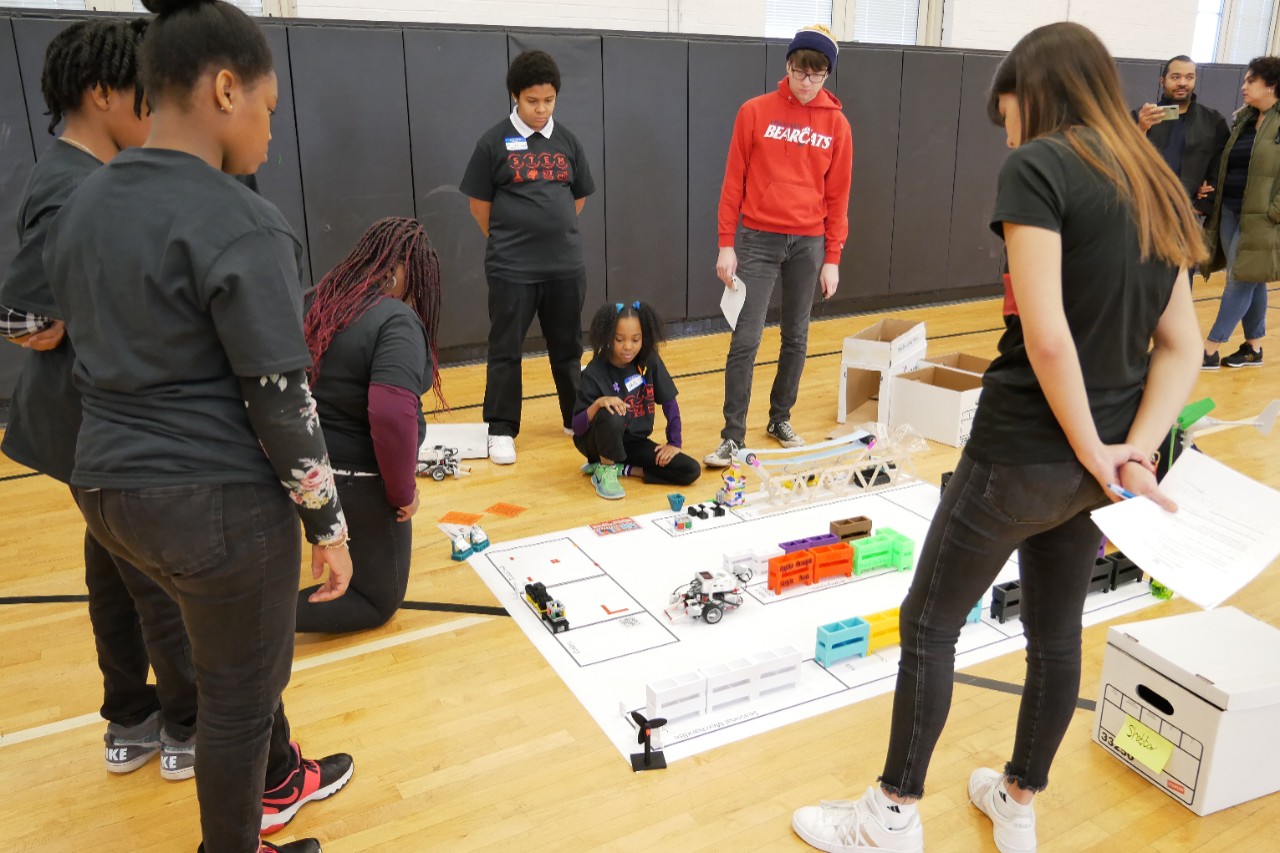
UC helps local schools launch robotics programs
Students address robot safety and warehouse logistics in competition

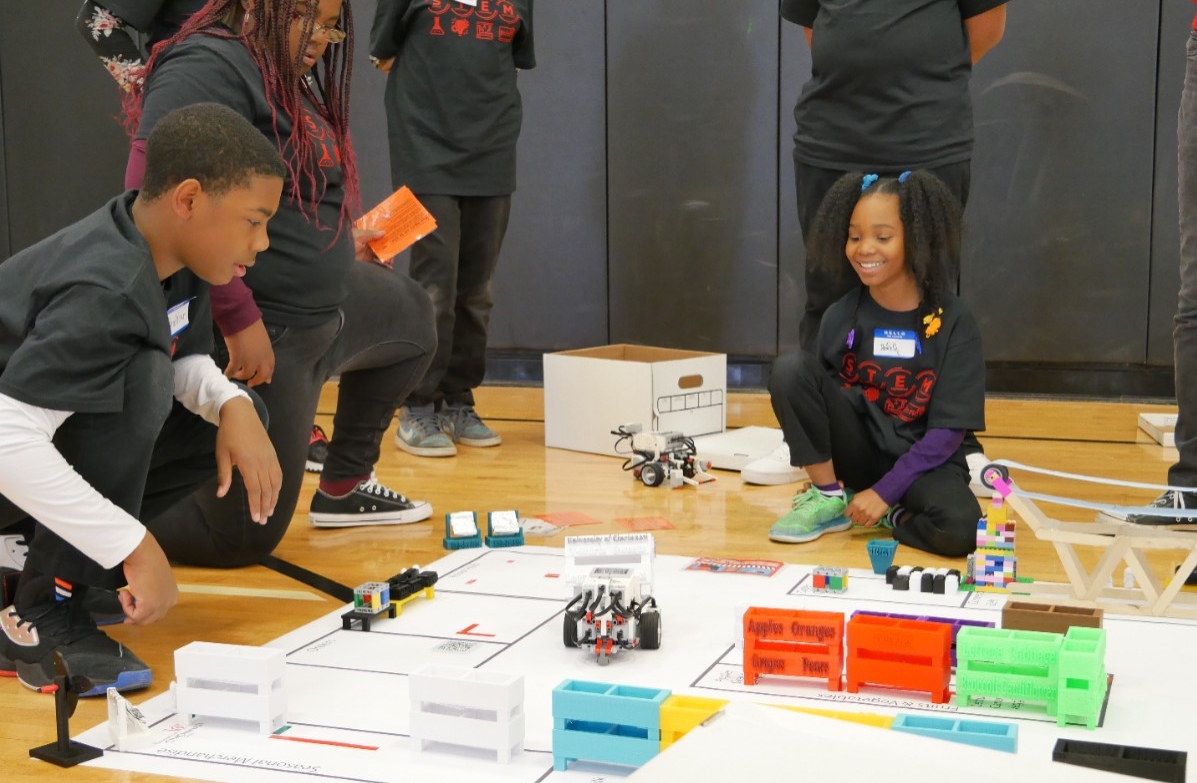
Students create warehouses for their robots to interact with products
In an age when customers can have nearly anything delivered to their door with just one click, many industries rely heavily on automation.
Local students recently learned about supply chain management and distribution at the 2020 Robotics Competition hosted by University of Cincinnati College of Engineering and Applied Science Office of Inclusive Excellence and Community Engagement.
This year’s theme was the use of robots in warehouses and logistics hubs. Their design challenges were based on current industry concerns to limit risk of injury to human workers and enable robots to interface with a large variety of products.
The students do not receive instructions on how to build a robot, but they do receive challenge criteria and a list of vetted resources to start from.
The challenges are designed to be completed using the LEGO EV3/NXT and Makeblock Mbot platforms. Unfortunately, not all schools have the resources and funds needed to jump-start a robotics team, even if they have students who want to compete.
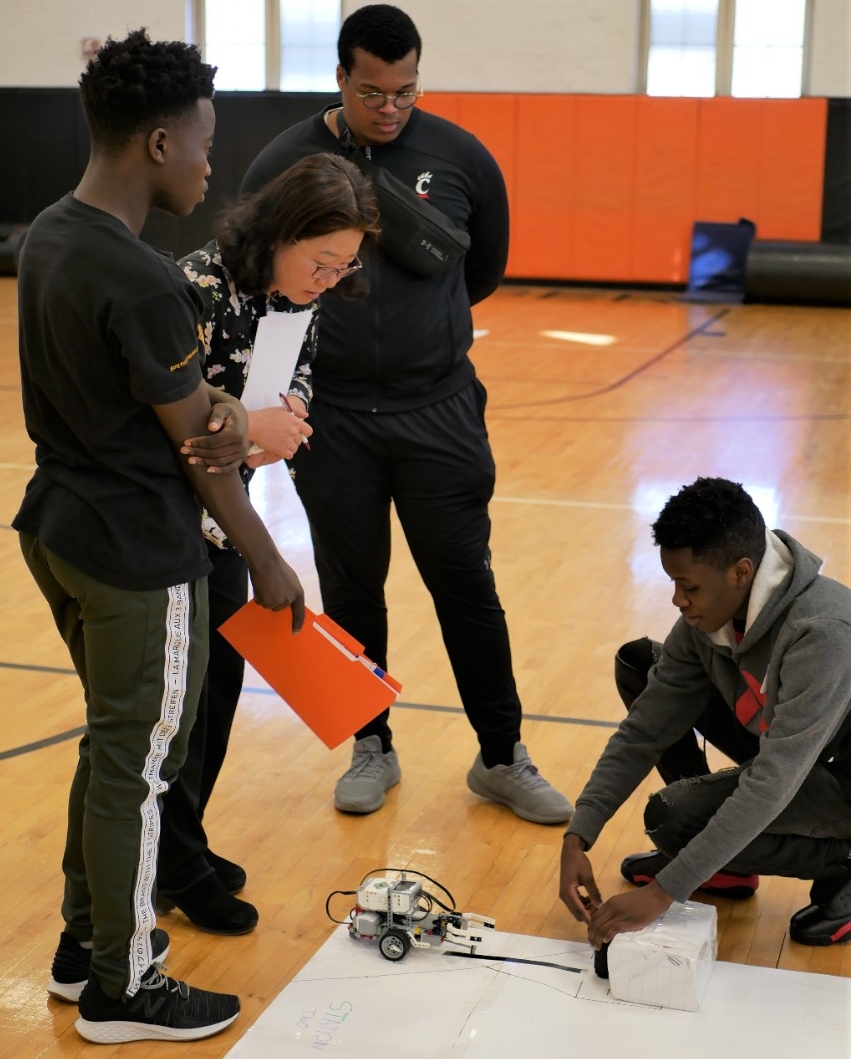
A high school team sets up a demonstration
To help more schools participate, the college loans LEGO EV3 and Mbot kits so schools can start their own programs and inspire students to explore the world of robotics firsthand.
“The competition provides an opportunity and the means for schools to start a robotics program, especially those that are new to robotics,” said Don Wittrock, program coordinator for the Office of Inclusive Excellence and Community Engagement.
Participating teams must always build a robot, but this year, they also had to construct their own warehouse or logistics shipping hub.
Students researched potential warehouse layouts and organization methods and experimented with potential interactions that a robot could have with a range of products and sizes. After they determined the ways the robot would locate and transport these items, they decided how items would arrive from receipt of an order to shipping.
Our participants have to research a theme, the challenge, and how robots are used in the real world.
Don Wittrock, UC Office of Inclusive Excellence and Community Engagement
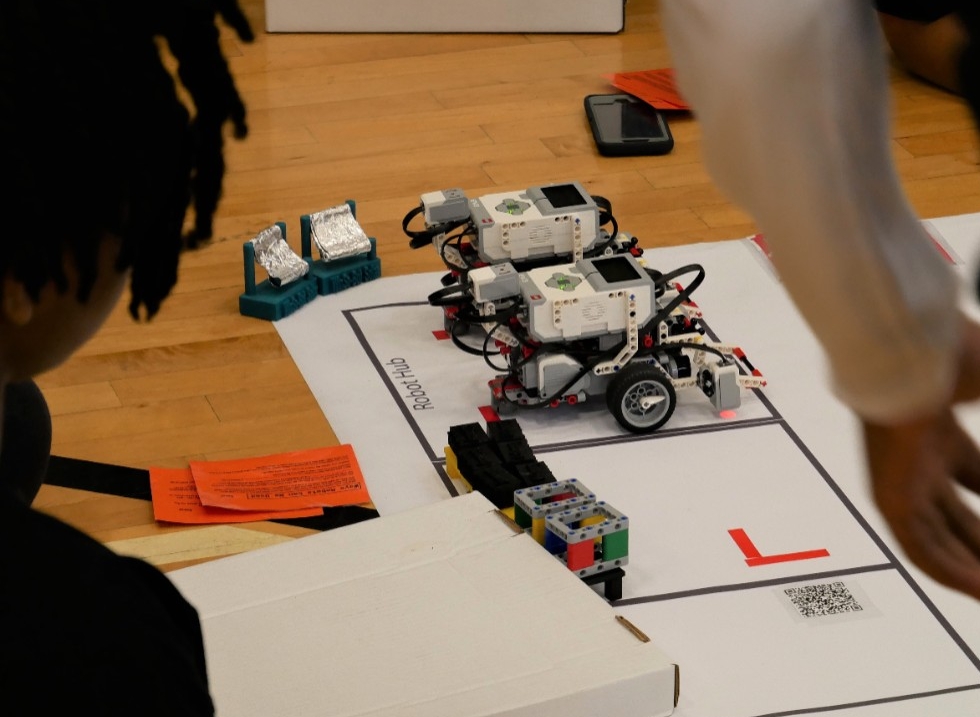
Students can design any style of robot to suit the challenge.
The event coordinators emphasize the importance of research and design in the competition. Judges assess each team’s research and design process just as much as the robot’s performance.
“In other competitions, students use robots that have been designed to shoot, grab and complete tasks that are required in the competitions,” Wittrock said. “Our participants have to research a theme, the challenge, and how robots are used in the real world.”
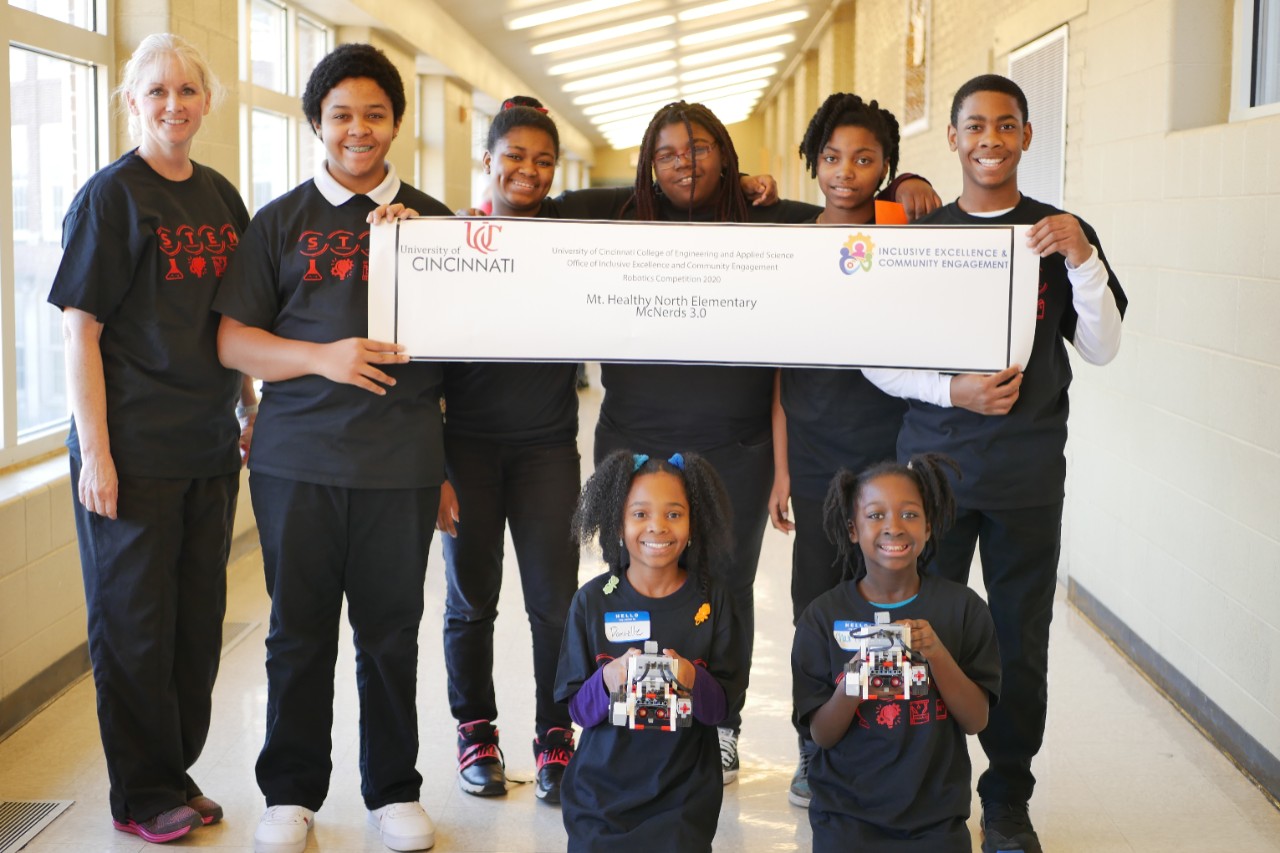
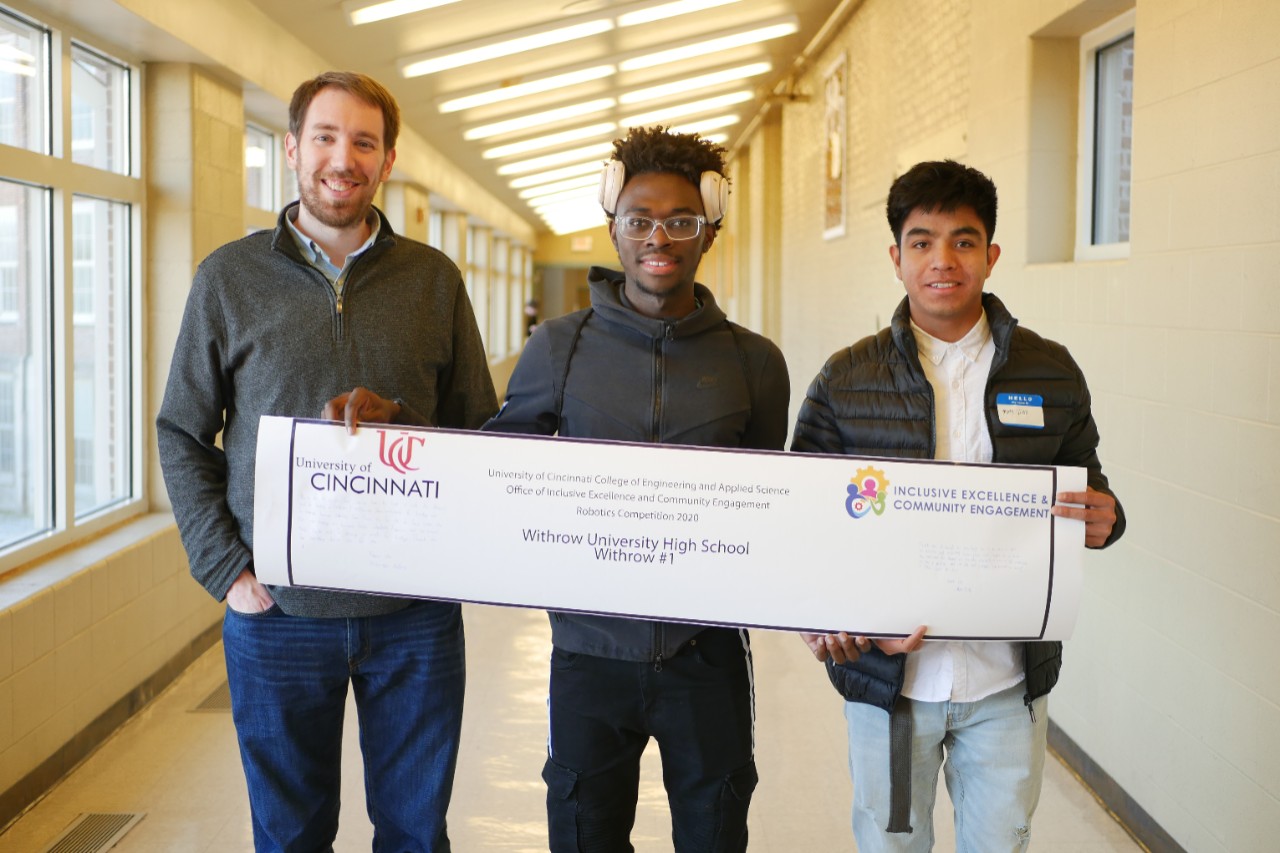
Sixteen teams of elementary through high school students presented their creations for judging in February at Withrow High School. Team Withrow #1 was recognized for overall total points for the high school division, and Mt. Healthy Elementary McNerds 3.0 for overall total points for the elementary school division.
Related Stories
President Pinto’s 2nd glow party brings first-year Bearcats together
September 20, 2026
UC President Neville Pinto and team hosted the second annual Bright Beginnings glow party for first-year students
How phone scammers use your own voice against you
September 18, 2026

The Wall Street Journal recently did a deep dive on how artificial intelligence is making scamming people over the phone much easier, citing research by Kimberly Hyun, assistant professor of marketing at UC’s Lindner College of Business.
UC Blue Ash to host two fall open houses
September 18, 2026
The University of Cincinnati Blue Ash College will host its fall open houses on Thursday, Oct. 15 and Thursday, Nov. 5. Both events will be from 5-7 p.m. in Muntz Hall on the UC Blue Ash campus.