Healthline: Coronavirus and stroke
Reports detail guidelines, published by UC researchers, about stoke treatments during COVID-19

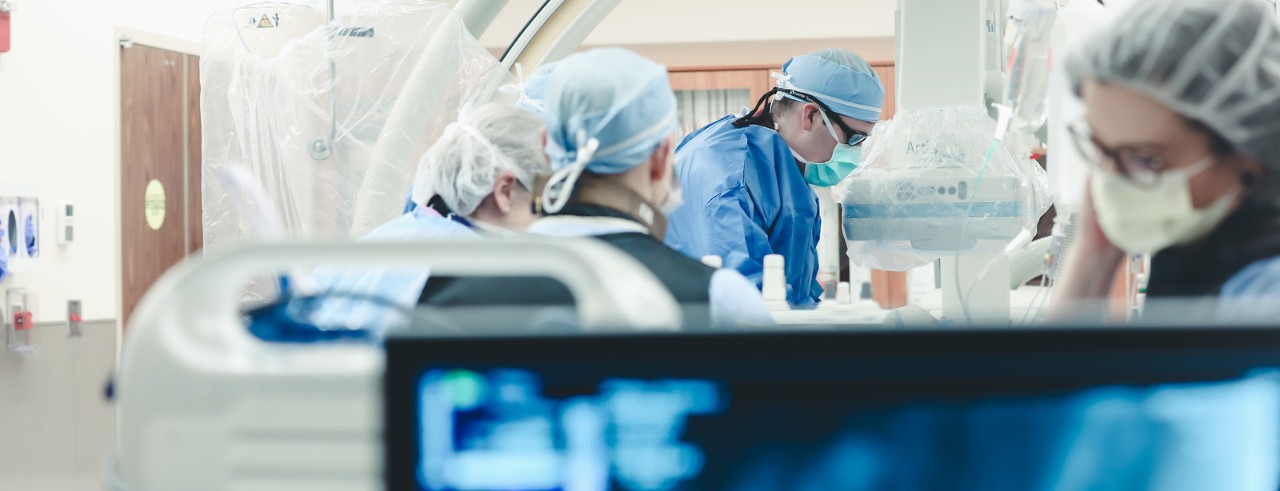
New research by UC and UC Health experts shows that doctors can perform immediate surgery to treat stroke in COVID-19 patients by using enhanced disinfection methods, according to their paper published in the journal Stroke. But the surgery also can present an ethical issue because not every COVID-19 patient is a good candidate for the invasive, anti-stroke treatment.
Aaron Grossman, MD, PhD, assistant professor in the department of neurology and rehabilitative medicine at the UC College of Medicine and a UC Health physician who is also the corresponding author on the report, is quoted.
The report was covered in Healthline. Grossman and Matthew Smith, MD, lead author of the report, neurocritical care fellow and UC Health physician, provided details.
Cincinnati's NPR affiliate WVXU-FM, 91.7, also hosted Grossman and Smith for a half-hour segment to discuss stroke in the COVID-19 era.
Read about other COVID-19 research being conducted at UC.
Featured photo/Tommy Campbell/UC Health
Impact Lives Here
The University of Cincinnati is leading public urban universities into a new era of innovation and impact. Our faculty, staff and students are saving lives, changing outcomes and bending the future in our city's direction. Next Lives Here.
Stay up on all UC's COVID-19 stories, read more #UCtheGood content, or take a UC virtual visit and begin picturing yourself at an institution that inspires incredible stories.
Related Stories
Is Cincinnati building new homes fast enough?
September 22, 2026

Gary Painter, professor and academic director of the Real Estate Center at UC's Lindner College of Business, offers comments on affordability issues in Cincinnati.
UC climbs to No. 3 in the nation for co-ops and internships in 2027 U.S. News rankings
September 22, 2026
In U.S. News & World Report’s 2027 Best Colleges rankings, the University of Cincinnati rises to No. 3 in the nation for co-ops and internships — No. 1 among public institutions — and posts gains in undergraduate business, computer science and psychology.
'Discovery, mentorship, momentum': UC College of Medicine's graduate programs celebrate year of success
September 22, 2026
From new mentorship honors to a growing research pipeline, see how the University of Cincinnati College of Medicine's graduate programs made this a standout year.