Science Daily: UC research sheds light on animal aggression
Biologist Elizabeth Hobson is studying how social networks inform animal behavior

Science Daily highlighted work by a University of Cincinnati biologist into how social networks inform animal aggression.
Elizabeth Hobson, an assistant professor of biology in UC's College of Arts and Sciences, is studying the behavior of monk parakeets, a colonial nesting bird from South America that has established itself across the United States.
Monk parakeets, like many other animals, live in dominance hierarchies where animals fight for status. But the parakeets have a sophisticated understanding not only of their social network but their place within it, Hobson said.
This helps the parakeets know which potential rivals upon which to unleash their aggression to maintain or improve their status, she said in a new paper published in the journal Current Opinion in Psychology.
"This paper is setting up a perspective I want to push in my research program," Hobson said.
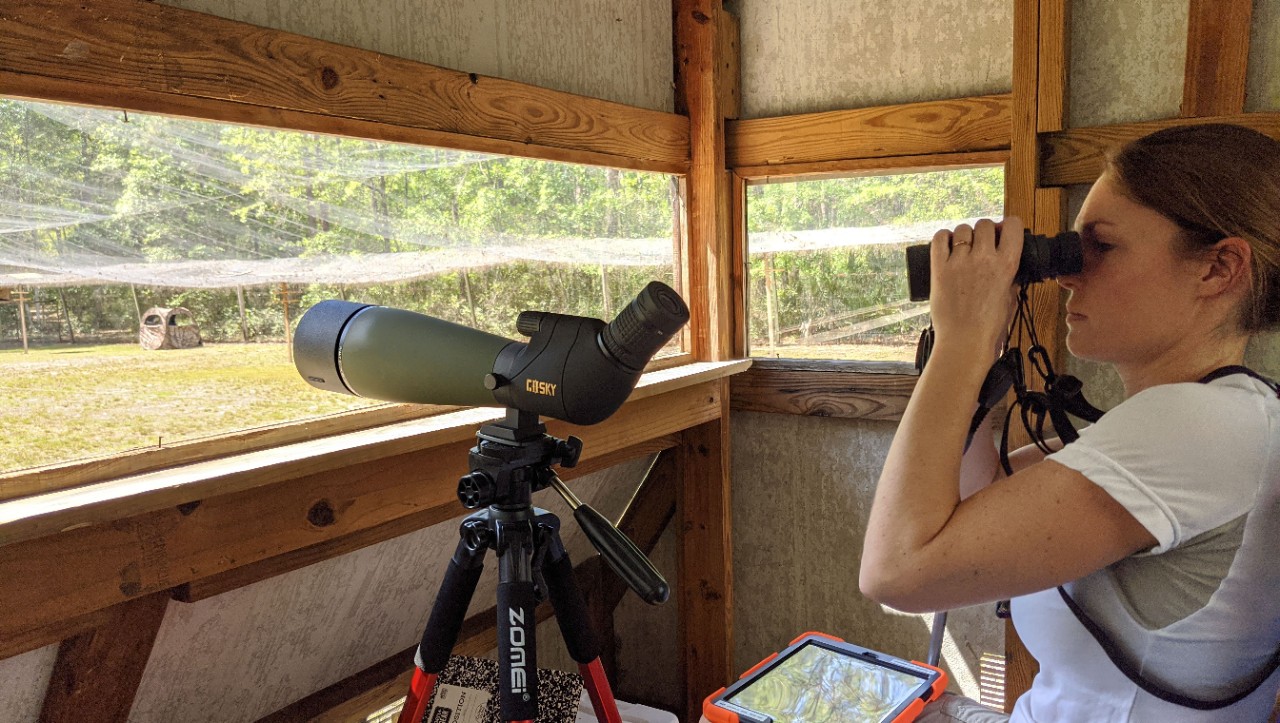
Featured image at top: UC postdoctoral researcher Annemarie van der Marel watches monk parakeets through binoculars from a bird blind. Photo/Provided
More UC research in the news

F/A-18E Super Hornets. Photo/Shannon Renfroe/U.S. Navy
Related Stories
How scammers can persuade you with AI
July 27, 2026

Spectrum News recently dove into how cloning voices with artificial intelligence is making it easier to scam people over the phone. The news outlet spoke with Kimberly Hyun, assistant professor of marketing at UC’s Lindner College of Business, to examine why AI is making it so much easier to trick people.
Decade of discovery
July 27, 2026
Every summer, UHP Discover has connected undergraduate students in the University Honors Program (UHP) to a unique array of opportunities in original interdisciplinary research. This year, the program celebrates its 10th anniversary.
The subtle changes in hearing you should never ignore
July 24, 2026

It’s easy to dismiss changes in hearing as minor. But as The Washington Post recently reported, these symptoms could also signal a medical emergency that many people don’t recognize — known as sudden sensorineural hearing loss, a rapid decline in hearing that occurs suddenly or over a few days.