
Healthline: Lysol disinfectant approved for use against COVID-19: Here’s what else can work
UC expert says while Lysol may be effective, other generic disinfectants could do the job as well

Following the Food and Drug Administration's approval of using Lysol against COVID-19, Healthline interviewed Carl Fichtenbaum, MD, of the Division of Infectious Diseases at the UC College of Medicine for a story on the decision.
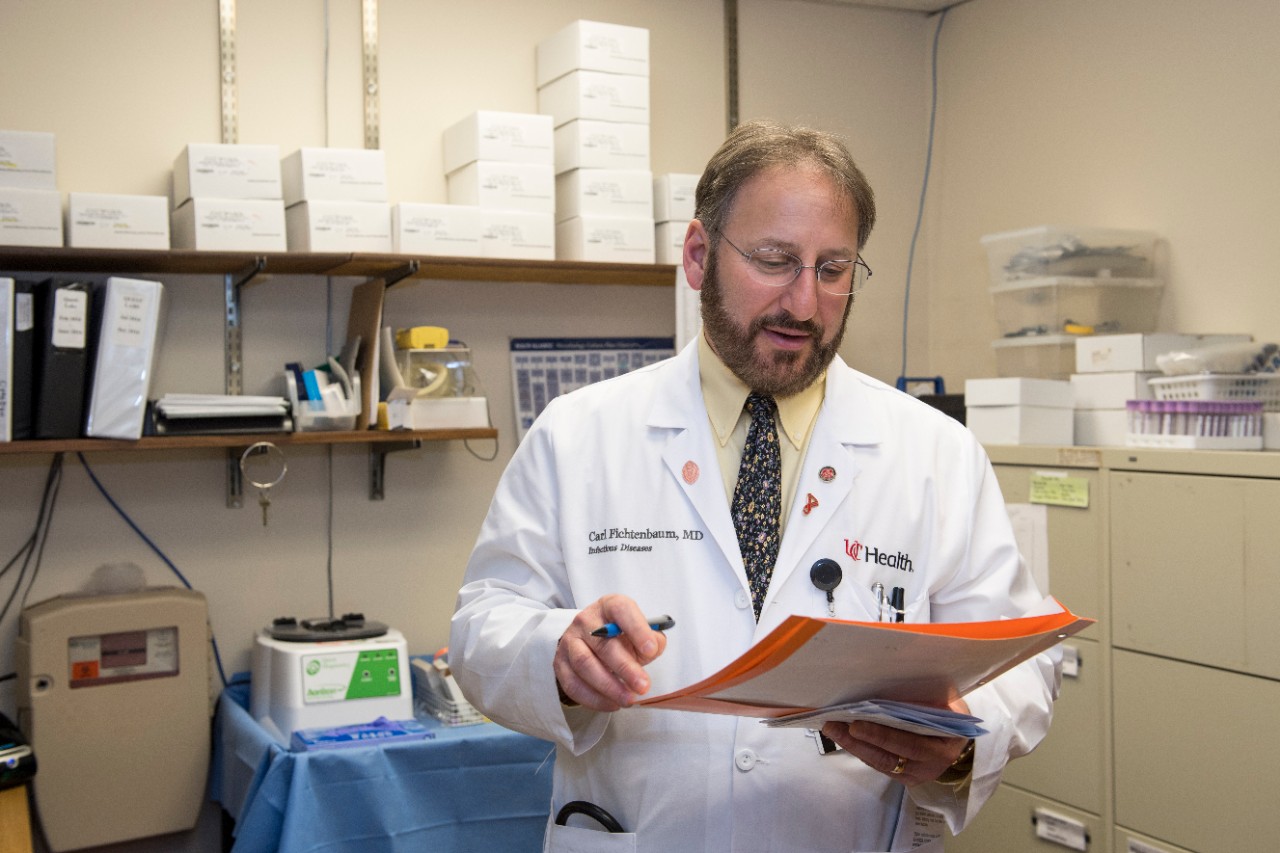
Carl Fichtenbaum, MD, in a lab in the Division of Infectious Diseases. Photo/Colleen Kelley/UC Creative + Brand.
Fichtenbaum said “The best scientific studies indicate that alcohol-containing solutions of at least 60% proof are most effective in killing viruses like SARS-CoV-2 that are non-enveloped viruses. Lysol has 40.33% alcohol and other ingredients that may be effective."
He also said if people are unable to find Lysol due to high demand after the decision, they could consider other disinfectants such as quaternary ammonium and sodium hypochlorite.
Read the entire story here.
Lead image courtesy Getty Images.
Impact Lives Here
The University of Cincinnati is leading public urban universities into a new era of innovation and impact. Our faculty, staff and students are saving lives, changing outcomes and bending the future in our city's direction. Next Lives Here.
Stay up on all UC's COVID-19 stories, read more #UCtheGood content, or take a UC virtual visit and begin picturing yourself at an institution that inspires incredible stories.
Related Stories
Simple ways to find a deeper sense of happiness and well being
October 8, 2026

UC assistant professor Suzie White, featured in an AARP story on practical ways to live a happier, healthier life, shared research-backed strategies for increasing well-being through gratitude and service to others. White teaches Happiness in Action, a course that helps students apply the science of happiness in everyday life.
New vending machine helps people with addiction
October 8, 2026

The University of Cincinnati's Daniel Arendt was featured in a Spectrum News report on a new harm reduction vending machine installed at the IPM Food Pantry in partnership with the Hamilton County Mental Health and Recovery Services Board.
UC study correlates increased physical activity with slower Parkinson’s progression
October 7, 2026
Higher levels of physical activity were associated with slower declines in thinking and memory as well as slower worsening of movement symptoms for people with Parkinson’s disease, according to a new study led by University of Cincinnati researchers published Oct. 7, 2026, in Neurology.