PBS: Can use of force restrictions change police behavior?

PBS examines the renewed call from reform advocates in recent month to restrict police use of force in a story published July 23. But measuring the impact and effectiveness of different restrictions can be complicated. To help understand the factors and issues of this complex issue, PBS turned to University of Cincinnati criminologist Robin Engel, a renowned expert in policing policy.
Engel, a criminal justice professor and director of the International Association of Chiefs of Police and University of Cincinnati Center for Police Research and Policy, tells PBS that it’s hard to measure racial disparities, in part because every case must be looked at in its own context.
Simply taking the total number of Black people killed by police and comparing it to their overall population size is not a good comparison because it removes the situational factors that may play a role in the use of force, Engel said.
“I’m not claiming that [racial disparities] are not real. They are. It’s very clear there are racial and ethnic disparities,” Engel said. “But the reasons for those disparities is what we really need to better understand as social scientists so that we can better inform the solutions.”
Read the full story here.
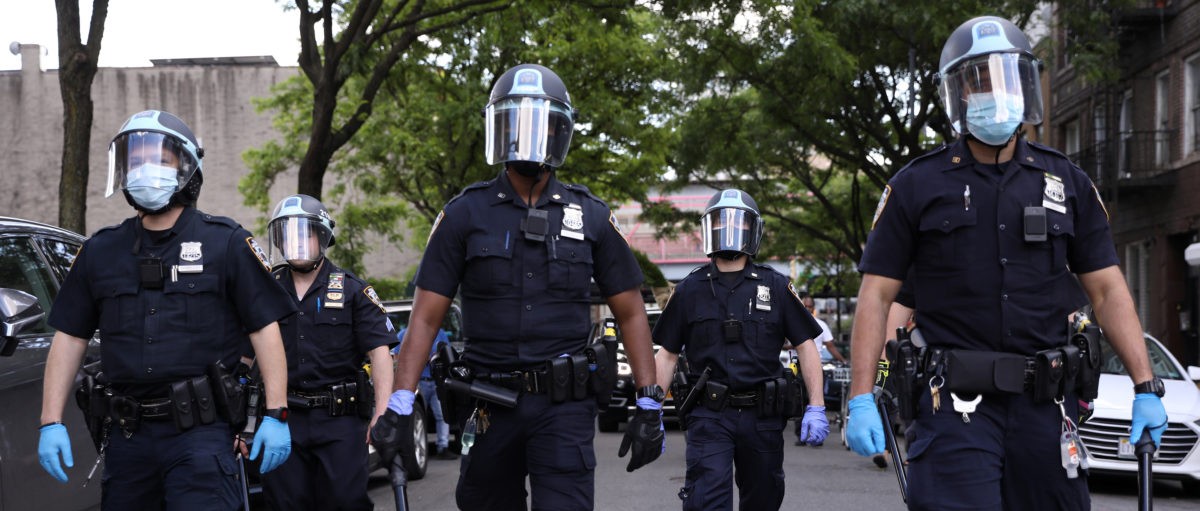
Featured image at top: Police officers are seen during a protest against the death in Minneapolis police custody of George Floyd, in New York City, U.S., May 31, 2020. REUTERS/Caitlin Ochs
Related Stories
Ride Free UC offers free transportation options this fall
August 21, 2026
Ride Free UC: UC students, faculty and staff can take advantage of free UC Metro Pass and the Bearcats Shuttle for convenient travel between campuses and throughout Cincinnati.
What is electroacoustic music?
August 21, 2026

Professor Mara Helmuth spoke with Cincinnati Spotlight about her upcoming faculty recital on Cincinnati Spotlight.
UC study shows lack of awareness for lung cancer screenings across country
August 21, 2026
University of Cincinnati Cancer Center researchers have published a study in the American Journal of Surgery that found only 15% of eligible American adults have discussed lung cancer screening with their doctors.This research emphasizes the need to spread awareness and better educate the public about screening through low-dose computed tomography.