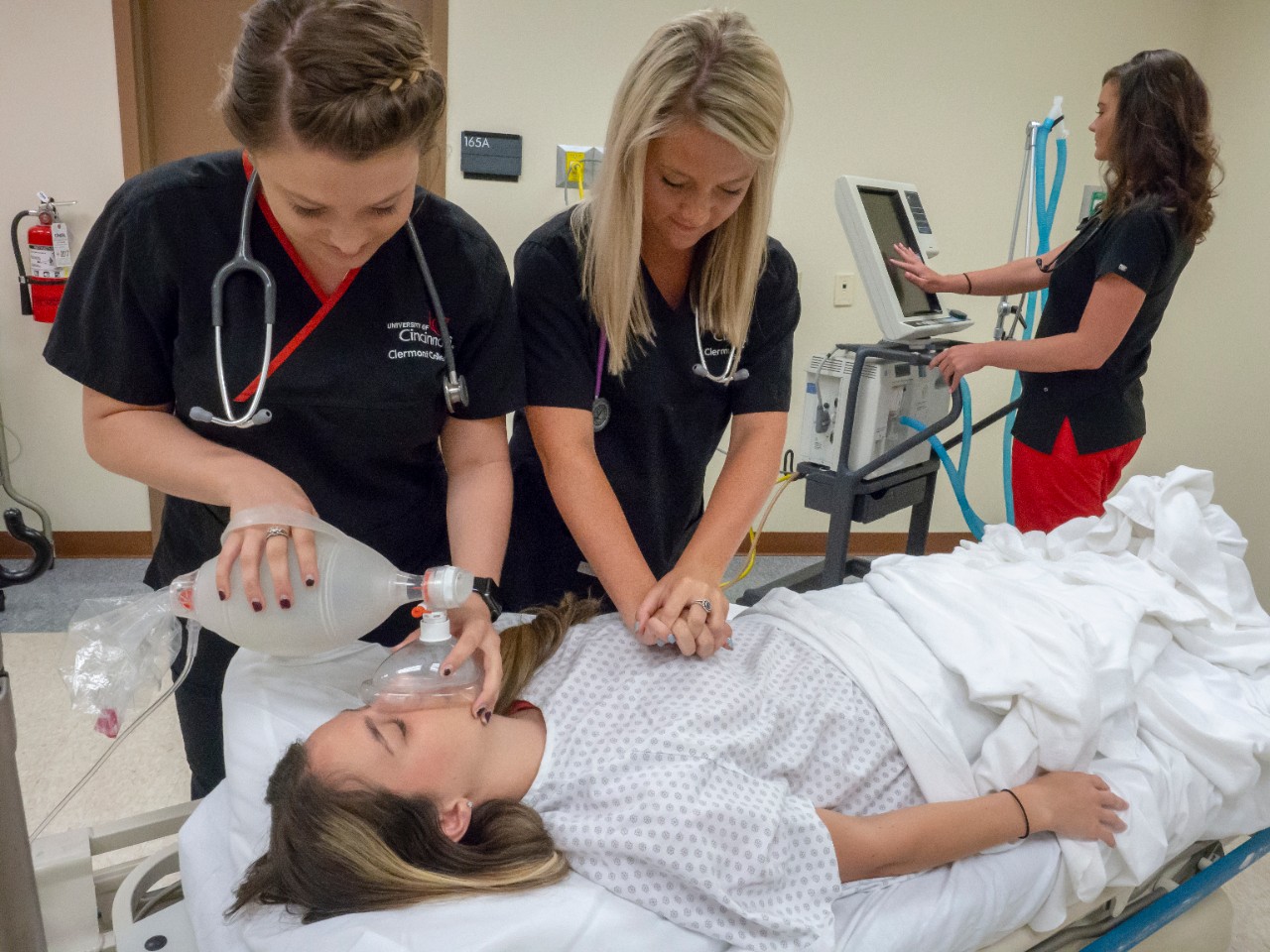
UC Clermont program answers growing demand for respiratory therapists
COVID crisis calls for more airway specialists

Respiratory therapists have always been on the frontline of working with patients with airway diseases such as asthma, pneumonia and COPD, and with premature infants who require support to breath. But COVID-19 — which counts breathing difficulties among its many symptoms — requires even more respiratory professionals.
“The COVID crisis has further increased demand for therapists trained in airway and lung disease treatment,” said UC Clermont Associate Professor Michael Mullarkey, who manages the college’s Respiratory Care program. “COVID patients in critical condition often need to be intubated and managed for long periods of time.”
As part of the University of Cincinnati, UC Clermont’s Respiratory Care program allows for a seamless transfer to the UC College of Allied Health completion program. This program enables UC Clermont graduates to earn their bachelor’s degree in respiratory therapy (BSRT) in less than two years — completely online.
“Our graduates score well beyond the national averages on their board exams,” Mullarkey said. “And 100 percent of them have received job offers during the last three years.”
UC Clermont Respiratory Care major and Williamsburg resident Aubreyanna Siekbert is banking her future on those promising stats. Scheduled to graduate in May 2021, Siekbert has known she wanted to work with patients in a hospital setting since high school. After finding out about respiratory care and job shadowing a therapist at UC West Chester Hospital, Siekbert decided to pursue the field as a career — and chose UC Clermont to help her reach her goals.
“UC Clermont is close to home and more affordable than other colleges,” Siekbert said. “The program at UC Clermont is accredited by the Committee on Accreditation for Respiratory Care, and the professors care and want you to succeed.”
Siekbert plans to eventually obtain her bachelor’s degree, and said while the UC Clermont program is challenging, she has so far found the field extremely rewarding.
“You are a part of the team when it comes to the care of patients,” Siekbert said. “Everyday is a new opportunity to make a difference in the life of another individual.”
Classmate Madi Marsh agrees. Also on track to graduate next spring and with plans to eventually return to school for a bachelor’s degree, Marsh’s goal is to help improve the lives of patients with chronic lung disease. She was drawn to UC Clermont because the small college was close to home and because she can start working after earning her associate degree in just two years.
“I chose the respiratory program because I love treating and taking care of others,” Marsh said. “I have learned that hard work and dedication results in good outcomes, and my program classmates have become my respiratory family. If you want to get in the healthcare field in less than two years and have a passion for taking care of others, the UC Clermont program is perfect.”
Learn more about UC Clermont’s Respiratory Care program or contact Associate Professor Michael Mullarkey at michael.mullarkey@uc.edu.
Tags
Related Stories
Building community
July 27, 2026
The inaugural Ultra-SLP Conference brought together clinicians and researchers from across the country to advance the practice of using ultrasound technology to treat disorders of speech and swallowing.
The subtle changes in hearing you should never ignore
July 24, 2026

It’s easy to dismiss changes in hearing as minor. But as The Washington Post recently reported, these symptoms could also signal a medical emergency that many people don’t recognize — known as sudden sensorineural hearing loss, a rapid decline in hearing that occurs suddenly or over a few days.
UC experts say proper produce washing is key defense against Cyclospora
July 24, 2026

Hamilton County Public Health reports confirmed cases of cyclosporiasis, as concerns persist. Cyclospora is a parasite that can cause a stomach illness lasting days — sometimes even weeks. University of Cincinnati medical experts say it is usually linked to contaminated water or food, often fresh produce.