Pharmacy Times: Hierarchy of breast cancer cells
UC research pinpoints hierarchy of breast cancer cells as potential cause for treatment resistance

It may take cells in different stages of development to cause breast cancer to progress and spread, according to recent University of Cincinnati research published in the journal eLife.
The findings demonstrated the importance of accounting for specific cell states present in a tumor in order to determine the appropriate combination of drugs necessary to eliminate all the cell states present and halt treatment resistance. The study was led by author Syn Yeo, PhD, research instructor in the department of cancer biology.

Syn Yeo, PhD, research instructor in the department of cancer biology at the UC College of Medicine. Photo by UC Creative + Brand.
He and other researchers noted that the variation between cell states may cause difficulties during treatment if differences in cell states are not accounted for.
"This diversity poses a problem to treating patients because particular subsets of tumor cells may be drug resistant and eventually lead to disease recurrence," says Yeo. "One of the factors contributing to this diversity is the fact that tumor cells can exist in different cellular states, ranging from more stem-like cells that can become other cell types to more differentiated cells that have been coded to serve a purpose, or do a certain 'job' within the system.”
Read the full Pharmacy Times story.
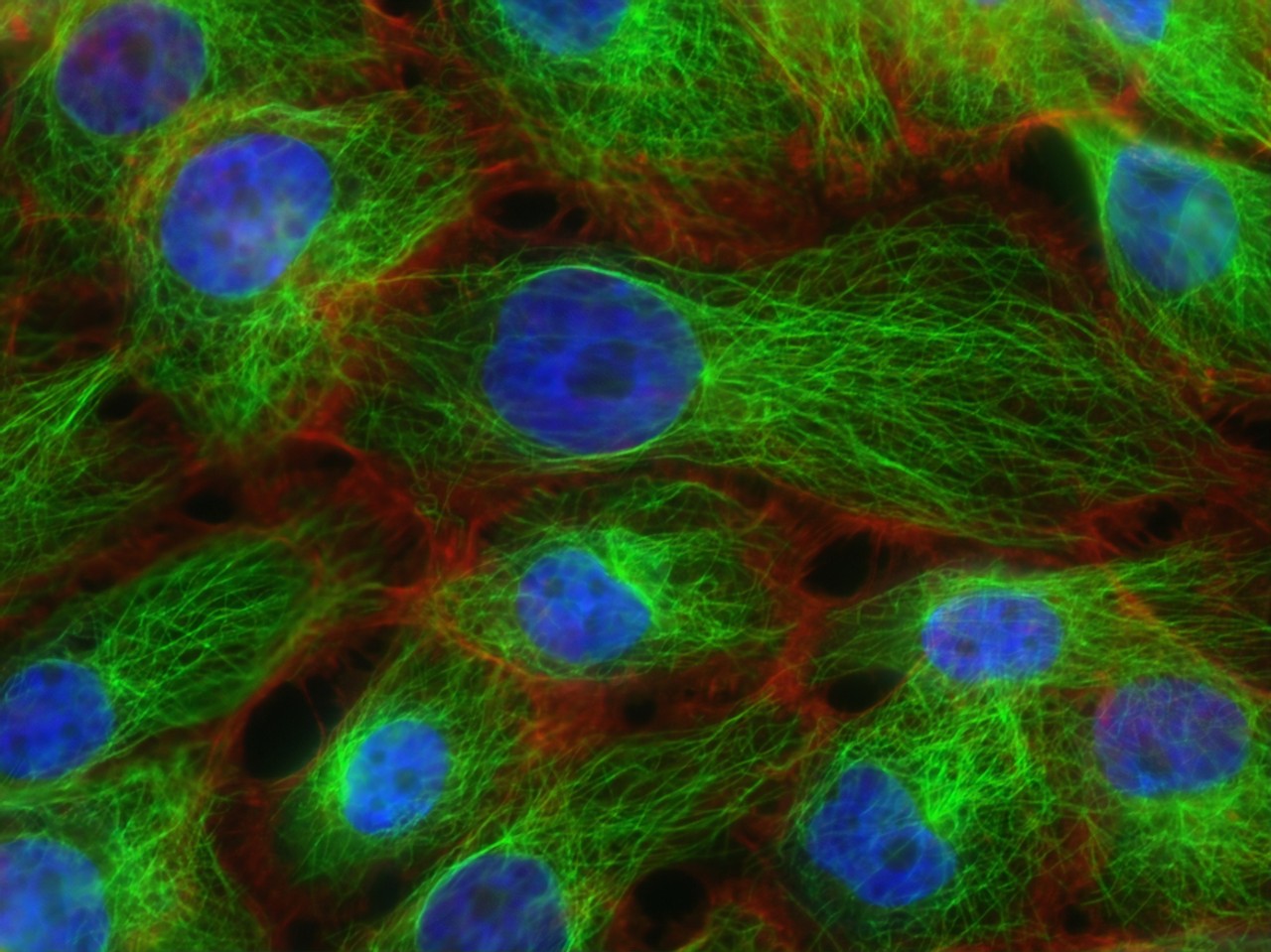
Featured photo of breast cancer cells courtesy of the National Cancer Institute.
Next Lives Here
The University of Cincinnati is classified as a Research 1 institution by the Carnegie Commission and is ranked in the National Science Foundation's Top-35 public research universities. UC's graduate students and faculty investigate problems and innovate solutions with real-world impact. Next Lives Here.
Related Stories
More young adults are having strokes than three decades ago
September 23, 2026
A University of Cincinnati-led study published in the journal Neurology found that strokes among adults ages 20 to 54 nearly doubled over almost three decades, even as short-term survival after stroke improved.
UC part of $18 million initiative to expand behavioral health workforce in Ohio
September 23, 2026

The University of Cincinnati is participating in a new $18 million statewide scholarship program, as Cleveland.com recently reported, to address critical shortages of mental health and substance use treatment providers across Ohio.
Cincinnati entrepreneurs on the rise, with UC’s help
September 23, 2026
Eight startup companies recently graduated from the University of Cincinnati’s Venture Lab, showcasing newfound business skills and publicly proving their readiness to scale.