WVXU: Certain cancer treatments & COVID-19 could lead to death
Recent research shows combinations of treatments given at certain times could mean worse outcomes

A University of Cincinnati study found that cancer patients undergoing a combination of chemotherapy and immunotherapy one to three months prior to a COVID-19 diagnosis have a greater risk of death than patients who haven't undergone cancer treatment in the past year.
These findings were presented Saturday at the European Society for Medical Oncology Virtual Congress 2020.
Lead author Trisha Wise-Draper, MD, PhD, associate professor of medicine in the Division of Hematology and Oncology at UC, UC Health oncologist and member of the UC Cancer Center, and her team analyzed 3,600 patients from 122 institutions across the country for this study.
"Any way you slice it, this is not good news for patients who are fighting cancer," she says. "Targeted therapies, especially those causing immune cell depletion, used one to three months before (the diagnosis of COVID-19) are associated with very high mortality, up to 50%."
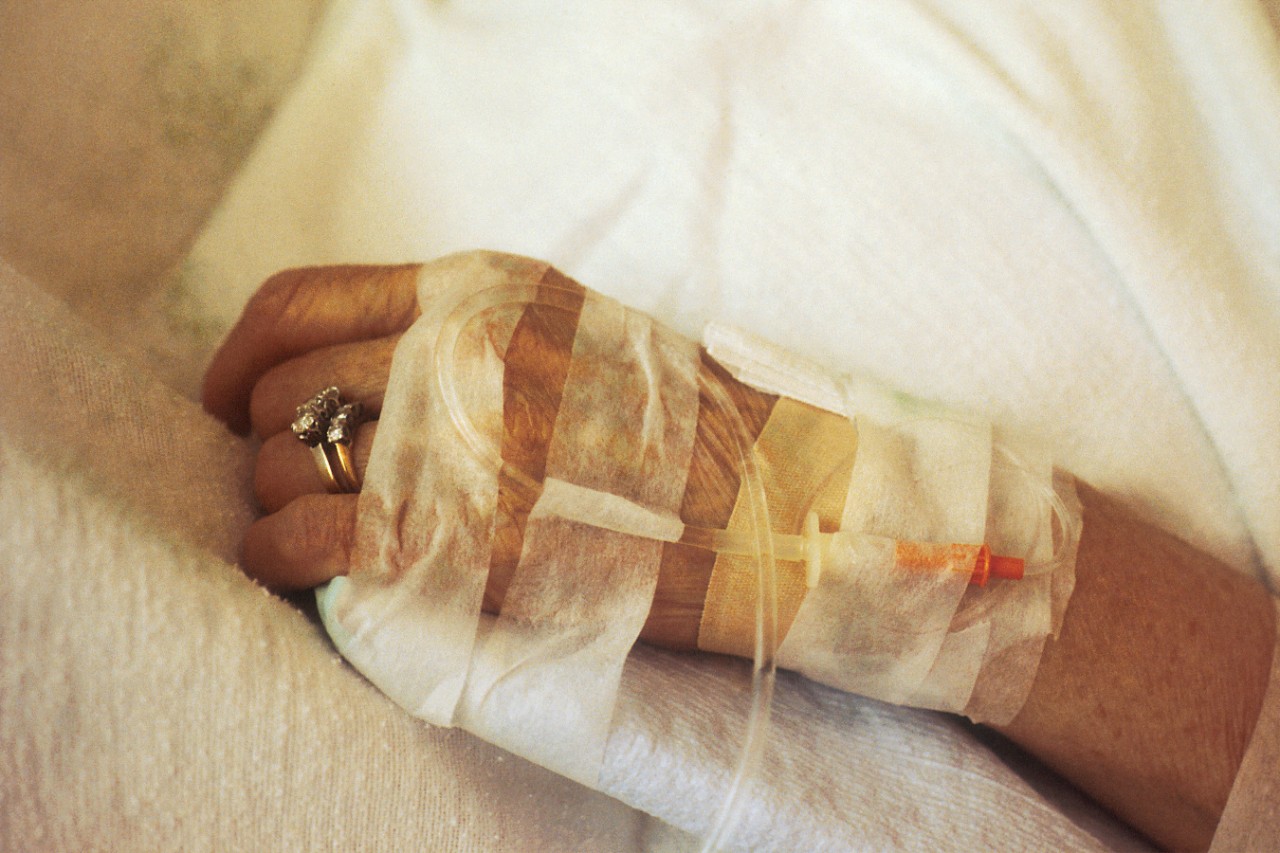
Photo of chemotherapy courtesy of the National Cancer Institute.
Next Lives Here
The University of Cincinnati is classified as a Research 1 institution by the Carnegie Commission and is ranked in the National Science Foundation's Top-35 public research universities. UC's graduate students and faculty investigate problems and innovate solutions with real-world impact. Next Lives Here.
Related Stories
These teeny spiders are social media stars
August 28, 2026

The New York Times turned to a University of Cincinnati professor to explain the appeal of jumping spiders on social media.
An internal divide among unions on AI impacts the Wisconsin gubernatorial race
August 28, 2026

Anne Lofaso, a professor in the Donald P. Klekamp College of Law at UC, spoke with Wisconsin Public Radio, about the schism among unions over AI and whether it is a plus, a negative, or somewhere in between when looking at job creation.
On-site training in Speech & Hearing Clinic sets UC’s programs apart
August 27, 2026
At the University of Cincinnati’s Speech & Hearing Clinic, Doctor of Audiology and Speech-Language Pathology graduate students gain real-world experience while providing free speech and hearing services to the community.