Science News for Students: Parasite survives seal's deep dives
UC biologist Joshua Benoit explains how a tiny louse can dive deep with elephant seals

University of Cincinnati biologist Joshua Benoit explained to Science News for Students how a tiny parasite the size of a sesame seed can withstand the extreme atmospheric pressure of diving more than a mile below the ocean's surface with its host – an elephant seal.
Elephant seals are champion divers. They can hold their breath for more than 90 minutes while diving for food a mile deep. This depth would crush even many modern submarines.
But not only do the seals survive the trip, but their parasites called seal lice do as well.
The Institute of Biology of Marine Organisms in Argentina put seal lice to the pressure test under lab conditions and found that most survived pressures equal to diving 6,500 feet.
Benoit told Science News for Students that it makes sense that lice that live on seals must be evolved to go where the seals go.
Benoit has studied other "extremophiles" in Antarctica. Extremophiles are creatures that live on the fringes of what's considered possible in extreme environments. Benoit's research found that a wingless fly in Antarctica cover their eggs in a kind of antifreeze to protect them from routine freezing and thawing.
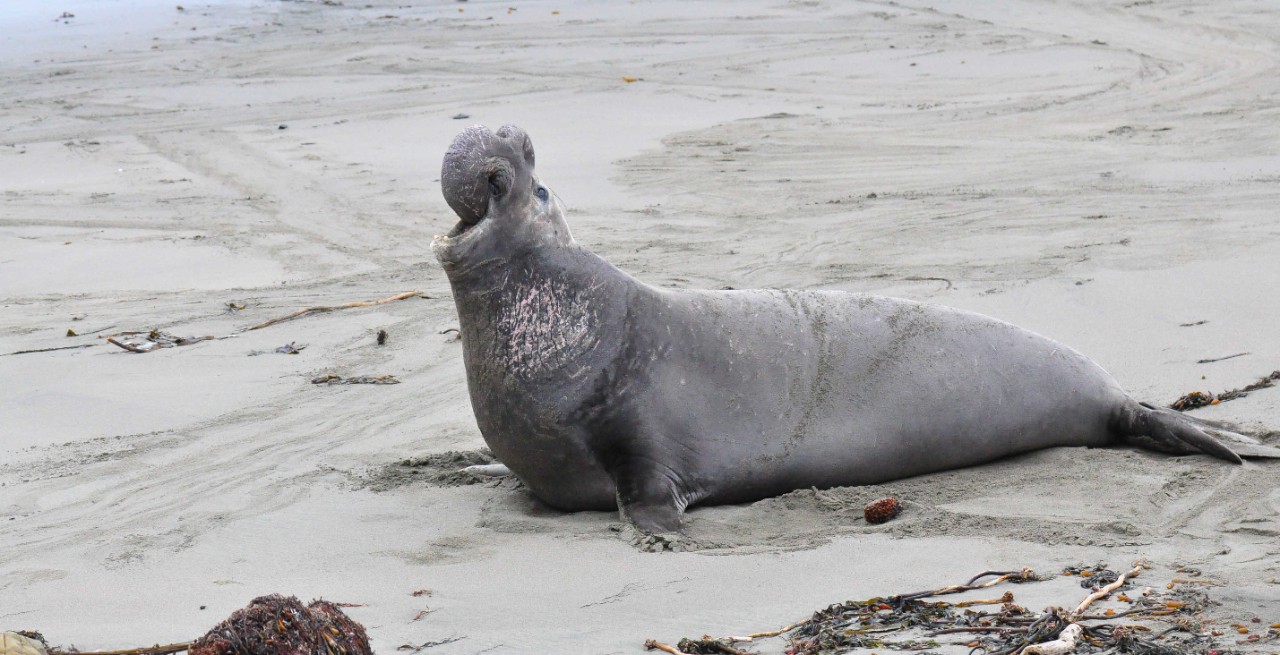
Featured image at top: A northern elephant seal. Photo/Michael Miller

UC biologist Joshua Benoit studies insects in his UC lab. Photo/Joseph Fuqua II/UC Creative + Brand
Related Stories
These teeny spiders are social media stars
August 28, 2026

The New York Times turned to a University of Cincinnati professor to explain the appeal of jumping spiders on social media.
An internal divide among unions on AI impacts the Wisconsin gubernatorial race
August 28, 2026

Anne Lofaso, a professor in the Donald P. Klekamp College of Law at UC, spoke with Wisconsin Public Radio, about the schism among unions over AI and whether it is a plus, a negative, or somewhere in between when looking at job creation.
UC, NKU renew longstanding partnership supporting Army ROTC cadets
August 26, 2026
The University of Cincinnati Army ROTC and Northern Kentucky University (NKU) have renewed a longstanding partnership that supports students preparing to become Army officers and leaders in their communities. The universities formalized the renewed agreement during a signing event Aug. 11 at NKU.