Cincinnati.com: Study involving UC could help ID genetic markers for opioid addiction
UC expert leads research that is among the first to examine ways of preventing opioid use disorder

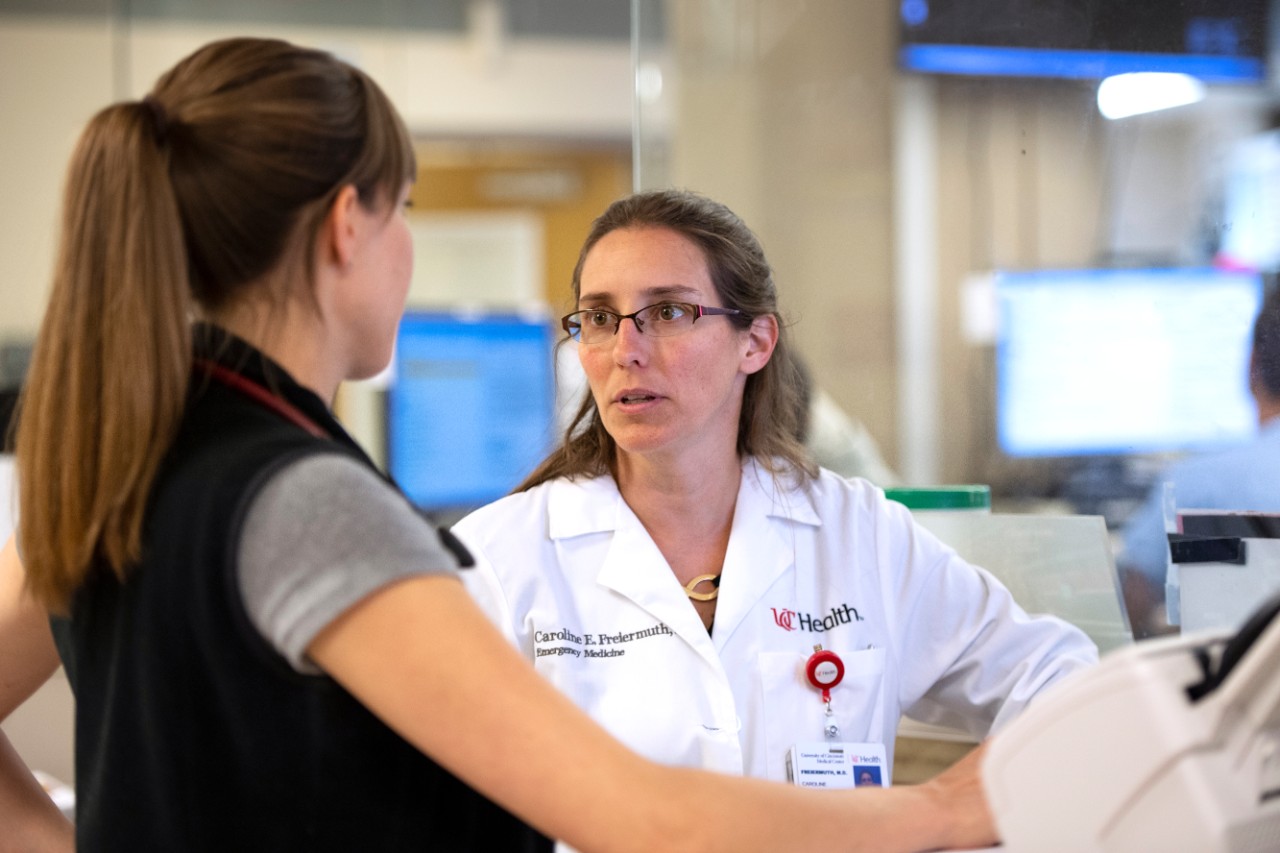
Caroline Freiermuth, MD, of the Department of Emergency Medicine at the UC College of Medicine, is featured in a story published on Cincinnati.com on research she is leading that hopes to identify potential genetic factors in opioid addition. The research, funded by the Ohio Attorney General's office, is among the first to examine the pharmacogenomics of opioid addiction.
Pharmacogenomics, a relatively new field, is the study of how genes affect a person's response to drugs.

A patient volunteering for the pharmacogenomics study is swabbed at the UC Department of Emergency Medicine. Photo credit/Jonathan Quilter/Ohio Attorney General's Office
"We don't know who will be harmed by opioids," Freiermuth said in a YouTube video outlining the research project. "We know … there's a genetic link to many substance use disorders." She and others from UC and Ohio State University's Wexner Medical Center hope to zero in on the genetic identifiers of opioid addiction.
The researchers are recruiting patients from emergency departments who have the chronic health disorder and patients who do not have the condition. Freiermuth, who started the work in May, said she's had a great response from patients at the UC Medical Center. UCMC has now reached the initial milestone of 100 patients enrolled.
Read the full story here and find out more about the research here.
Lead image/Colleen Kelley/UC Creative + Brand
Impact Lives Here
The University of Cincinnati is leading public urban universities into a new era of innovation and impact. Our faculty, staff and students are saving lives, changing outcomes and bending the future in our city's direction. Next Lives Here.
Stay up on all UC's COVID-19 stories, read more #UCtheGood content, or take a UC virtual visit and begin picturing yourself at an institution that inspires incredible stories.
Related Stories
6 ways starting a GLP-1 medication could affect your emotions
May 20, 2026

When patients first start taking a glucagon-like peptide-1 (GLP-1) medication, they probably expect to feel full. But they might not anticipate how it can influence their emotions. The medications act on the stomach and the brain, said Malti Vij, MD, a University of Cincinnati adjunct associate professor in the College of Medicine's Department of Internal Medicine and a diplomate of the American Board of Obesity Medicine.
UC researchers recruit older adults for extreme heat health study
May 20, 2026
The University of Cincinnati’s Center for Collaboration on Climate & Community for Health (C4H) is recruiting older adults to participate in a study tracking their health during periods of extreme summer heat.
UC Serves gives back to Greater Cincinnati
May 18, 2026
UC Serves brought together more than 425 staff and faculty volunteers Friday, May 15, for a day of giving back to the community. It has drawn participation from across the University of Cincinnati since 2014.