
Newsweek: UC snake research fit for Halloween
UC biologist Bruce Jayne studied snakes that rip apart their prey alive

Newsweek turned to University of Cincinnati biologist Bruce Jayne for a Halloween feature about a ghastly creature that rips its prey apart alive.
Jayne first described the unique hunting methods of Asia's cat-eyed water snakes, which look for molting soft-shelled crabs it can rip and devour in pieces.
"Like a high-end chef choosing the finest meat, these snakes will only attack prey when they are ripe for the picking, around 10 to 15 minutes after the animals have molted their shells," Newsweek wrote.
"The Halloween-like surprise is the snake's ho-hum appearance and yet savage behavior!" Jayne told Newsweek.
Jayne used infrared cameras to capture the behavior unsettlingly up close. Like the first victims in a slasher movie, the crabs stand no chance.
"Just as you can't judge a book by its cover, you would never guess that this little snake with such a mundane appearance was such a ferocious and accomplished predator," Jayne told Newsweek.
Featured image at top: UC professor Bruce Jayne holds a brown tree snake. Photo/Joseph Fuqua II/UC Creative + Brand
More UC snake research
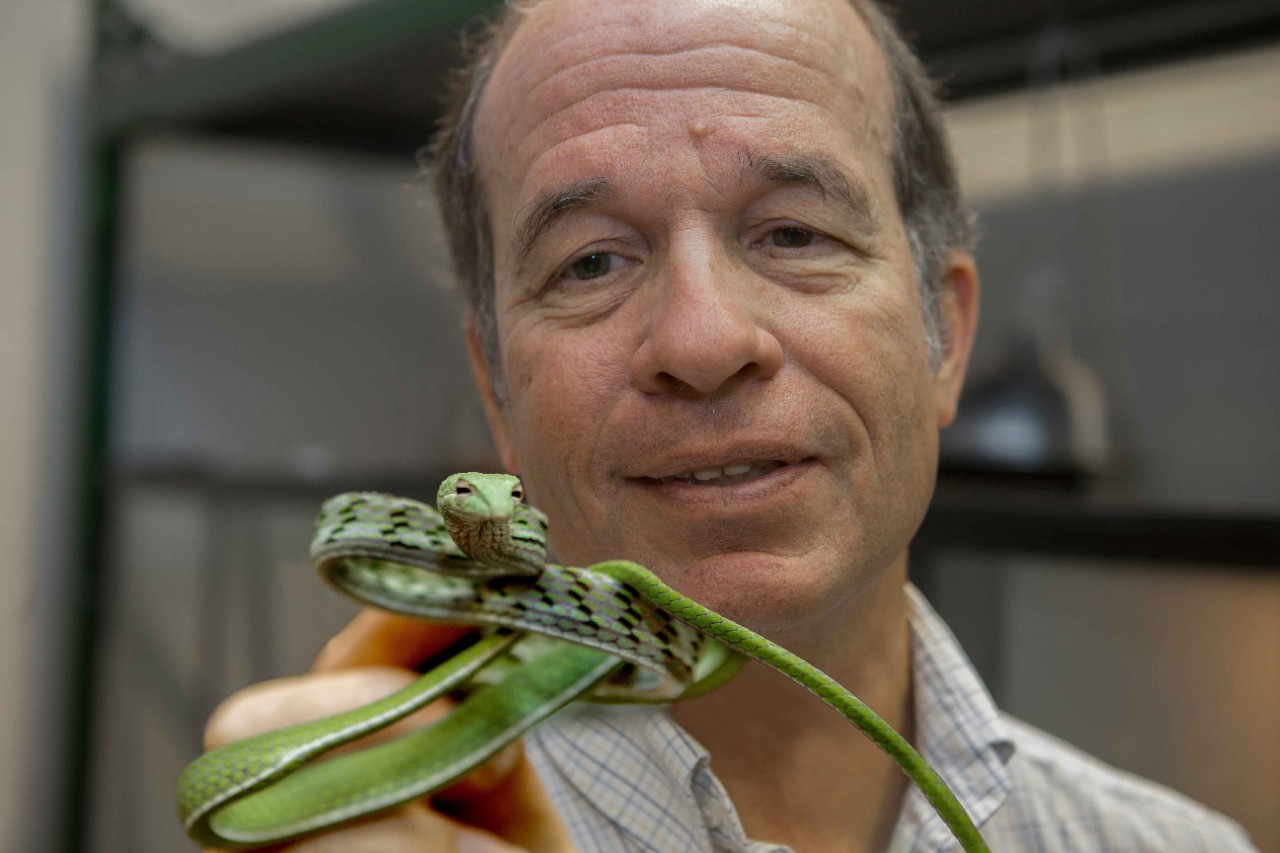
UC professor Bruce Jayne holds a vine snake. Photo/Joseph Fuqua II/UC Creative + Brand
UC Magazine: Whither the Slither?
National Geographic: These snakes can jump and scientists want to know why
New York Times: How the Snake Pours Its Way Across the Ground
UC Magazine: Snake Surprise!
National Science Foundation: Expert unlocks mechanics of how snakes move in a straight line
Related Stories
UC Speech & Hearing Clinic serves patients while acting as training site
September 30, 2026

The University of Cincinnati's Speech & Hearing Clinic provides graduate students in audiology and speech-language pathology with hands-on experience while delivering care to patients across the region. Located on the university's medical campus, the clinic serves patients of all ages and was recently featured on Spectrum News 1 Ohio.
UC economist warns of higher heating costs this winter
September 30, 2026

David Brasington explains why home heating will cost so much this winter and how to save money.
Former mistress of convicted pastor and former American Idol contestant likely won’t face criminal charges
September 30, 2026

Mark Godsey, a criminal law professor in the Donald P. Klekamp College of Law at the University of Cincinnati spoke with NBC News about a criminal case that has attracted national attention.