UC professor develops a new way to manufacture alloys
Murali Sundaram gains NSF grant to expand his patented 3D metal printing process

Murali Sundaram, professor in the Department of Mechanical and Materials Engineering at the University of Cincinnati, is developing a novel alloy manufacturing process using 3D printing.
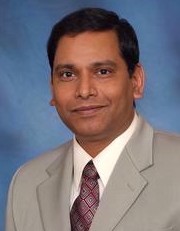
Murali Sundaram
Sundaram has received more than half a million dollars from the National Science Foundation to further develop his method for the additive manufacturing of a new class of high entropy alloys.
By definition, alloys are a mix of different metals. Stainless steel, for example, is steel with added nickel and chromium to make it shiny and rust-free. The typical method for manufacturing alloys like stainless steel includes bringing each component to the temperature at which that element melts, and then combining them to make a uniform composition. This limits the materials you can use because of the different melt temperatures and also restricts the potential shapes and applications of the finished product.
Sundaram employs additive manufacturing, often referred to as 3D printing, which builds an object based on a digital computer model with few limitations on shape.
He developed an electrochemical additive manufacturing process — for which he has a patent — that allows for the layering of various materials at room temperature and eliminates residual stress and cracks that can occur in the traditional heating process required in the current method for making alloys. This method also would vastly expand the elements that can be blended together in virtually any shape imaginable.
Ultimately, the goal is to have the capability to layer a specific material only in the precise area where it is needed for that application. This would allow for new functionalities and savings in materials and less weight or bulk because there are no unnecessary materials used.
“Using the electrochemical deposition, we can deposit the element we want at any particular location, and most importantly, we can do it at room temperature without any heating,” Sundaram said.
The technology could be used for numerous potential applications that require strong materials with specific properties, such as a fuel cell in a marine environment that could be created with layered materials providing corrosion resistance at the electrical contacts and other material layers for insulation.
Sundaram, a 2015 recipient of the prestigious National Science Foundation Faculty Early Career Development Award, has focused his research on micro and nanoscale additive manufacturing and electrochemical machining.
Two doctoral students are working on this new project with Sundaram. He is planning to recruit additional undergraduate and graduate students to work on the project in his Micro and Nano Manufacturing Lab to gain hands-on research experience in advanced manufacturing and materials science. Teaching and working with student researchers is an important aspect of his career. He’s mentored more than 50 students and received the 2019 Excellence in Undergraduate Research Mentoring Award, presented by UC’s Undergraduate Research Program. He said mechanical and materials engineering is still a mostly male-dominated field and he hopes to change that by continuing to inspire more female students to consider the area of study he finds so fascinating.
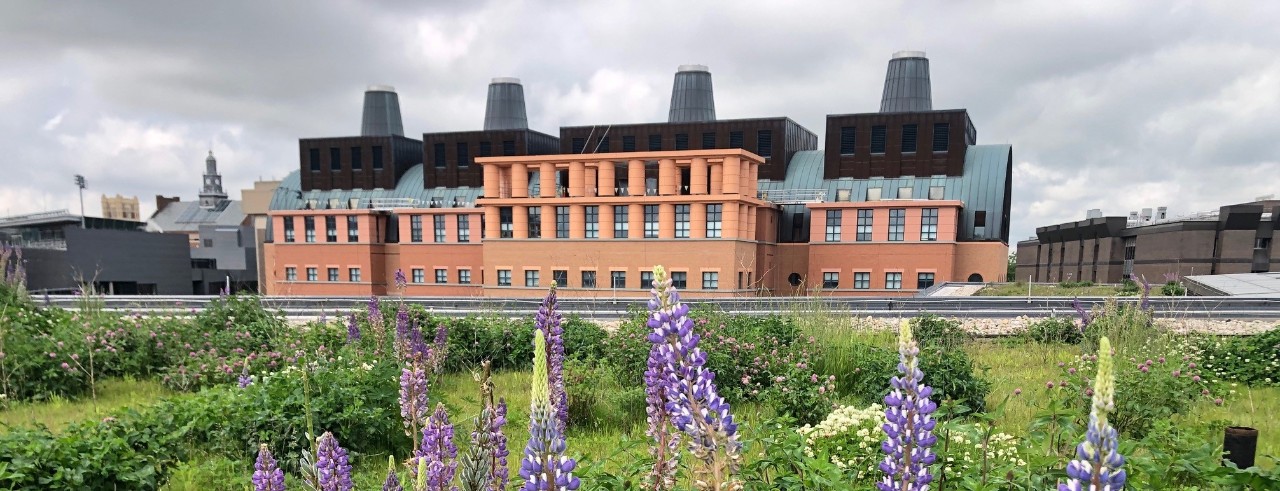
Featured image at top: The Engineering Research Center viewed from Lindner Hall's rooftop garden. Photo/John Martini/UC.
Related Stories
Why can it get so hot at times?
September 3, 2026

Cincinnati is experiencing more days of extreme heat this summer than in previous decades, due in large part to warmer global temperatures. But explanations for these higher temperatures also relate to regional factors, including the city's location in a river valley and large proportion of built environment.
Driverless-taxi company Waymo is mapping Cincinnati streets
September 3, 2026

WCPO turns to UC College of Engineering and Applied Science Professor Munir Nazzal to discuss how consumer confidence is growing in autonomous vehicles as the driverless taxi service sets its eyes on Cincinnati.
UC invests in the next generation of graduate leaders through fellowships focused on mentorship and research
September 3, 2026
The Next Lives Here Presidential Fellowship supports the recruitment of top doctoral students through competitive funding, mentorship and professional development.