AP: America's bellwethers crumbled in aligning with Trump
UC political scientist David Niven shares commentary on 2020 election with national audience

Bellwether states and counties used to be good predictors of election outcomes. That changed with the 2020 presidential election.
For example, Ohio has been a predictor of a Republican presidential win since 1960. Should Biden be certified by the electoral college that trend has ended.
UC political scientist David Niven explains in an Associated Press article how bellwethers were born when political battle lines tended to be drawn more cleanly along economic lines; however, this election cycle the lines appeared to be drawn more around culture wars and identity.
“It speaks to an evolution in American politics,” said Niven, who teaches American politics at UC and conducts research on campaigns, political communication and death penalty policy.
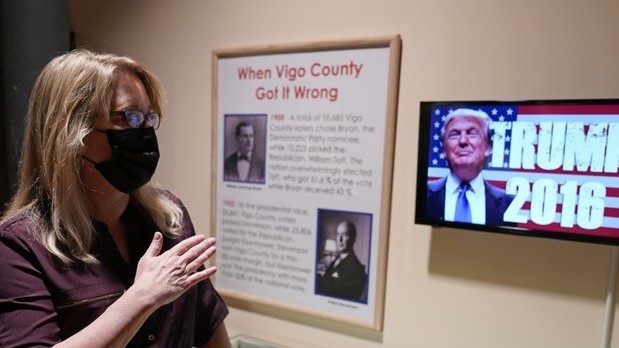
Featured image at top of Vigo County history musuem, where a sign touts the county's status as an election predictor. Photo/AP
Impact Lives Here
The University of Cincinnati is leading public urban universities into a new era of innovation and impact. Our faculty, staff and students are saving lives, changing outcomes and bending the future in our city's direction. Next Lives Here.
Related Stories
Boutique shopping is 'in vogue'
August 20, 2026

Tessa Clark, DAAP alum and fashion designer, owns Idlewild, an OTR shop recently featured in both the New York Times and Vogue.
CCM shares 2026-27 calendar of ticketed + free performances and events
August 20, 2026
Experience world-class performances by the next generation of performing and media artists at the University of Cincinnati College-Conservatory of Music (CCM). With more than 130 different performances and events, there is something happening nearly every week of the school year!
UC student veterans explore engineering careers
August 19, 2026

Stars and Stripes magazine highlighted the co-op experience of a University of Cincinnati mechanical engineering student who is working with the U.S. Army Corps of Engineers.