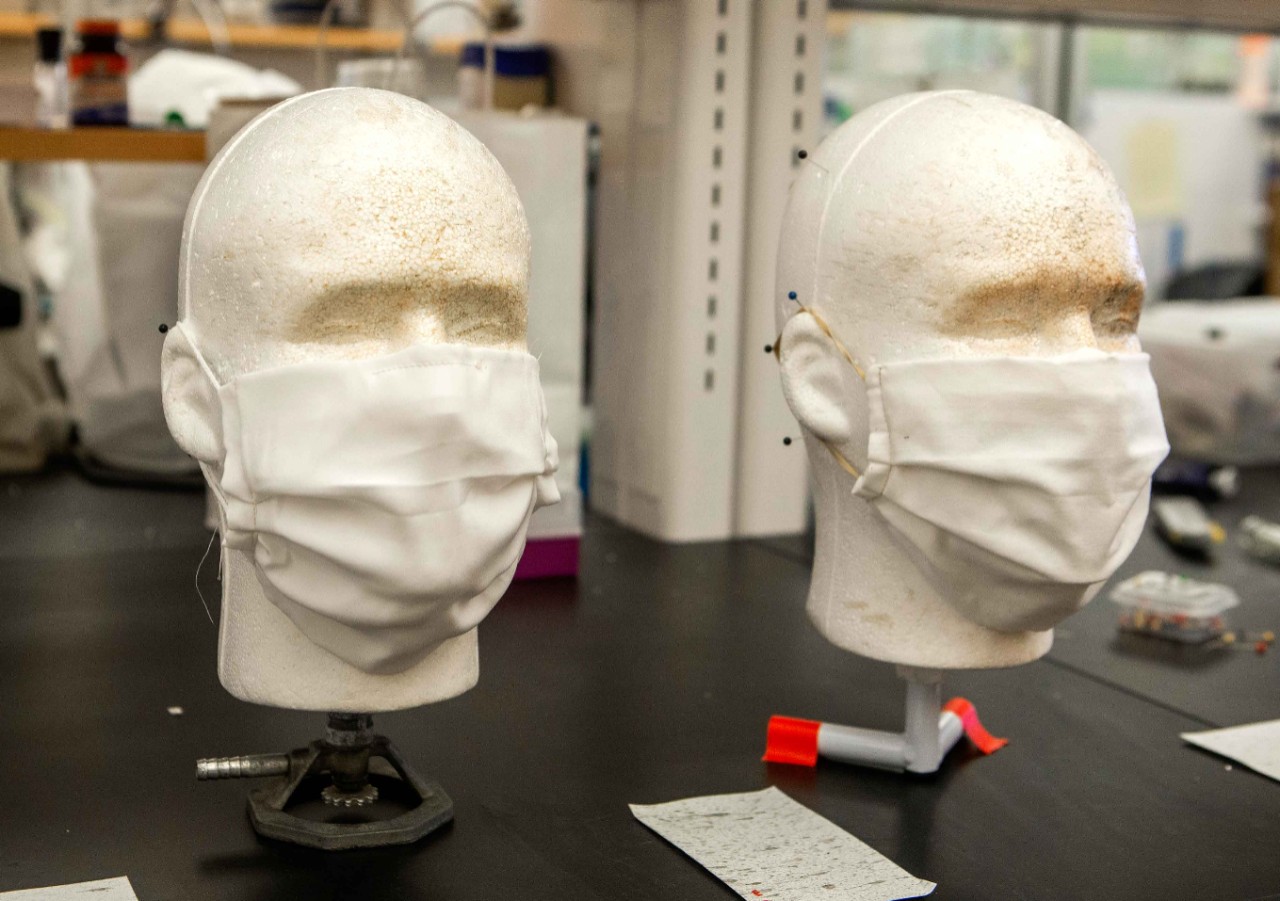
Discover: Why silk is among best for face masks
UC biologist Patrick Guerra talks about his silk research to fight coronavirus

Discover Magazine talked to University of Cincinnati biologist about why silk works better than other materials in making homemade face masks to prevent the spread of COVID-19 infections.
Guerra, an assistant professor of biology in UC's College of Arts and Sciences, conducted tests using cotton, silk and synthetics.
Guerra became interested in helping to find a solution to a national shortage of personal protective equipment at the start of the global pandemic to protect medical professionals like his wife.
Guerra, an expert in moths and butterflies, is familiar with the amazing natural properties of silk used in their cocoons.
"The caterpillars basically build these hydrophobic layers so they're all cozy in their own sleeping bag," Guerra told Discover. "And then if it rains, it takes a lot of saturation to water log it."
Guerra and his postdoctoral researcher, Adam Parlin, conducted experiments in his lab that found silk worked better than cotton or synthetics are repelling moisture. The study was published in the journal Plos One.
Featured image at top: UC biology researchers say silk face masks work better than cotton or synthetic material to repel coronavirus. Photo/Joseph Fuqua II/UC Creative + Brand
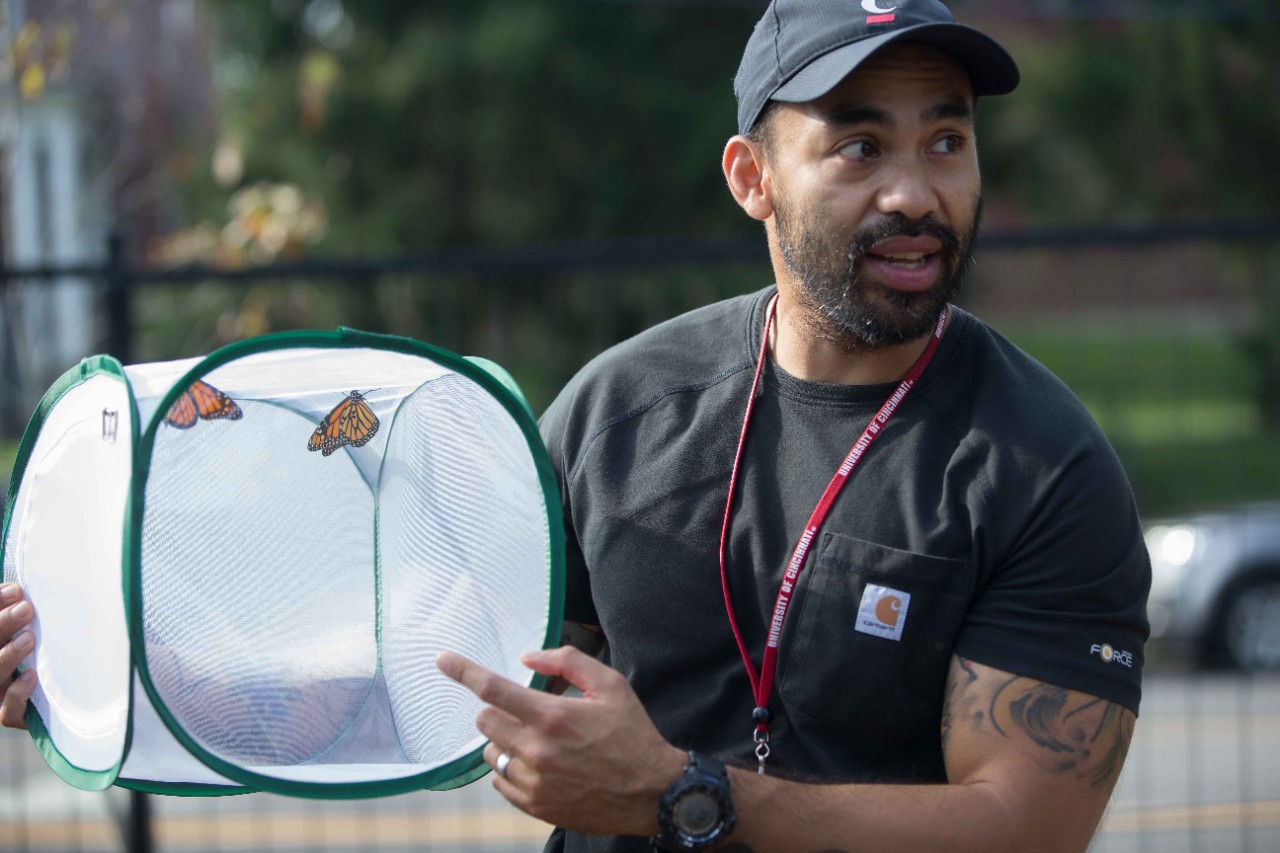
UC assistant professor Patrick Guerra talks to Discover Magazine about why silk face masks might work better than cotton or synthetics at repelling coronavirus. Photo/Lisa Ventre/UC Creative + Brand
Related Stories
These teeny spiders are social media stars
August 28, 2026

The New York Times turned to a University of Cincinnati professor to explain the appeal of jumping spiders on social media.
An internal divide among unions on AI impacts the Wisconsin gubernatorial race
August 28, 2026

Anne Lofaso, a professor in the Donald P. Klekamp College of Law at UC, spoke with Wisconsin Public Radio, about the schism among unions over AI and whether it is a plus, a negative, or somewhere in between when looking at job creation.
UC, NKU renew longstanding partnership supporting Army ROTC cadets
August 26, 2026
The University of Cincinnati Army ROTC and Northern Kentucky University (NKU) have renewed a longstanding partnership that supports students preparing to become Army officers and leaders in their communities. The universities formalized the renewed agreement during a signing event Aug. 11 at NKU.