
MSN: 'Human beings now have hope': UC doctor running Moderna trial says a big blow struck against coronavirus
Preliminary analysis shows vaccine has 95% efficacy

The preliminary analysis on the Moderna COVID-19 vaccine shows 94.5% efficacy, which is consistent with recent early results on the Pfizer vaccine. Carl Fichtenbaum, MD, of the UC Division of Infectious Diseases is a co-investigator of the trial on the Moderna vaccine being conducted at UC.
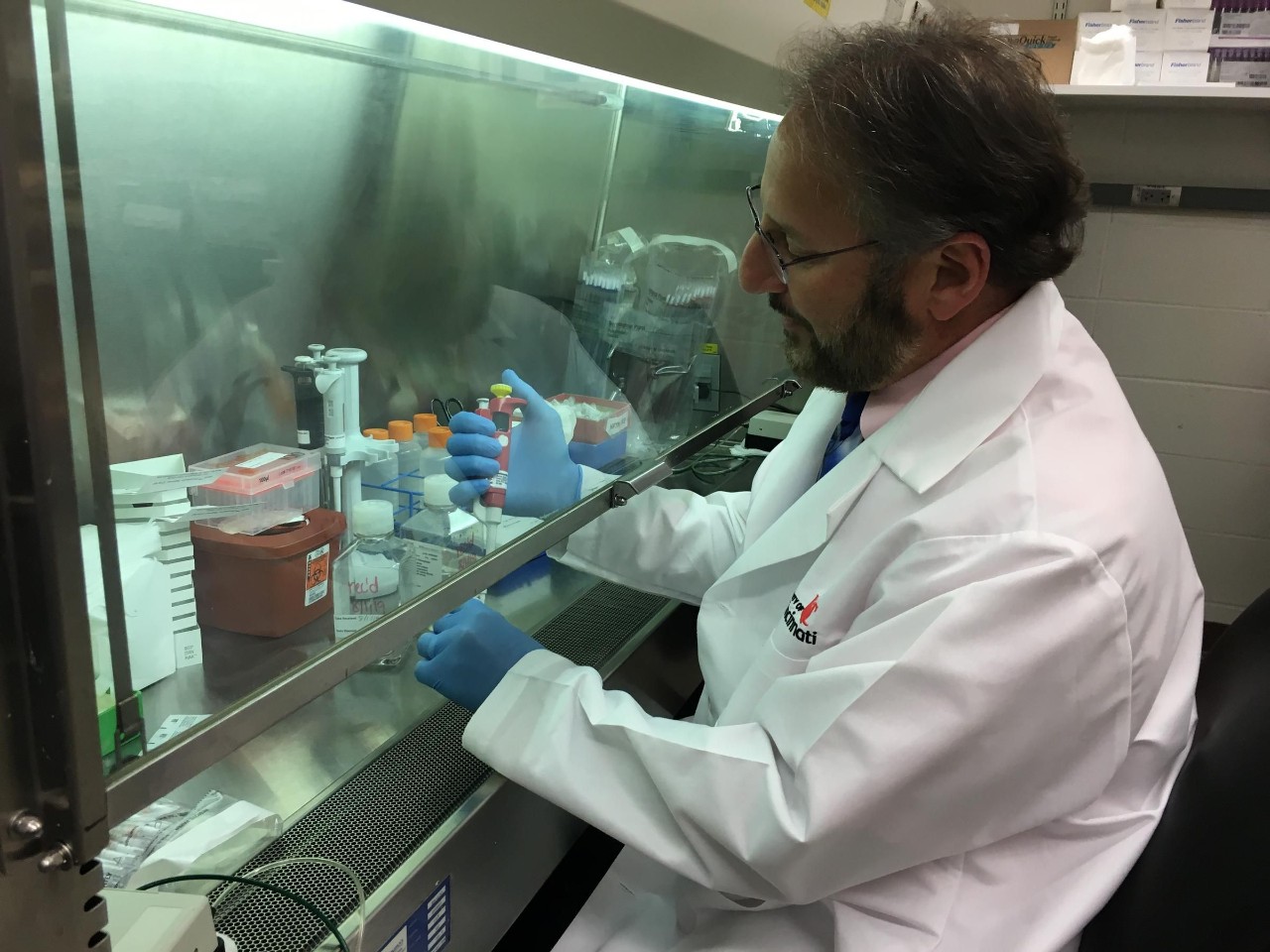
Carl Fichtenbaum, MD, of the UC Division of Infectious Diseases. Photo/Colleen Kelley/UC Creative + Brand
In a story published on MSN and Cincinnati.com, Fichtenbaum said “This is the beginning of the end because human beings now have hope.”
The Moderna vaccine candidate requires two injections 28 days apart. The Pfizer drug is delivered in two shots 21 days apart.
The two vaccines are similar in technology, using a fragment of the virus’ genetic code to go after the spiky proteins on the surface of the coronavirus. Without the crown of spikes, the virus can’t bind, and the body develops the ability to recognize the virus and fight it off.
The Pfizer candidate requires super-cold storage, which many providers do not have. Fichtenbaum said Monday that the advantage of the Moderna candidate is that it keeps at -4, “and most hospitals in the United States have freezers that have the capacity of holding at that temperature.”
The drug also is stable, Fichtenbaum said, “and could be given in a church parking lot over a vaccination day without losing any efficacy. We have reason to be incredibly hopeful.”
Fichtenbaum was also interviewed on this topic by the Cincinnati Business Courier, WLWT-TV and 700 WLW radio. Margaret Powers-Fletcher, co-investigator with Fichtenbaum on the Moderna vaccine trial at UC, was interviewed by Spectrum News.
Lead image/Colleen Kelley/UC Creative + Brand
Next Lives Here
The University of Cincinnati is classified as a Research 1 institution by the Carnegie Commission and is ranked in the National Science Foundation's Top-35 public research universities. UC's medical, graduate and undergraduate students and faculty investigate problems and innovate solutions with real-world impact. Next Lives Here.
Related Stories
UC's Anita Afzali, MD, receives American College of Gastroenterology International Leadership Award
October 27, 2026
The University of Cincinnati's Anita Afzali, MD, receives the American College of Gastroenterology's 2026 International Leadership Award for advancing global digestive health education, research and partnerships.
AI breast cancer survival model from Cancer Center could improve accuracy and personalize care
October 23, 2026
UC Cancer Center researchers, including lead author Wedad Alatebi, developed a deep learning survival model for breast cancer that combines detailed clinical and genetic information, potentially offering physicians a more accurate tool to guide treatment decisions.
UC expert explains potential impact of Pennsylvania’s new vape product law
October 22, 2026

UC professor Ashley Merianos speaks to the Pittsburgh Post-Gazette about Pennsylvania’s new vape law, youth vaping prevention, enforcement challenges and possible unintended consequences.