The New York Times: Third member of Cincinnati City Council charged with corruption
UC political scientist David Niven gives commentary on the arrest of yet another Cincinnati official

In a New York Times article, UC political scientist David Niven weighs in on the arrest of Cincinnati City Councilman P.G. Sittenfeld, and what federal prosecutors are calling a “culture of corruption” among leaders in Cincinnati’s city government.
On Nov. 19, Sittenfeld became the third member of the City Council charged with corruption when he was arrested at home and charged with taking $40,000 in bribes.
“He was the bright young boy wonder of Cincinnati city politics with the Ivy League pedigree and the old money family,” Niven said of the charges and subsequent arrest.
Niven, an associate professor of political science, teaches American politics and conducts research on campaigns, political communication and death penalty policy.
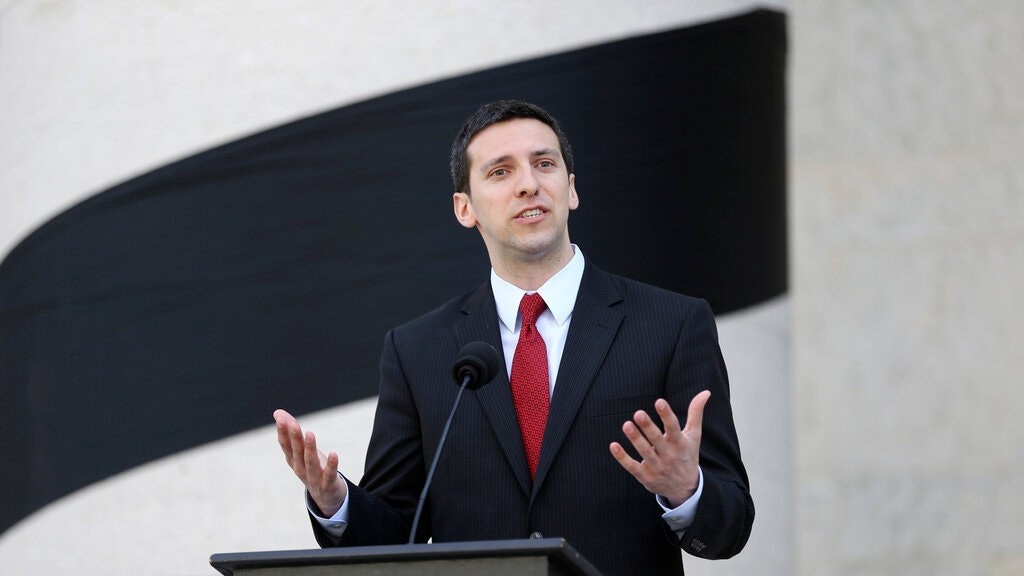
Featured image at top of P.G. Sittenfeld/Photo/Courtney Hergesheimer/The Columbus Dispatch, via Associated Press
Impact Lives Here
The University of Cincinnati is leading public urban universities into a new era of innovation and impact. Our faculty, staff and students are saving lives, changing outcomes and bending the future in our city's direction. Next Lives Here.
Related Stories
These teeny spiders are social media stars
August 28, 2026

The New York Times turned to a University of Cincinnati professor to explain the appeal of jumping spiders on social media.
An internal divide among unions on AI impacts the Wisconsin gubernatorial race
August 28, 2026

Anne Lofaso, a professor in the Donald P. Klekamp College of Law at UC, spoke with Wisconsin Public Radio, about the schism among unions over AI and whether it is a plus, a negative, or somewhere in between when looking at job creation.
DAAP professor and artist turns grass clippings into biodegradable art
August 27, 2026
Through biodegradable bioplastic made from grass clippings, Supermrin shows how creativity can connect science, sustainability and everyday life.