Yahoo News: UC scientist working to find a cure for endometriosis
One in 10 women battle condition that can lead to infertility

For Katie Burns, PhD, an assistant professor at the University of Cincinnati, the push to find a cure for endometriosis is personal.
Endometriosis affects up to 10% of women in childbearing age and is a disorder where the tissue that makes up the lining of the womb grows outside the uterus. The condition can cause extreme pain with periods, lower abdominal pain, painful sexual intercourse and infertility.
Burns has endured the symptoms of endometriosis since adolescence. As a scientist, she dedicates her research to finding treatment and hopefully a cure for endometriosis. She spoke with Cincinnati’s WCPO-TV about her journey.
Endometriosis is difficult to treat and even harder to diagnose. Burns said she was told by some doctors that she just has bad periods or that she was blowing things out of proportion.
“I was told that a number of times growing up … I was told that I needed to seek psychological help,” Burns told WCPO.
Right now, the only way to diagnose endometriosis is through surgery, but Burns hopes her research will change that. She is looking into a non-hormonal treatment that could permanently treat or even prevent endometriosis.
Listen to Katherine Burns, PhD, on WCPO.
Read about Burns' journey fighting endometriosis.
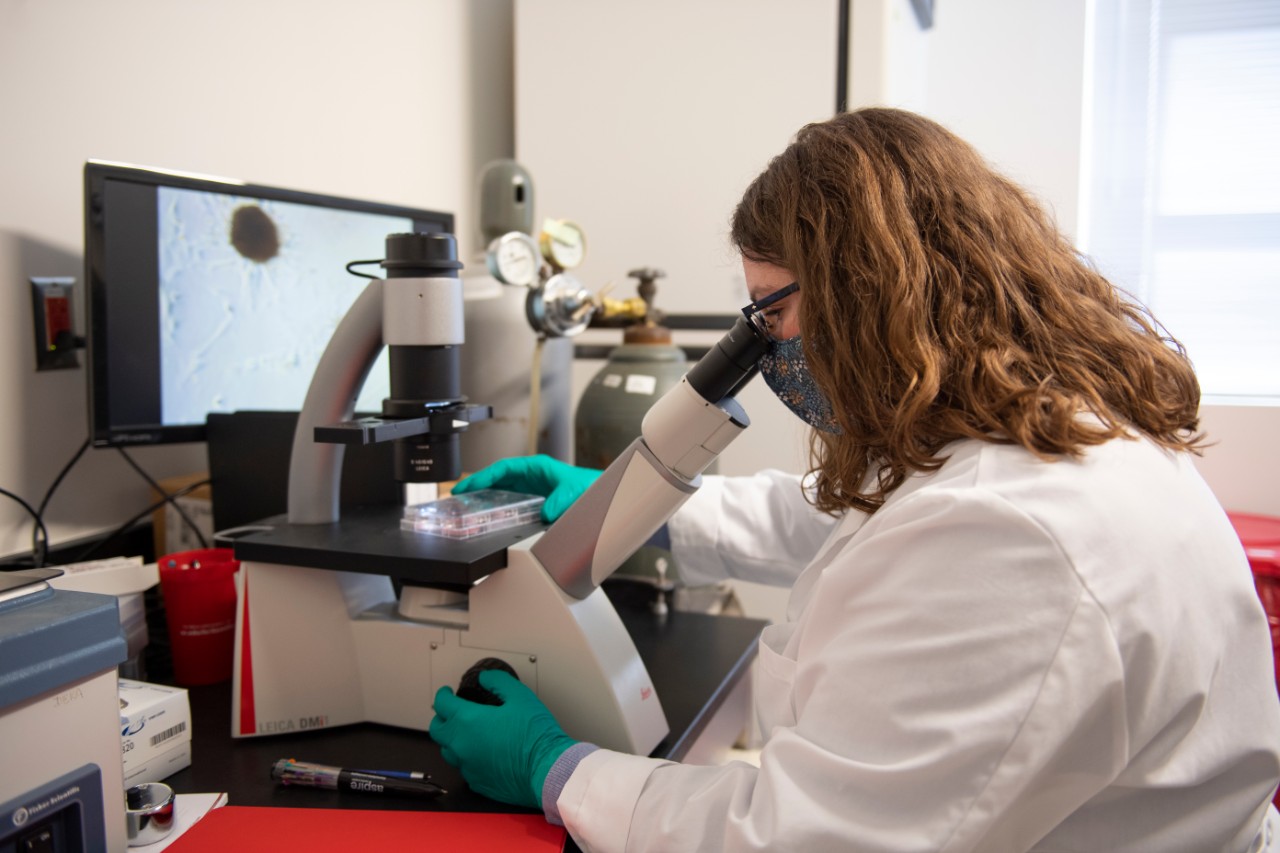
Featured image of Dr. Kathernine Burns in a College of Medicine laboratory. Photo by Colleen Kelley/UC Creative + Brand.
Related Stories
Her book drive is changing literacy in Cincinnati
August 31, 2026

WCPO highlights a nonprofit dedicated to childhood literacy that has offers co-op positions to UC students.
Heavy social media use linked to depression
August 31, 2026

U.S. News and World Report, Yahoo! News, MSN, USA Today and other national media highlight a new study by the University of Cincinnati and Northwestern University that found a correlation between heavy social media use and depression in adults.
These teeny spiders are social media stars
August 28, 2026

The New York Times turned to a University of Cincinnati professor to explain the appeal of jumping spiders on social media.