Wall Street Journal: The human and physical logistics behind COVID vaccine rollouts
UC emergency medicine expert shares insight on how COVID-19 vaccines will be distributed

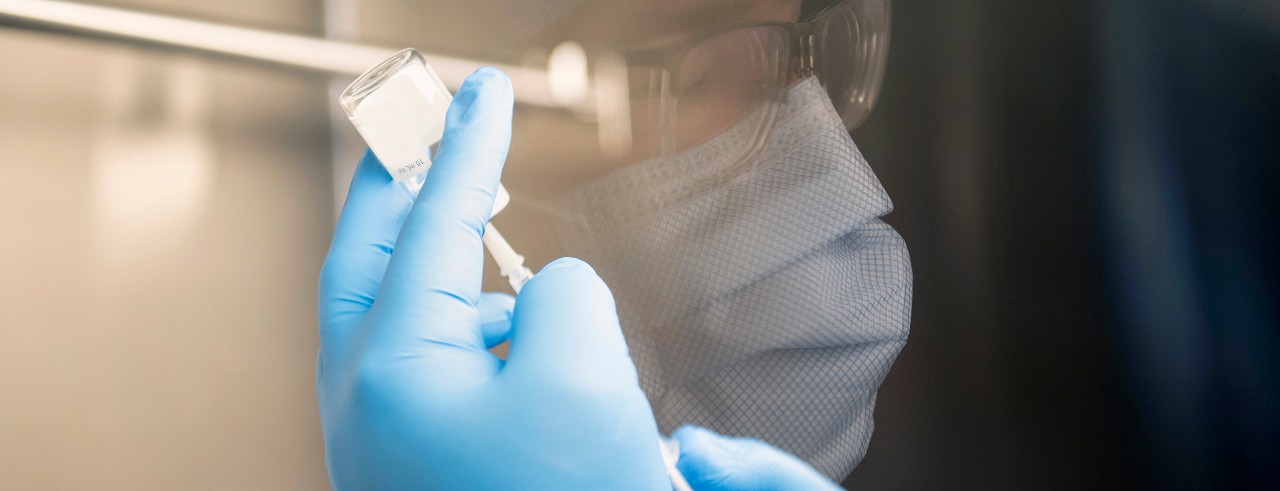
As states and hospitals in the United States race to roll out the first COVID-19 vaccines, the Wall Street Journal talked to a hospital administrator and immunization expert about the logistical challenges involved in this first phase of the vaccination process.

Dustin Calhoun, MD, of the Department of Emergency Medicine at the UC College of Medicine. Photo/Colleen Kelley/ UC Creative + Brand
University of Cincinnati Medical Center will be one of the locations distributing the Pfizer COVID-19 vaccine. Dustin Calhoun, MD, in the Department of Emergency Medicine at the UC College of Medicine, says in Ohio, the vaccine will be distributed in lots of 975 doses.
"The prepositioning sites will probably be receiving one package each initially, and then significantly larger amounts flowing after that," says Calhoun. "Any facility that needs a smaller amount than the 975 of the Pfizer vaccine, will be receiving it after it is re-processed through the state of Ohio into smaller lots of about 100 doses."
Calhoun says the initial rollout of the vaccine to frontline health care workers will help guide the process of giving it to the general population once the vaccine is more widely available.
Watch the full video report here.
Next Lives Here
The University of Cincinnati is classified as a Research 1 institution by the Carnegie Commission and is ranked in the National Science Foundation's Top-35 public research universities. UC's medical, graduate and undergraduate students and faculty investigate problems and innovate solutions with real-world impact. Next Lives Here.
Related Stories
These teeny spiders are social media stars
August 28, 2026

The New York Times turned to a University of Cincinnati professor to explain the appeal of jumping spiders on social media.
An internal divide among unions on AI impacts the Wisconsin gubernatorial race
August 28, 2026

Anne Lofaso, a professor in the Donald P. Klekamp College of Law at UC, spoke with Wisconsin Public Radio, about the schism among unions over AI and whether it is a plus, a negative, or somewhere in between when looking at job creation.
On-site training in Speech & Hearing Clinic sets UC’s programs apart
August 27, 2026
At the University of Cincinnati’s Speech & Hearing Clinic, Doctor of Audiology and Speech-Language Pathology graduate students gain real-world experience while providing free speech and hearing services to the community.