
How are tariffs impacting your retirement plans?
Lindner professor explains the latest on tariffs in WVXU interview

WVXU sat down with University of Cincinnati’s Michael Neugent for a look into how tariffs impact the markets, retirement funds and inflation.
Neugent, associate professor-educator at Lindner College of Business and Director of the MS Finance Program, said that investors in the stock market prefer certainty in fiscal policy to help them map out investment decisions. “Right now, that lack of certainty is providing some angst within the market and investors,” he told WVXU. Many U.S. companies will face challenges from tariffs, but pauses on tariff plans can sometimes lead to more questions than answers.
Neugent also said it is important to keep in mind that not every company will hurt from an increase in tariffs. “Certain companies are more exposed than others to the tariffs. There are others that are relatively immune, and actually may benefit from what’s happening,” he explained.
To Neugent, that’s where having a financial adviser can come in handy, as they can parse out which companies can benefit even as markets may overall falter. “If you have a financial adviser, talk to them. If you don’t have one, get one,” he told WVXU.
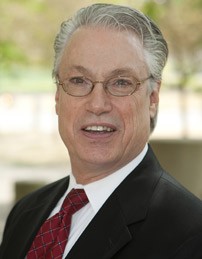
Michael Neugent is an associate professor-educator at Lindner College of Business and Director of the MS Finance Program. Photo/UC Marketing + Brand
In terms of retirement funds, Neugent said to slow down and focus on the long-term. “A lot of times people make the mistake of looking only at a retirement portfolio and not all of their assets,” he said. “So, they don't realize that while the market may be exposed, other assets are not exposed; for example, real estate.”
Neugent said that as people get closer to retirement, it is common to “de-risk” portfolios and invest into more fixed income regardless of the state of the market. “As you get closer to retirement it’s not so much about what you make - it’s about what you don’t lose,” he said. “Each person has to decide what their risk tolerance is.” He also said a financial adviser can help people figure out which avenues to pursue for retirement, such as annuities, IRAs and 401(k)s, as each come with their own fees and nuances.
WXVU also asked Neugent about inflation risks for consumer goods. “I would look at this kind of like we saw in COVID. People stocked up out of fear more so than necessity. Everything’s not going to be equally impacted,” he said. While consumers may buy less discretionary goods, they will still need staple products, and likely continue to buy them regularly.
Neugent said even with volatility and uncertainty dependent on the news cycle, markets tend to bounce back, noting that the S&P 500 index is already near the levels it was before the first round of tariffs were announced. “The question is going to be to what degree that is going to sustain itself,” he said. “The market is obviously looking for hope.”
Listen to the full interview on WVXU.
Featured image at top of a retirement fund jar. Photo/Adobe Stock/pinkomelet
Related Stories
New vending machine helps people with addiction
October 8, 2026

The University of Cincinnati's Daniel Arendt was featured in a Spectrum News report on a new harm reduction vending machine installed at the IPM Food Pantry in partnership with the Hamilton County Mental Health and Recovery Services Board.
UC study correlates increased physical activity with slower Parkinson’s progression
October 7, 2026
Higher levels of physical activity were associated with slower declines in thinking and memory as well as slower worsening of movement symptoms for people with Parkinson’s disease, according to a new study led by University of Cincinnati researchers published Oct. 7, 2026, in Neurology.
Defying the demographic cliff
October 7, 2026

Despite the looming demographic cliff, the University of Cincinnati and five other major Greater Cincinnati universities grew enrollment this fall, with UC reaching a record 54,437 students, helped by strong first-year demand.