
WVXU: 'Springing' forward means more daylight but also more health problems and less sleep
UC expert says the time change is not good for our health

A Congressional committee heard testimony recently on the pros and cons of switching between standard and daylight saving time. Many people say they like having the extra hour of daylight, but sleep professionals say it's a bad idea.
The American Academy of Sleep Medicine is continuing the push to abolish daylight saving time. Research shows most people get an hour less sleep on daylight saving time. That has a host of health and safety implications.
In a story posted by WVXU, Ann Romaker, MD, of the Division of Pulmonary, Critical Care and Sleep Medicine and director of the Sleep Medicine Center at UC Medical Center, said the time change creates the potential for a variety of health problems.
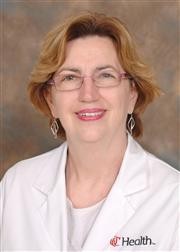
Ann Romaker, MD, of the Division of Pulmonary, Critical Care and Sleep Medicine/Photo/Colleen Kelley/UC Creative + Brand
She says while you may look forward to an extra hour of daylight, it's not good for our health.
"We're already a sleep-deprived civilization and with less sleep there's more hypertension, there's more coronary disease, more motor vehicle accidents, etc.," she says.
She's says people should be extra careful when driving.
"We should probably slow down a little bit because we and other drivers on the road are somewhat sleep deprived so we're not going to stop as well," she says. "In addition to what we can do to mitigate sleep problems we also should slow down and watch out for each other and be a little more patient and try to mitigate road rage."
Romaker says getting up an hour early on Sunday so you're ready to go to bed at what would be your normal time, may help ease the transition.
Romaker was also interviewed for a story posted by Local12 about move in Congress to make daylight saving time permanent. See that coverage here.
Lead image/Rayia Soderberg/Unsplash
Impact Lives Here
The University of Cincinnati is leading public urban universities into a new era of innovation and impact. Our faculty, staff and students are saving lives, changing outcomes and bending the future in our city's direction. Next Lives Here.
Stay up on all UC's COVID-19 stories, or take a UC virtual visit and begin picturing yourself at an institution that inspires incredible stories.
Related Stories
Record enrollment continues at the University of Cincinnati
September 9, 2026
The University of Cincinnati recorded its largest enrollment ever in fall 2026 with more than 54,400 students, driven by record first-year enrollment, growth at UC Blue Ash and rising College Credit Plus participation.
CCM alumnus to write and direct movie for Neon, Blumhouse Atomic Monster, Spooky Pictures
September 9, 2026

Spencer Lackey is taking his scary stories from social media to feature films with Lust, a movie he wrote and will direct. A few months ago, The Hollywood Reporter informally surveyed agents, managers and producers about who could be the next Curry Barker (Obsession) or Kane Parsons (Backrooms). UC College-Conservatory of Music alumnus Spencer Lackey (BFA Acting, '17) was one of the names that kept coming up as a potential "next big thing in the horror space."
'Truly spectacular': College of Medicine baccalaureate programs celebrate a year of momentum under new leadership
September 8, 2026
A year into his role, Kevin Haworth, PhD, reflects on the University of Cincinnati College of Medicine's largest-ever incoming baccalaureate class, first anatomy certificate graduates and a landmark philanthropic gift.