WLWT: Beautiful tree in Ohio causes ugly problem
UC biologist explains the significance of invasive pear trees

WLWT spoke to a University of Cincinnati biologist about why a ubiquitous flowering tree in the Midwest is creating an environmental problem.
Bradford pear trees were introduced from China. Initially, the imported varieties were sterile. But since they also were fragile, with trunks that easily split as they grew, nurseries crossed them with similar hardy trees that could reproduce.
And reproduce they have. Wild pear trees have cropped up along highways and in forest clearings far where birds deposit their seeds, said Theresa Culley, head of UC's Department of Biological Sciences.
"That's one of the really interesting things about invasive species. There's always a story behind it," Culley told WLWT.
Today, the white blossoms of Callery pear trees are easy to spot each spring across Cincinnati.
The invasive pear trees are crowding out native species that provide more food and habitat for wildlife.
Ohio plans to ban the sale and distribution of Callery pear trees starting next year with a five-year grandfather clause to allow garden stores to sell their remaining inventory.
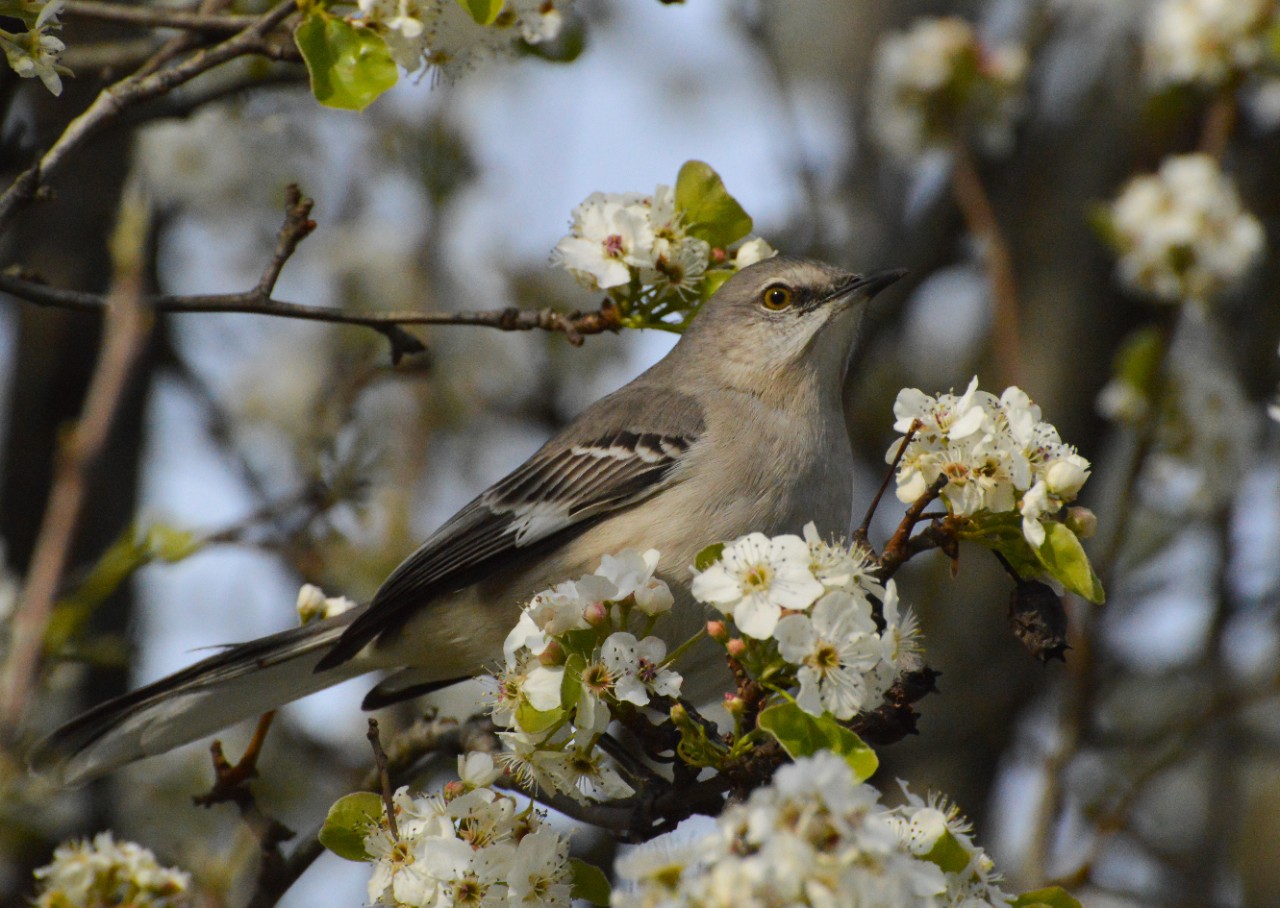
Featured image at top: A northern mockingbird is surrounded by the white flowers of a Callery pear tree. Photo/Michael Miller

UC biologist Theresa Culley stands in a grove of wild Callery pear trees at the Harris M. Benedict Nature Preserve. The fast-growing trees are crowding out native forests in some parts of the Midwest. Photo/Joseph Fuqua II/UC Creative + Brand
Related Stories
Bidirectional link between oral, kidney health calls for patient education, access
August 4, 2026

Despite growing awareness of the connection between oral health and chronic health conditions, patient awareness and access to dental care remain limited, according to University of Cincinnati experts who recently spoke with Healio | Nephrology News & Issues.
UC-built detector at CERN looks for enticing evidence to explain dark matter
August 4, 2026
A physicist from the University of Cincinnati and his research partners from around the world conducted an experiment at CERN’s Large Hadron Collider in Switzerland to look for evidence that might help explain one of science’s most baffling questions: dark matter.
The subtle changes in hearing you should never ignore
August 4, 2026

It’s easy to dismiss changes in hearing as minor. But as The Washington Post recently reported, these symptoms could also signal a medical emergency that many people don’t recognize — known as sudden sensorineural hearing loss, a rapid decline in hearing that occurs suddenly or over a few days.