Reuters Health: Stroke treatment effective for patients with disability, dementia

The American Heart Association and American Stroke Association have published new guidance stating people with a disability or dementia who experience a stroke should receive appropriate treatment, which could allow for a return to prestroke levels of function.
The researchers explained that subgroups of patients, such as those with pre-existing disability, were not included in early trials that helped develop endovascular thrombectomy (EVT), or the removal of a blood clot using imaging guidance, as a standard of care for stroke treatment. However, new data shows comparable safety to perform EVT on patients with dementia or disability.
Stacie Demel, DO, PhD, assistant professor of clinical neurology and rehabilitation medicine in the University of Cincinnati College of Medicine and a UC Health physician at the UC Gardner Neuroscience Institute, commented on the statement for Reuters Health.
"Prior to referring a patient for EVT, an understanding of a patient's baseline functional status plays a central role in the decision regarding taking a patient for (the) procedure," Demel said. "Blindly excluding patients with physical disability or dementia will result in inequitable stroke treatment across populations. However, in lieu of strong evidence to either treat or defer treatment, it is the obligation of the treating physician to be cognizant of bias and to engage and educate the patient and/or the family in decision making."
Read the Reuters Health article.
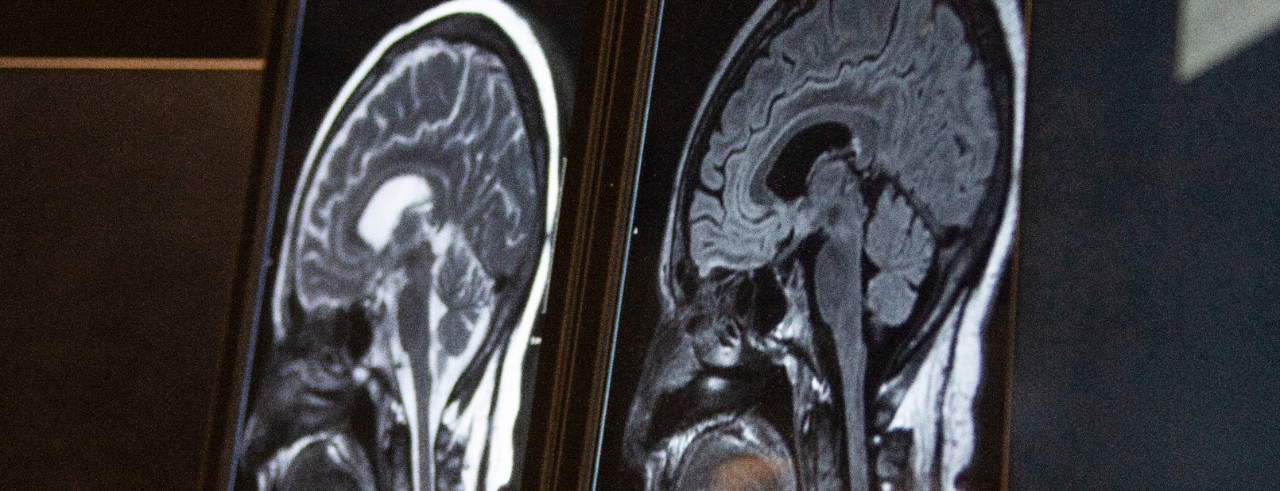
Featured photo at top of MRI brain scan. Photo/Ravenna Rutledge/University of Cincinnati.
Related Stories
These teeny spiders are social media stars
August 28, 2026

The New York Times turned to a University of Cincinnati professor to explain the appeal of jumping spiders on social media.
An internal divide among unions on AI impacts the Wisconsin gubernatorial race
August 28, 2026

Anne Lofaso, a professor in the Donald P. Klekamp College of Law at UC, spoke with Wisconsin Public Radio, about the schism among unions over AI and whether it is a plus, a negative, or somewhere in between when looking at job creation.
On-site training in Speech & Hearing Clinic sets UC’s programs apart
August 27, 2026
At the University of Cincinnati’s Speech & Hearing Clinic, Doctor of Audiology and Speech-Language Pathology graduate students gain real-world experience while providing free speech and hearing services to the community.