
Chemical engineering student researches nanoparticle drug delivery
Vishnu Sriram hopes his research could lead to improved cancer treatments

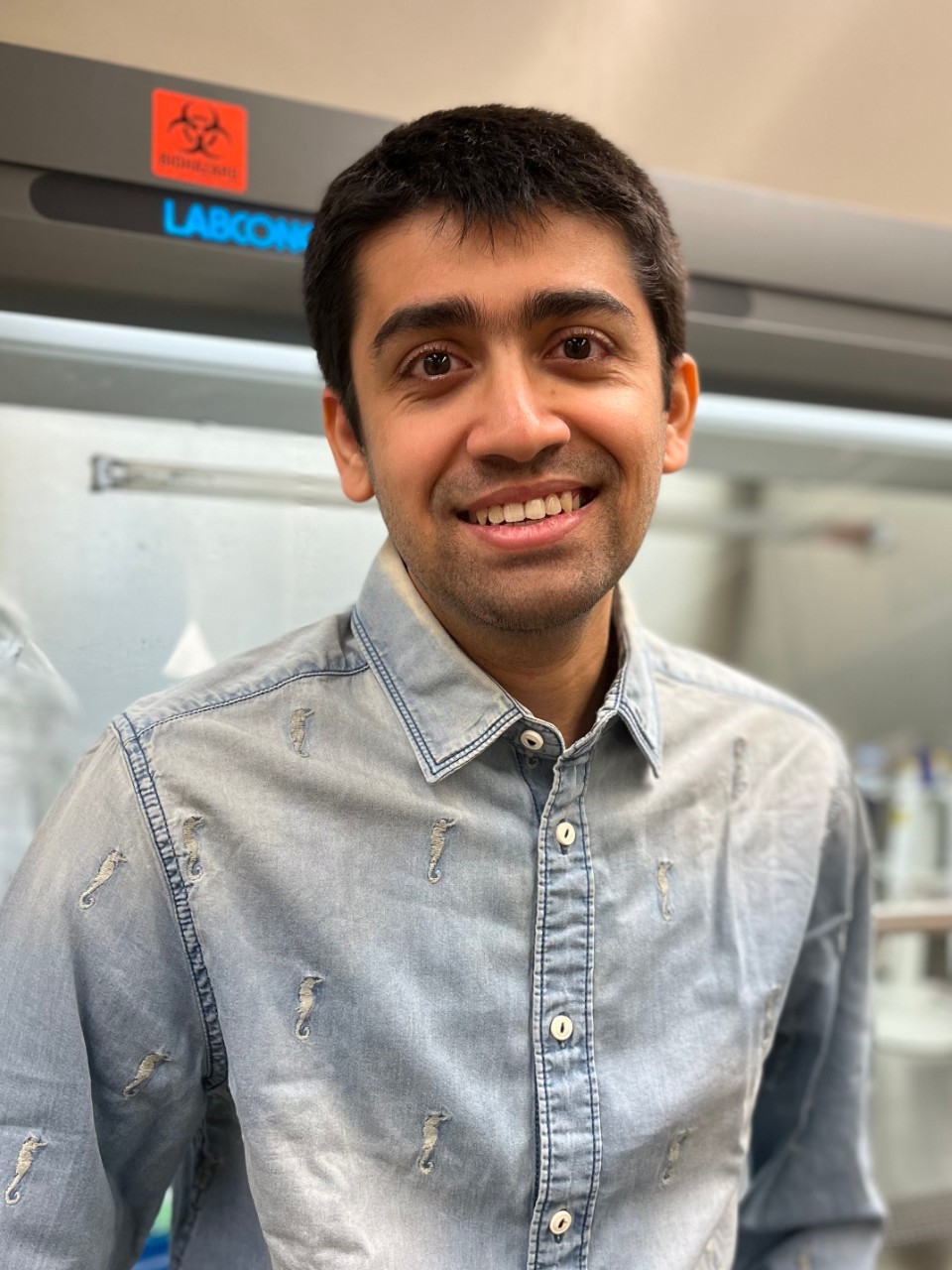
Vishnu Sriram came to the University of Cincinnati from India to pursue a master’s in chemical engineering. He decided to stay at UC for his Ph.D. to research nanoparticle gene and drug delivery that could someday lead to improved cancer treatments. He was named Graduate Student Engineer of the Month by the UC College of Engineering and Applied Science.
Why did you choose UC for your master's and why did you stay for your Ph.D.?
UC has always had a good reputation and the chemical engineering programs offered here allow graduate students to focus in specialized areas of study, such as catalysis, water treatment, nanomedicine, etc. Many of our professors work in innovative research fields. They impart knowledge that helps us develop unique skillsets that pave the way for students to secure good positions in industry. They’re also very encouraging if the student wishes to pursue a career in academia.
Additionally, many professors work and collaborate with other departments. This kind of multi-disciplinary interaction and exposure helps broaden our prospects. After my master's, I had an opportunity to move elsewhere, but the opportunity to work in the field of drug and gene delivery to treat cancer was exciting and it weighed heavily on my decision to continue at UC.
Why did you choose to study chemical engineering?
I was always fascinated by and drawn to the subject. Back in school, I enjoyed my time spent in the chemistry lab the most. I was also very good at math, so choosing engineering was a no-brainer. I was also inspired by my dad, who was a good innovator himself and members of my family who excelled in science. My family encouraged me to pursue the subject as it had many exciting career options.
Describe your research work.
For my Ph.D. study, I had the opportunity to work in the field of nanomedicine focused on gene and drug delivery to treat cancer. I make biodegradable and biocompatible delivery systems including polymeric and lipid nanoparticles which are used to carry chemotherapeutic drugs or genetic material such as mRNA. My work entails the synthesis of organic molecules, engineering them into nanoparticles and evaluating their performance against cells in vitro. I would like to test its performance in pre-clinical models to evaluate the potential of these drug delivery systems to treat cancer.
What is the end goal of your research work?
I’m working towards a unique delivery system that can exhibit good cell-killing ability against cancer in vitro and in pre-clinical models. Even though there has been tremendous progress in the way we treat cancer, there are several barriers that need to be overcome. Currently, there are few nanoparticle systems that can successfully perform in vivo and is less toxic. I aim to produce new biodegradable and biocompatible nanoparticle designs that perform well both in vitro and in vivo models.
What motivates you to work hard every day?
My work could potentially have a positive impact on society and change people’s lives. It could change how we treat terminal diseases such as cancer, but there is a long way to go.
Additionally, as an international student, I feel the need to go above and beyond and push myself to keep working towards my goals, so that my decision to pursue this and move away from my family is vindicated.
What are your future plans after completing your degree?
I look forward to joining the industry after I graduate. I hope to have gained skillsets that will help me work closely with patients and offer solutions. I’m also very excited to see what the world of chemical engineering has to offer outside of UC.
Related Stories
AI breast cancer survival model from Cancer Center could improve accuracy and personalize care
October 23, 2026
UC Cancer Center researchers, including lead author Wedad Alatebi, developed a deep learning survival model for breast cancer that combines detailed clinical and genetic information, potentially offering physicians a more accurate tool to guide treatment decisions.
UC Biomedical Engineering student launches mobile healthcare platform
October 22, 2026
As a fifth-year biomedical engineering student at the University of Cincinnati College of Engineering and Applied Science, Amelia Wares has been a trailblazer in nearly every area imaginable — and this is only the beginning of her journey.
UC aerospace engineer leads global computational fluid dynamics taskforce
October 21, 2026
The American Institute of Aeronautics and Astronautics' CFD 2030 Integration Committee has announced the formation of the Computational Fluid Dynamics (CFD) Vision 2045 Team, a multi-institution working group tasked with defining where the field of computational fluid dynamics should be by 2045 to align with the changing and evolving needs of the aerospace industry. The University of Cincinnati's Prashant Khare, Bradley Jones professor and head of the Department of Aerospace Engineering, is leading this specialized group.