UC appoints new Jewish Foundation of Cincinnati chair
Jennifer Caplan brings updated approach to religion and culture curriculum

The Department of Judaic Studies at the University of Cincinnati has appointed Jennifer Caplan as the new Jewish Foundation of Cincinnati Chair in Judaic Studies.
“We are excited that Dr. Caplan will be joining our faculty,” says Matthew Kraus, head of the Department of Judaic Studies. “Her expertise in modern Jewish religion and culture are essential to a comprehensive and relevant understanding of Jewish studies.”
Caplan’s book “Funny, You Don't Look Funny: Judaism and Humor from the Silent Generation to Millennials” (Wayne State University Press) demonstrates how Jewish humor marks developments in the Jewish identity, Jewish religion, and the concept of religion itself and will be coming out soon.

UC's new Jewish Foundation of Cincinnati's chair Jennifer Caplan
In addition to courses about Jews and Judaism in film, comics, and humor and on modern Jewish history, Caplan will also teach a variety of courses in religious studies. Through her research and teaching, she will enhance and grow religious studies in UC’s College of Arts and Sciences as well as throughout UC. She will be teaching Jews in American Film and Introduction to the Study of Religion this fall.
Caplan comes to UC from Towson University, where she served as assistant professor in the department of philosophy and religious studies. She grew up in Safety Harbor, Fla., but as a child of an itinerant actor and a professional clown, she has lived all over the country. She graduated from Wellesley College, received a master’s of theological studies from Harvard Divinity School and earned a Ph.D. in religion from Syracuse University.
Prior to joining the faculty at Towson in 2017, Caplan held visiting positions at Wesleyan University, Western Illinois University, and Rollins College. Beside her forthcoming book, she has published articles and book chapters such as “Public Heroes, Secret Jews: Jewish Identity and Comic Books” in The Journal of Jewish Identities, January 2021, and “Modern Judaism and the Golden Age of Television” in American Religious History 2021.
The future for Jewish Studies at UC is bright. Dr. Caplan brings new trends in religious and Jewish studies.
Matthew Kraus Head, UC Judaic Studies
She is currently working on visual and photographic theory to talk about trauma and images for a volume on obscenity and comic books focusing on obscene violence and the cultural difference between the visual presentation of “superhero violence” and depictions of historical events such as the Holocaust, 9/11, or the bombing of Hiroshima and Nagasaki.
Caplan teaches a wide range of religious studies and Jewish studies courses such as American Jewish History; Race, Gender, Sexuality, and Judaism; Global Jewish Literature; Jewish Graphic Novels; Religion in America; American Jewish Humor; Judaism, Christianity, and Islam; and Religion, Literature, and Film. Her interdisciplinary work connects to a number of areas besides religious and Jewish Studies such as American studies, women and gender studies, and film and media studies.
Says Kraus: “The future for Jewish Studies at UC is bright. Dr. Caplan brings new trends in religious and Jewish studies, along with an understanding and appreciation of our community that will benefit UC and Cincinnati for many years to come.”
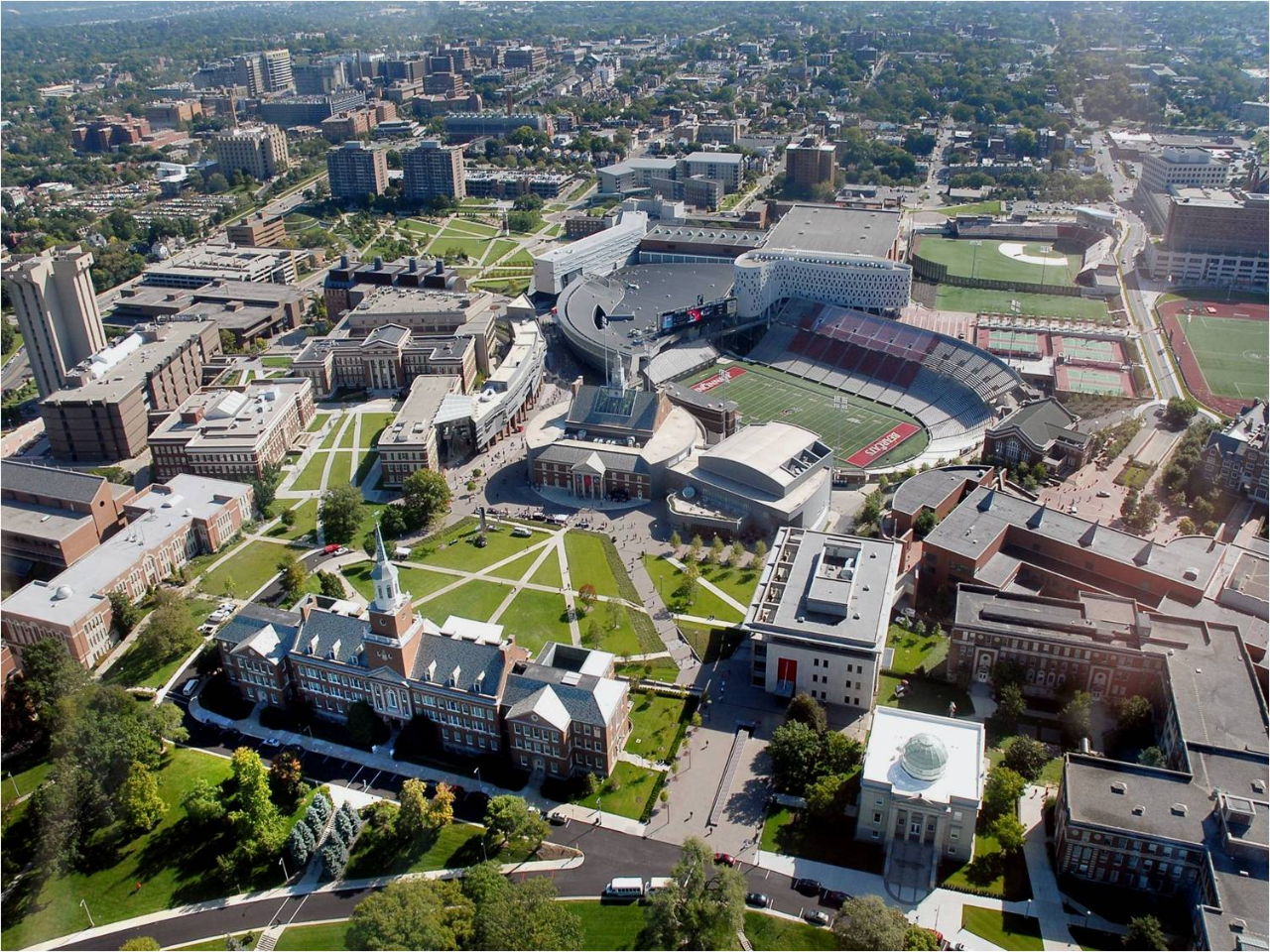
Featured image at top: Aerial view of UC's uptown campus.
Related Stories
Her book drive is changing literacy in Cincinnati
August 31, 2026

WCPO highlights a nonprofit dedicated to childhood literacy that has offers co-op positions to UC students.
These teeny spiders are social media stars
August 28, 2026

The New York Times turned to a University of Cincinnati professor to explain the appeal of jumping spiders on social media.
UC, NKU renew longstanding partnership supporting Army ROTC cadets
August 26, 2026
The University of Cincinnati Army ROTC and Northern Kentucky University (NKU) have renewed a longstanding partnership that supports students preparing to become Army officers and leaders in their communities. The universities formalized the renewed agreement during a signing event Aug. 11 at NKU.