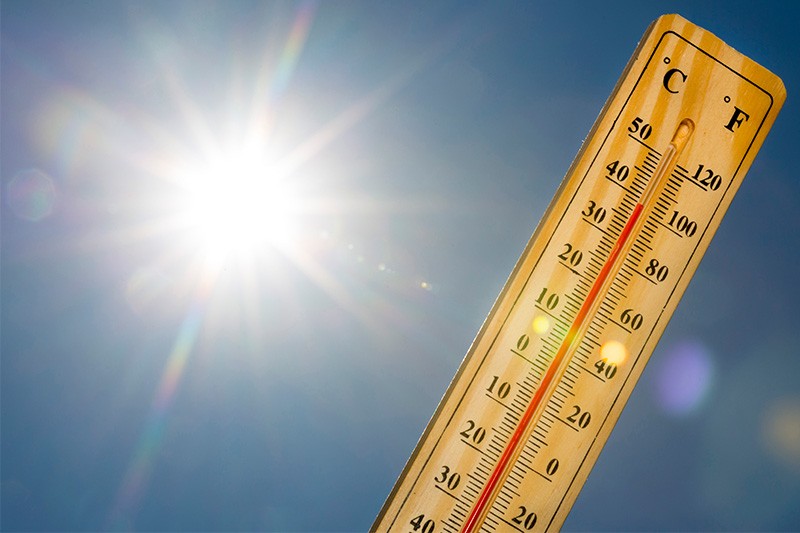
Cincinnati.com: Extreme heat is dangerous for more than children, elderly. How to know if you're at risk
UC expert says being able to sweat is the key to keeping cool

Greater Cincinnati is experiencing another round of dangerously hot weather. Children, the elderly and people with pre-existing conditions are particularly at risk from the heat. Cincinnati.com checked with some local experts to learn more about dealing with extreme heat. One of those was Dustin Calhoun, MD, of the Department of Emergency Medicine at the UC College of Medicine.
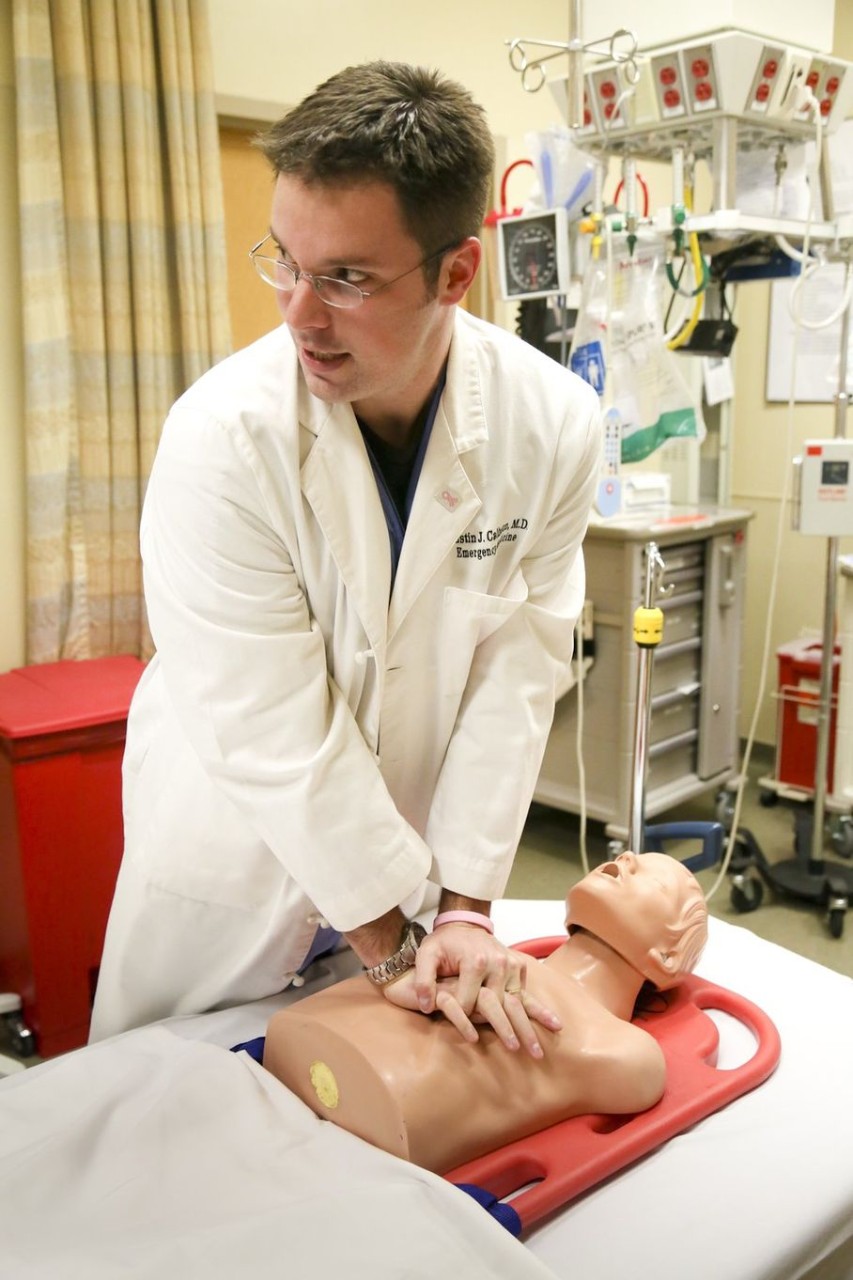
Dustin Calhoun, MD, of the Department of Emergency Medicine at the UC College of Medicine/Photo/Colleen Kelley/UC Marketing + Brand
"There's a number of different populations that can have a greater problem with it," Calhoun said. "I sort of lump them into two categories. There's the group of folks that are medically fragile to temperature change and then there's another group of folks that are sort of on the social side of fragility, who don't have air conditioning or don't have a situation where they have more abilities to cool off."
Cincinnati.com reported that Cincinnati ranks amongthe top 15 U.S. cities for homes that lack air conditioning, according to the Census Bureau's 2019 American Housing Survey. That's a major barrier to cooling off when temperatures hit summer highs.
For most people, Calhoun said, their bodies are able to do a decent job of cooling themselves, within reason.
"If you have some amount of air circulation and you're able to sweat and there is sufficient dryness in the air to evaporate that sweat, our body does a decent job there," he said. "As soon as we're no longer able to adequately sweat, our heat stress and heat injury goes up dramatically."
Lead photo/CDC
Next Lives Here
The University of Cincinnati is classified as a Research 1 institution by the Carnegie Commission and is ranked in the National Science Foundation's Top-35 public research universities. UC's graduate students and faculty investigate problems and innovate solutions with real-world impact. Next Lives Here.
Related Stories
Her book drive is changing literacy in Cincinnati
August 31, 2026

WCPO highlights a nonprofit dedicated to childhood literacy that has offers co-op positions to UC students.
Heavy social media use linked to depression
August 31, 2026

U.S. News and World Report, Yahoo! News, MSN, USA Today and other national media highlight a new study by the University of Cincinnati and Northwestern University that found a correlation between heavy social media use and depression in adults.
These teeny spiders are social media stars
August 28, 2026

The New York Times turned to a University of Cincinnati professor to explain the appeal of jumping spiders on social media.