55KRC highlights UC stroke trial

The BEST-II clinical trial led by the University of Cincinnati's Eva Mistry is looking to determine if lowering patients' blood pressure following treatment for an ischemic stroke leads to better outcomes.
Mistry, MD, assistant professor in the Department of Neurology and Rehabilitation medicine in UC’s College of Medicine and a UC Health physician, recently joined 55KRC's Simply Medicine radio program and podcast to discuss the study.
She explained the study is designed to research patients with the most severe type of ischemic stroke, as even with advances in treatment half of these patients remain disabled or die in the long term.
"High blood pressure after this procedure was associated with worse outcomes in these patients compared to lower blood pressure levels," Mistry said. "So we have taken those data forward and performed a randomized clinical trial looking at high versus moderate versus low blood pressure targets in the first acute 24 hours after this procedure of taking the blood clot out."
If lowering blood pressure in this patient population proves to be safe, Mistry said future studies will look to see how effective of a strategy lowering blood pressure is to lead to long term positive outcomes.
Listen to the Simply Medicine interview. (Note: Segment begins around 12:04 mark.)
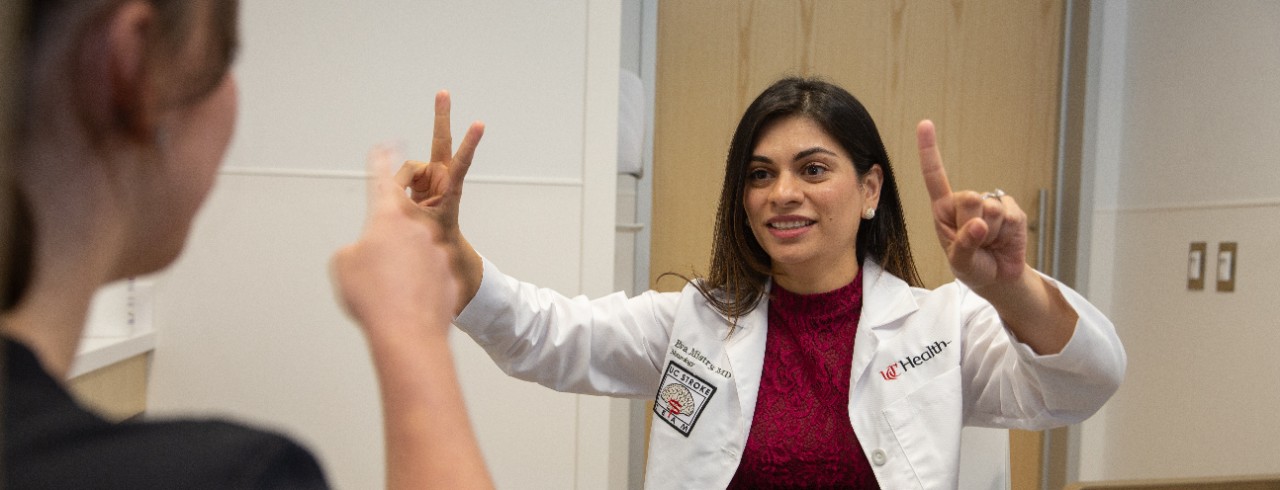
Featured photo at top of Dr. Mistry with a patient. Photo/Andrew Higley/UC Marketing + Brand.
Related Stories
Yes, gas prices will be high this summer
June 17, 2026

WLWT turned to assistant professor-educator at the University of Cincinnati Clermont Seth Powless for a look into how supply chain volatility will keep prices up in the air.
UC Foundation Board of Trustees announces seven new members
June 17, 2026
The University of Cincinnati Foundation is proud to announce that seven dedicated community members are joining its board of trustees. Ray Brooks, CEAS ’83; Chris Carper, A&S ’93; Tim Giglio, Bus ’84; Nandita Jena, A&S '03, Bus '03 and Chris Lewis, MD, Med ’00 will begin their term in October 2026. In addition to this esteemed group, two new student trustees, Case Trokhan, Med ’26 and Joseph Verry, Med ’30 are joining the board.
Rivers expert says satellite technology can help protect drinking water
June 17, 2026
University of Cincinnati environmental engineering professor Dongmei Feng is using satellite remote sensing to study rivers around the world and protect drinking water supplies. As co-lead author of a paper in Nature Water and the recipient of two major federal grants, Feng is developing tools to monitor nutrient pollution and toxic algal blooms from space, with applications for cities like Cincinnati.