
Medium: UC simulations describe molten salt thermodynamics
Medium highlights UC's chemistry research

Medium highlighted research by chemists at the University of Cincinnati who are investigating the thermodynamic properties of molten salt, a material used in energy projects such as solar towers and some nuclear power plants.
UC College of Arts and Sciences research associate Yu Shi, a computational chemist, and his collaborators developed a new simulation method to calculate free energy using deep learning artificial intelligence.
Molten salt is salt heated to high temperatures where it becomes a liquid. It's a valuable medium for energy storage and heat transfer.
“Molten salts are stable at high temperatures and can hold a lot of energy in a liquid state,” Shi said. “They have good thermodynamic properties. That makes them a good energy storage material for concentrated solar power plants. And they can be used as a coolant in nuclear reactors.”
Shi's study of molten salt was published in the Royal Society of Chemistry journal Chemical Science.
Featured image at top: University of Cincinnati chemist Yu Shi discovered a novel way to study the thermodynamic properties of molten salt. Photo/Andrew Higley/UC Marketing + Brand
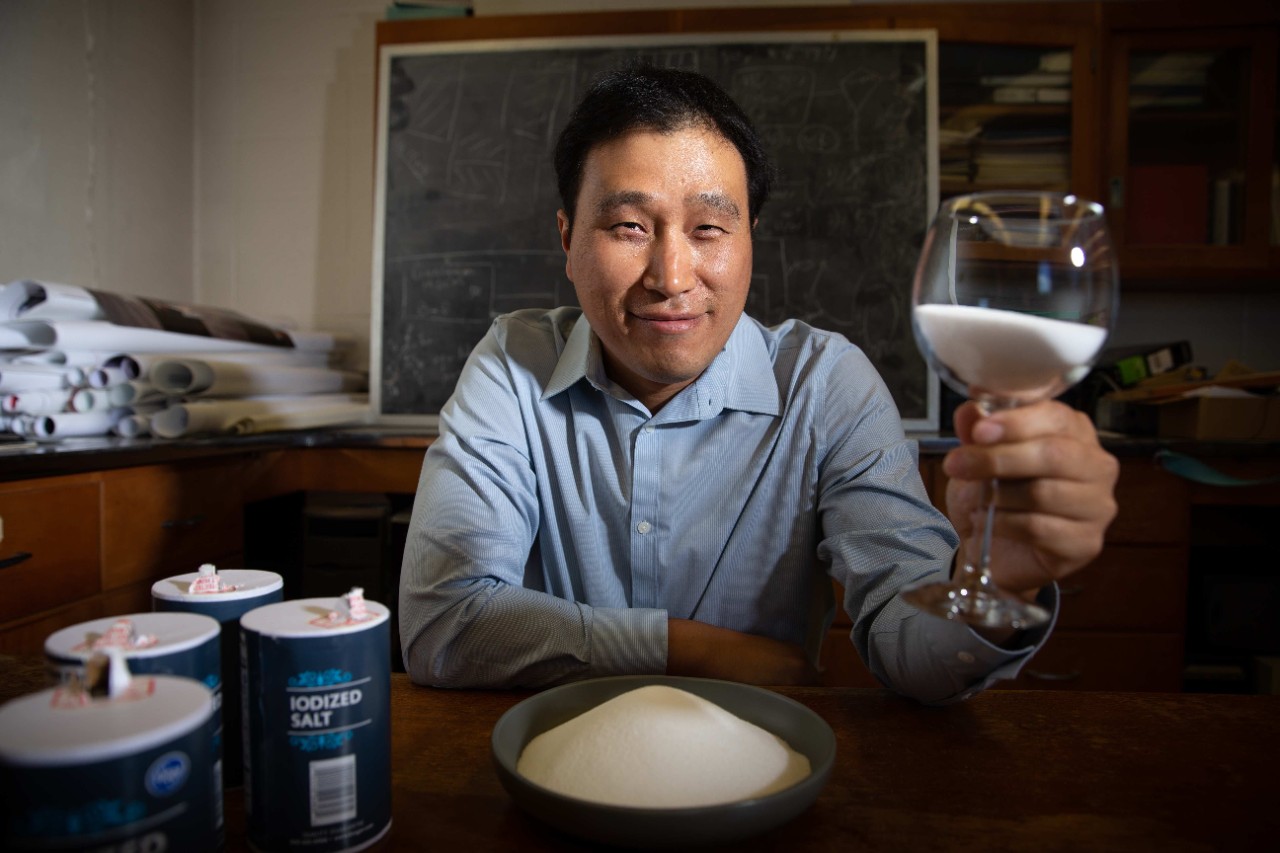
Yu Shi is a research associate and computational chemist in UC's College of Arts and Sciences. Photo/Andrew Higley/UC Marketing + Brand
Related Stories
2026 Cincinnati Business Courier's '40 Under 40' includes nine UC alumni
August 3, 2026
Nine remarkable University of Cincinnati alumni have been named by the Cincinnati Business Courier to its annual “40 Under 40” Class for 2026.
As Crosley Tower comes down, UC looks to STEM
July 30, 2026
With demolition of Crosley Tower more than halfway complete, the University of Cincinnati is preparing a, 200,000-square-foot STEM Academic Facility on its Uptown campus, transforming the north side of campus with new classrooms and labs.
Donor support of UC and UC Health reaches historic level
July 30, 2026
This summer, every law student at the Donald P. Klekamp College of Law who applied for a Summer Public Interest fellowship will receive a fully funded real-world learning experience, expanding opportunities for University of Cincinnati students wishing to pursue real-world experience in public service. This 30% increase in fully funded fellowship participation is a direct result of transformative philanthropy.