WESA: PA Senate candidate pledges to debate following stroke
UC expert discusses stroke recovery

Democratic Pennsylvania Senate candidate John Fetterman suffered a stroke in May, but he has pledged that he will debate his Republican opponent Mehmet Oz when his recovery allows him to do so.
Fetterman's campaign has said that while the candidate's ability to understand and produce speech has been affected, his underlying cognition is unaffected.
Pittsburgh NPR affiliate WESA featured the University of Cincinnati's Pooja Khatri, MD, as a stroke expert. While she did not specifically address Fetterman's recovery, she said it is possible for patients to have difficulty with speech while their underlying cognition has not been affected.
“I'll have people tell me, ‘My loved one was confused because they have aphasia,’ and really, they're actually not confused at all,” said Khatri, professor of neurology and director of the vascular neurology division in the UC College of Medicine’s Department of Neurology and Rehabilitation Sciences; co-director of the UC Gardner Neuroscience Institute Stroke Center of Excellence and the NIH StrokeNet National Coordinating Center housed at UC; as well as a UC Health physician. “They're just having trouble getting the words out that they want to say or understanding what you're saying.”
Khatri added that one of the clearest signs of how well a stroke victim will recover in the long term is how they do in the days immediately following the stroke.
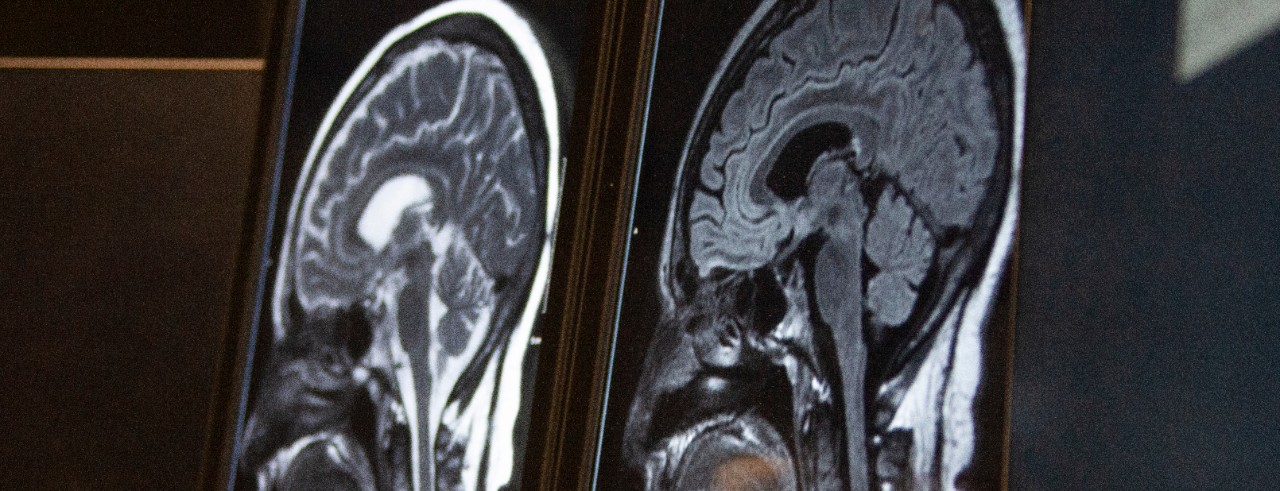
Featured photo at top of MRI brain scan. Photo/Ravenna Rutledge/University of Cincinnati.
Related Stories
These teeny spiders are social media stars
August 28, 2026

The New York Times turned to a University of Cincinnati professor to explain the appeal of jumping spiders on social media.
An internal divide among unions on AI impacts the Wisconsin gubernatorial race
August 28, 2026

Anne Lofaso, a professor in the Donald P. Klekamp College of Law at UC, spoke with Wisconsin Public Radio, about the schism among unions over AI and whether it is a plus, a negative, or somewhere in between when looking at job creation.
On-site training in Speech & Hearing Clinic sets UC’s programs apart
August 27, 2026
At the University of Cincinnati’s Speech & Hearing Clinic, Doctor of Audiology and Speech-Language Pathology graduate students gain real-world experience while providing free speech and hearing services to the community.