
Discover: Did giant sea lizard rule oceans 66M years ago?
UC paleontologist Takuya Konishi explains significance of new mosasaur discovery

Discover turned to University of Cincinnati paleontologist Takuya Konishi to explain the significance of a new species of mosasaur described by the University of Bath.
Konishi, who was not part of the discovery, is an expert in mosasaurs and other marine reptiles that terrorized oceans during the Cretaceous Period more than 65 million years ago.
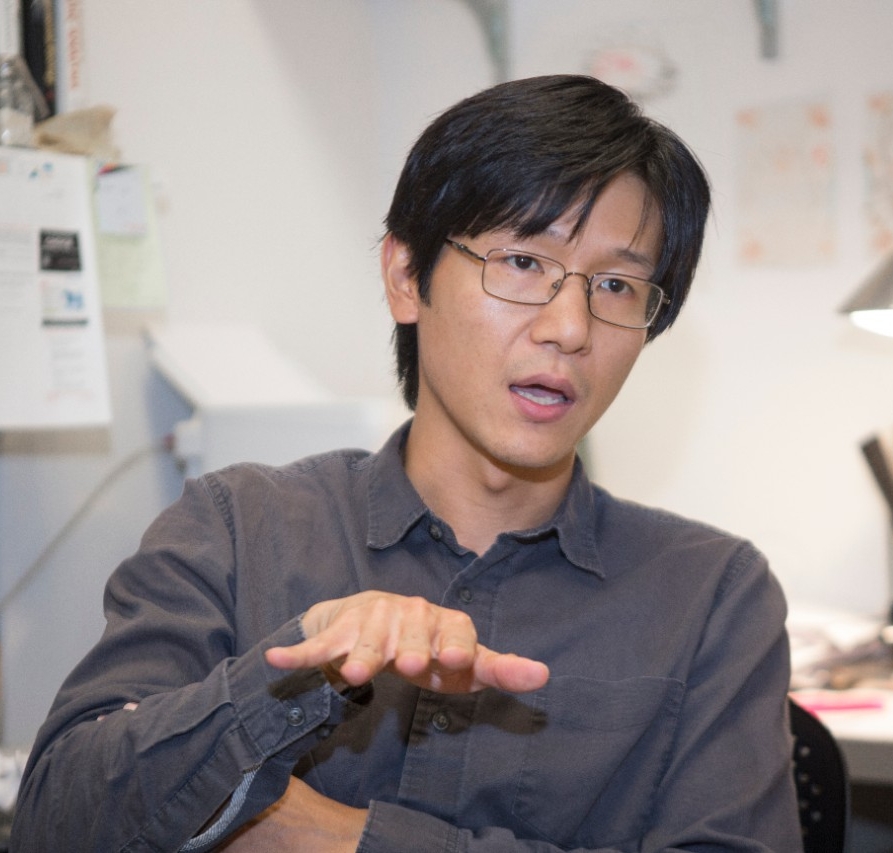
UC College of Arts and Sciences assistant professor Takuya Konishi studies mosasaurs and other ancient marine reptiles. Photo/Joseph Fuqua II/UC
Nicholas Longrich of the University of Bath led a study about a newly identified species of mosasaur they called Thalassotitan atrox (which means merciless sea giant) found in Morocco that had conical teeth like a killer whale. It was as big as an orca, too, at 30 feet.
Konishi told Discover that the specimen resembles another mosasaur called Prognathodon overtoni.
“The bulk of the features are basically found in this other species of mosasaur,” Konishi told Discover. “It’s just 10 million years older. The morphological consistency between the two mosasaurs likely implies just a continuation of that same kind of niche for Prognathodon.”
When it comes to the world's largest marine reptiles, location might not be as important a factor to identification, he said.
“They are large predators, and 10 million years would've given ample time for any large marine reptiles to achieve global distribution, keeping their original niche wherever they ended up,” he told Discover.
Konishi and UC graduate Alexander Willman and University of Alberta professor Michael Caldwell in 2021 identified an 18-foot-long mosasaur they called Ectenosaurus everhartorum after paleontologists Mike and Pamela Everhart. The mosasaur inhabited the Western Interior Seaway 80 million years ago in what is now western Kansas.
Featured image at top: The teeth of a mosasaur. Photo/Joseph Fuqua II/UC
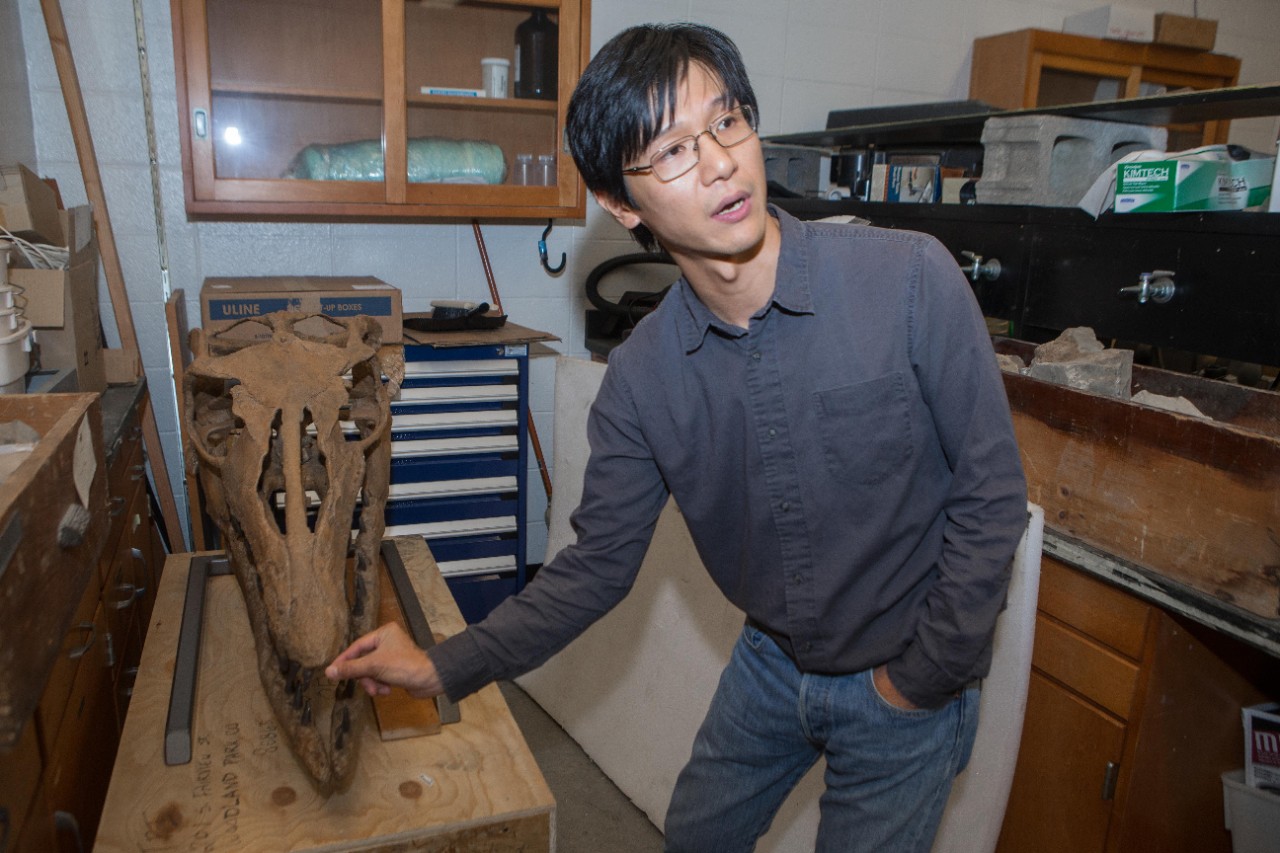
UC College of Arts and Sciences assistant professor Takuya Konishi studies ancient marine reptiles such as mosasaurs. Photo/Joseph Fuqua II/UC
Related Stories
'There's a strong community here:' UC transfer student finds place in College of Arts and Sciences
October 23, 2026
This week marks National Transfer Students Week, and the College of Arts and Sciences celebrated those students Thursday. Olivia White, assistant director of recruitment, said around 13-15% of students at UC are transfer students, and with that comes its own set of challenges.
AI breast cancer survival model from Cancer Center could improve accuracy and personalize care
October 23, 2026
UC Cancer Center researchers, including lead author Wedad Alatebi, developed a deep learning survival model for breast cancer that combines detailed clinical and genetic information, potentially offering physicians a more accurate tool to guide treatment decisions.
UC expert explains potential impact of Pennsylvania’s new vape product law
October 22, 2026

UC professor Ashley Merianos speaks to the Pittsburgh Post-Gazette about Pennsylvania’s new vape law, youth vaping prevention, enforcement challenges and possible unintended consequences.