
Cincinnati.com: 'It's happening a little bit earlier.' Flu hospitalizations rise in southwest Ohio
UC expert cites a variety of factors for the increase

Healthcare leaders in southwest Ohio are raising concerns about hospital capacity again as the Cincinnati and Dayton regions currently account for 63% of flu hospitalizations in the entire state of Ohio, according to a story posted by Cincinnati.com.
The uptick in flu activity comes as children's hospitals continue to experience an increase in cases of respiratory syncytial virus that has created crowded emergency rooms and caused hours-long wait times due to the unprecedented volume of patients.
As of Wednesday, the Cincinnati and Dayton regions have a combined 79 flu hospitalizations. Across Ohio, there are 125 total, according to state data.
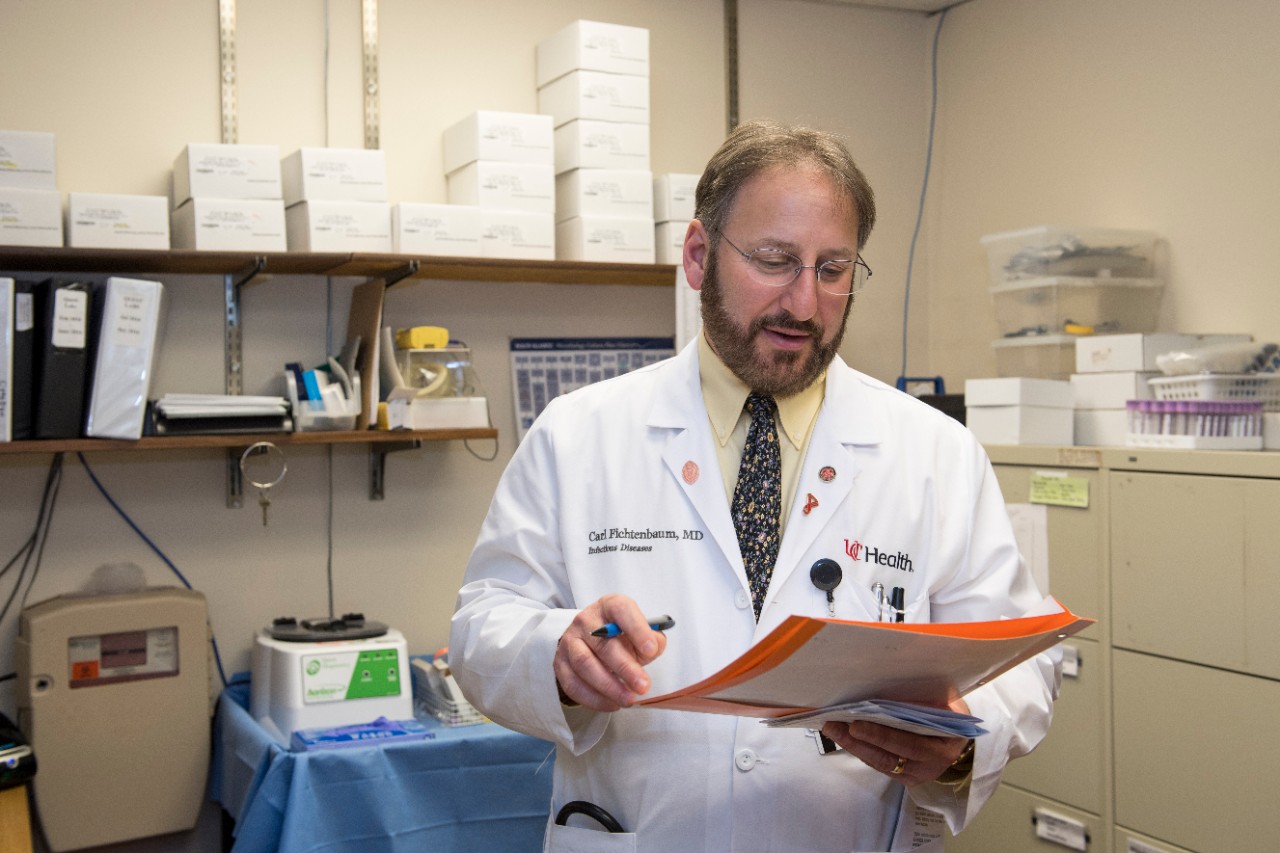
Carl Fichtenbaum, MD, of the Division of Infectious Diseases at the UC College of Medicine/Photo/Colleen Kelley/UC Marketing + Brand
"I expected this," he told Cincinnati.com. "The amount of influenza has been less for two years and our immunity wanes."
Fichtenbaum said the following factors could be contributing to the early flu season jump:
- Low vaccination turnout so far this year, given how early the flu season has arrived.
- A decline in vaccinations due to hesitancy following COVID-19.
- Reduced immunity to the flu as social distancing measures were put in place during the pandemic.
Cincinnati.com reported intensive care unit hospitals in the Cincinnati region were 94% full and medical-surgical beds are 96% full, as of Wednesday according to data from the Health Collaborative, the coordinating group for the Cincinnati region's 40 hospitals. COVID-19 hospitalizations have remained steady at around 125 over the past few weeks.
Next Lives Here
The University of Cincinnati is classified as a Research 1 institution by the Carnegie Commission and is ranked in the National Science Foundation's Top-35 public research universities. UC's graduate students and faculty investigate problems and innovate solutions with real-world impact. Next Lives Here.
Related Stories
Cancer Center plays key role in lab research, clinical trials for new pancreatic cancer drug
September 1, 2026

WLWT and WCPO highlighted the contributions of University of Cincinnati Cancer Center researchers that helped lead to the recent FDA approval of daraxonrasib, a new treatment for pancreatic cancer.
An expert pieced together this Roman document like a puzzle
September 1, 2026

National media highlighted a new project by UC Classics Assistant Professor Matthijs Wibier to piece together and translate an ancient Roman text from fragments buried in the desert for more than 1,600 years.
Cancer Center physician receives $150,000 New Investigator Research Grant to study treatment-resistant leukemia
September 1, 2026
The University of Cincinnati Cancer Center’s Sarah Skuli, MD, PhD, received a two‑year, $150,000 Leukemia Research Foundation New Investigator Grant to study TP53‑mutated leukemia, a treatment‑resistant subtype with very poor outcomes.